

TL;DR:
- A predictable routine provides puppies with a sense of safety and reduces anxiety.
- Consistent schedules for feeding, potty, play, and rest help prevent accidents and overstimulation.
- Routines build trust and emotional resilience, positively influencing long-term behavior and confidence.
Most new puppy owners pour their energy into cuddles, toys, and playtime, yet overlook the single most powerful tool for a calm, settled pup: a predictable daily routine. Puppies need 16 to 18 hours of sleep every day, and without structure around feeding, rest, and potty breaks, even the most affectionate home can feel overwhelming to a young dog. Play and love matter enormously, but they cannot replace the deep sense of safety that comes from knowing what happens next. This article walks you through exactly how to build routines that reduce anxiety, prevent accidents, and help your puppy settle into their new life with confidence.
Table of Contents
- Why routines are vital for calming puppies
- What an effective puppy routine looks like
- Handling anxious, overtired and young puppies
- Expert strategies for balancing rest and activity
- What most puppy guides miss: Routines are relationship builders
- Support for calm routines: Tools and guidance from Calm-Companions
- Frequently asked questions
Key Takeaways
| Point | Details |
|---|---|
| Predictability reduces anxiety | Consistent routines help puppies feel safe and ease adjustment to new homes. |
| Routine structure prevents accidents | Regular feeding, potty, play, and nap breaks dramatically cut stress-related incidents. |
| Balance activity and rest | Too much stimulation or too little sleep can trigger anxiety and behavioural problems. |
| Decompression and consistency matter | Anxious puppies need extra decompression time and firm routine anchors to calm quickly. |
| Routines build lasting trust | Predictable schedules foster confidence between you and your puppy. |
Why routines are vital for calming puppies
Puppies are not small adults. Their nervous systems are immature, their world is entirely new, and almost everything they encounter is a potential source of stress. What they desperately need is predictability. When a puppy knows that a walk follows breakfast, that a nap follows play, and that bedtime comes at the same hour each evening, their brain can stop scanning for threats and simply relax.
Predictable routines reduce anxiety by setting clear expectations around feeding, potty breaks, play, and sleep. This is not just common sense. Research confirms that stable routines lower baseline stress hormones and improve emotional regulation in dogs, meaning a well-structured day literally changes your puppy's internal chemistry for the better.
"Consistency is more important than perfection. A slightly imperfect routine followed reliably will always outperform a perfect schedule followed sporadically."
Think of routine as a language your puppy can understand before they learn any commands. Every repeated sequence tells them: this is safe, this is normal, you are okay. That message, repeated dozens of times a day, builds emotional resilience far faster than any amount of socialisation or training alone.
For practical guidance on puppy behaviour management, understanding the role of routine is the essential starting point. And if you want a ready-made framework, exploring predictable routines for puppies gives you a structured foundation to build from.
Here is what a consistent routine actually delivers:
- Security: Your puppy learns the world is safe and manageable
- Fewer accidents: Scheduled potty breaks mean fewer surprises on the carpet
- Calmer behaviour: A rested, fed puppy is far less likely to bite or bark
- Emotional resilience: Predictability now means a more confident adult dog later
- Stronger bond: Shared routines build trust between you and your puppy every single day
Now that you have seen how crucial routines are, let us break down what a typical puppy schedule actually looks like.
What an effective puppy routine looks like
A good puppy routine is not complicated, but it does need to be deliberate. The core cycle is simple: wake, potty, feed, play, nap, repeat. The key is keeping that cycle consistent from day one, even when life feels chaotic.
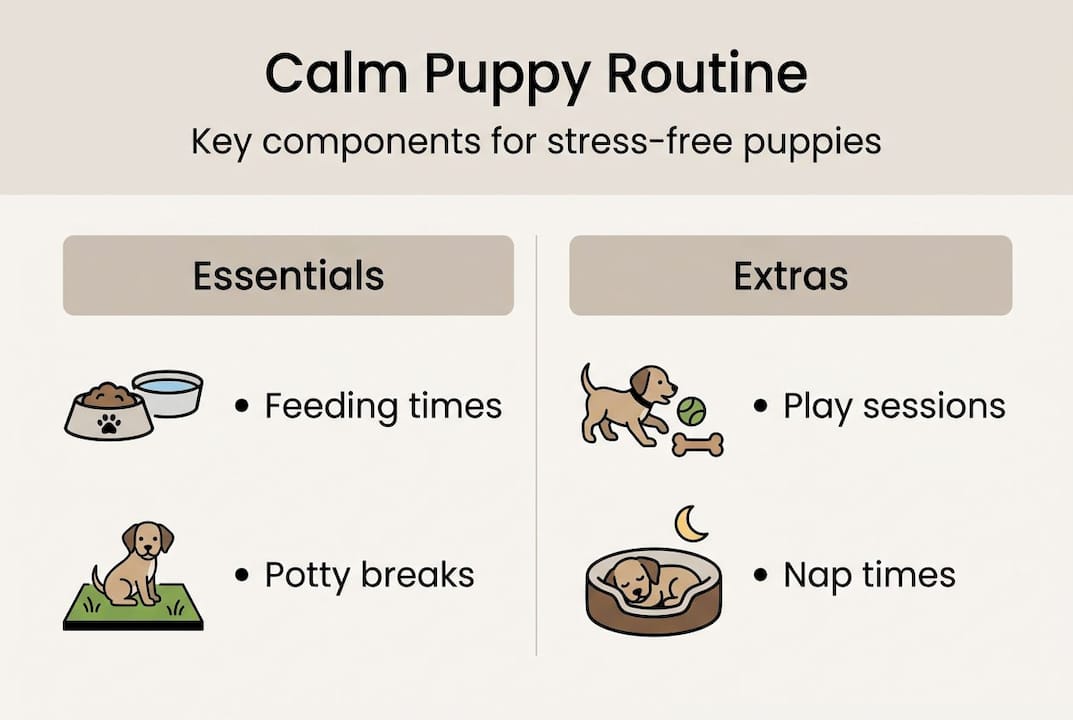
Establish a schedule from day one with potty trips after every wake, meal, and play session, aiming for every one to two hours during the first week. Feed young puppies three times a day, keep play sessions to fifteen to thirty minutes, and enforce naps between activities. This structure prevents the overtired, overstimulated spiral that leads to biting and meltdowns.
| Stable routine | Chaotic routine |
|---|---|
| Fewer accidents indoors | Frequent and unpredictable accidents |
| Calmer, more settled behaviour | Hyperactivity and anxiety spikes |
| Faster potty training progress | Slower learning and confusion |
| Better sleep at night | Restless nights for puppy and owner |
| Stronger sense of security | Persistent low-level stress |
Here is how to build your daily schedule step by step:
- Fix your anchor times first. Choose consistent wake-up, feeding, and bedtime slots before anything else.
- Add potty trips around every meal and nap. Take your puppy out immediately after waking and within fifteen minutes of eating.
- Schedule short play windows. Keep sessions to twenty to thirty minutes, then guide your puppy to their crate or bed.
- Build in enforced naps. Young puppies need rest even when they seem reluctant. Use a crate or pen to create a calm, quiet space.
- Set a consistent bedtime. The same wind-down sequence each evening signals that sleep is coming, reducing night-time anxiety.
Pro Tip: Even if your daily schedule varies, always anchor feeding and potty times. These two fixed points give your puppy enough predictability to stay calm, even on your busiest days.
For a ready-to-use framework, the puppy routine checklist at Calm-Companions maps this out day by day. You will also find detailed advice on calming a new puppy and practical transition tips for puppies to support those early days.
Understanding the components is essential, but special cases need thoughtful attention.
Handling anxious, overtired and young puppies
Not every puppy arrives home as a blank slate. Some are naturally more anxious. Some have been separated from their litter too early. Others simply become overtired far faster than their owners expect. These puppies need routine even more urgently, but they also need a gentler version of it.
Anxious or fearful puppies need decompression during the first one to two weeks. This means low stimulation, minimal visitors, and a focus on routine before any socialisation begins. Rushing a nervous puppy into new experiences without that foundation can make anxiety worse, not better.
Early separation matters more than most owners realise. Puppies separated before eight weeks show significantly higher rates of fear and anxiety in adulthood. If your puppy came home younger than that, expect a longer settling period and lean even harder on routine as their primary source of comfort.
Overtired puppies are easy to misread. When a puppy starts biting harder, running in frantic circles, or becoming impossible to settle, most owners assume they need more stimulation. In reality, the opposite is true. Watch for these signs:
- Sudden increase in biting or mouthing
- Frantic running or spinning (the classic "zoomies" at the wrong time)
- Whining or barking without clear cause
- Inability to settle even in a familiar space
- Glazed eyes or excessive yawning during activity
When you spot these signals, the answer is not more play. It is an enforced nap. Guide your puppy to their crate, keep the space calm and dark, and allow them to rest without interruption. Most overtired puppies fall asleep within minutes once removed from stimulation.
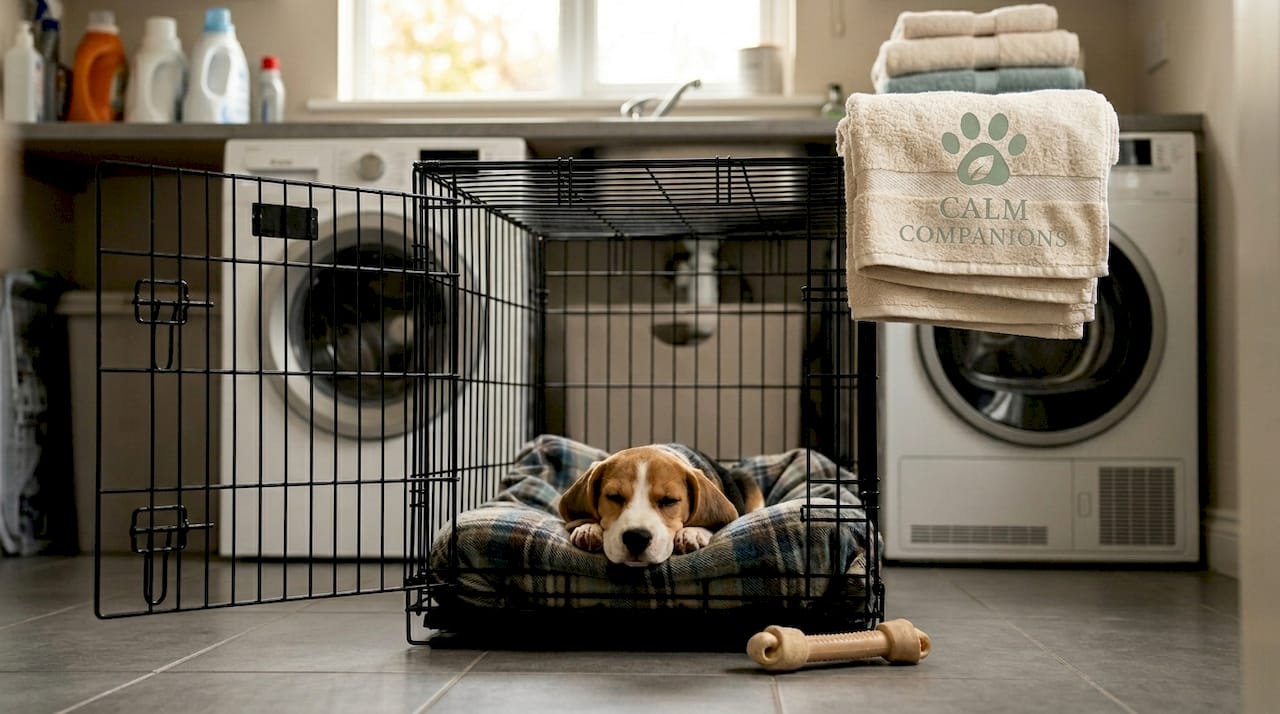
For support with the night-time side of this, advice on settling puppies at night and handling night-time crying can make a significant difference during that first difficult week.
These scenarios show the limits and nuances of routines, so let us look at advanced strategies for maintaining calm.
Expert strategies for balancing rest and activity
Once you have the basics in place, there are subtler strategies that separate good routines from genuinely great ones. The first is understanding trigger stacking. This is when multiple small stressors pile up in quick succession, pushing a puppy past their coping threshold. A car journey followed immediately by meeting strangers followed by a play session is not a fun-filled morning. It is a recipe for a meltdown.
Balance rest and activity deliberately, and use the crate as a "Zen Zone" rather than a punishment space. Introduce gradual alone time from the very first week to prevent separation anxiety from taking hold later.
Here is something that surprises many owners: play can sometimes increase stress susceptibility in certain contexts. Over-socialisation in the early weeks can overwhelm a puppy more than it helps them. Routine should come before socialisation, not the other way around.
| Routine success factors | Overstimulation risks |
|---|---|
| Fixed feeding and potty anchors | Too many new people in week one |
| Crate naps between activities | Back-to-back play sessions |
| Gradual alone time practice | Skipping naps due to excitement |
| Calm, quiet wind-down at bedtime | Loud environments before sleep |
"A puppy who has had enough rest, enough food, and enough quiet time is a puppy who can actually benefit from socialisation and training. Without that foundation, new experiences add stress rather than confidence."
Pro Tip: On days when your schedule cannot match your ideal routine, focus only on your anchors: feeding times and potty breaks. Everything else can flex. Those two elements alone are enough to keep your puppy's stress levels manageable.
For more on this, guidance on managing puppy excitement and calm leadership for puppies offers practical next steps, as does advice on introducing your puppy home in a way that sets the right tone from the start.
What most puppy guides miss: Routines are relationship builders
Most guides treat routines as logistics. Feed at seven, potty at eight, nap at nine. Useful, yes. But that framing misses something important. Routines are also the primary way you communicate with your puppy before they understand a single word you say.
Every time you follow the same sequence, you are telling your puppy: I am reliable. You can count on me. You are safe here. That is not scheduling. That is the foundation of trust.
Established veterinary guidance consistently affirms the calming role of routine, and while much of the evidence is correlational, the practical reality is clear: puppies with consistent owners settle faster, bite less, and grow into more confident adults. The routine is not just preventing accidents. It is building a relationship.
When you approach your daily schedule as a communication tool rather than a to-do list, everything shifts. You become calmer. Your puppy mirrors that calm. And the bond you are building in those first weeks becomes the bedrock of everything that follows. For more on this, advice on expert puppy introduction shows how the very first days set the tone for months ahead.
Support for calm routines: Tools and guidance from Calm-Companions
Building a consistent routine is far easier when you have a clear framework to follow rather than piecing it together from scratch at midnight with a whimpering puppy.
Calm-Companions offers a free puppy calm support checklist that maps out your puppy's first week day by day, covering feeding, potty schedules, nap windows, and night-settling techniques in one simple guide. If you need more hands-on support, puppy training guidance is available to help you work through specific challenges, and the puppy essentials section covers the practical tools that make routine-building simpler from day one. You do not have to figure this out alone.
Frequently asked questions
How quickly can routines calm a new puppy?
Most puppies begin to settle within a few days when consistent schedules are in place from the very first day, as predictability provides immediate comfort and reduces anxiety.
What should a daily puppy routine include?
A solid daily routine covers regular feeding, potty breaks every one to two hours, short play sessions of fifteen to thirty minutes, enforced naps, and a fixed bedtime each evening.
How are routines different for anxious or overtired puppies?
Anxious puppies benefit from a decompression period of one to two weeks with low stimulation, while overtired puppies need enforced crate naps to prevent biting and meltdowns.
Does early separation from the litter affect calming routines?
Yes. Puppies separated before eight weeks carry a higher risk of fear and anxiety in adulthood, meaning they often need a longer settling period and extra routine support.
What if my schedule changes daily — can I still use routines?
Absolutely. Anchoring feeding and potty times provides enough predictability to keep your puppy calm, even when the rest of your day looks different each time.