
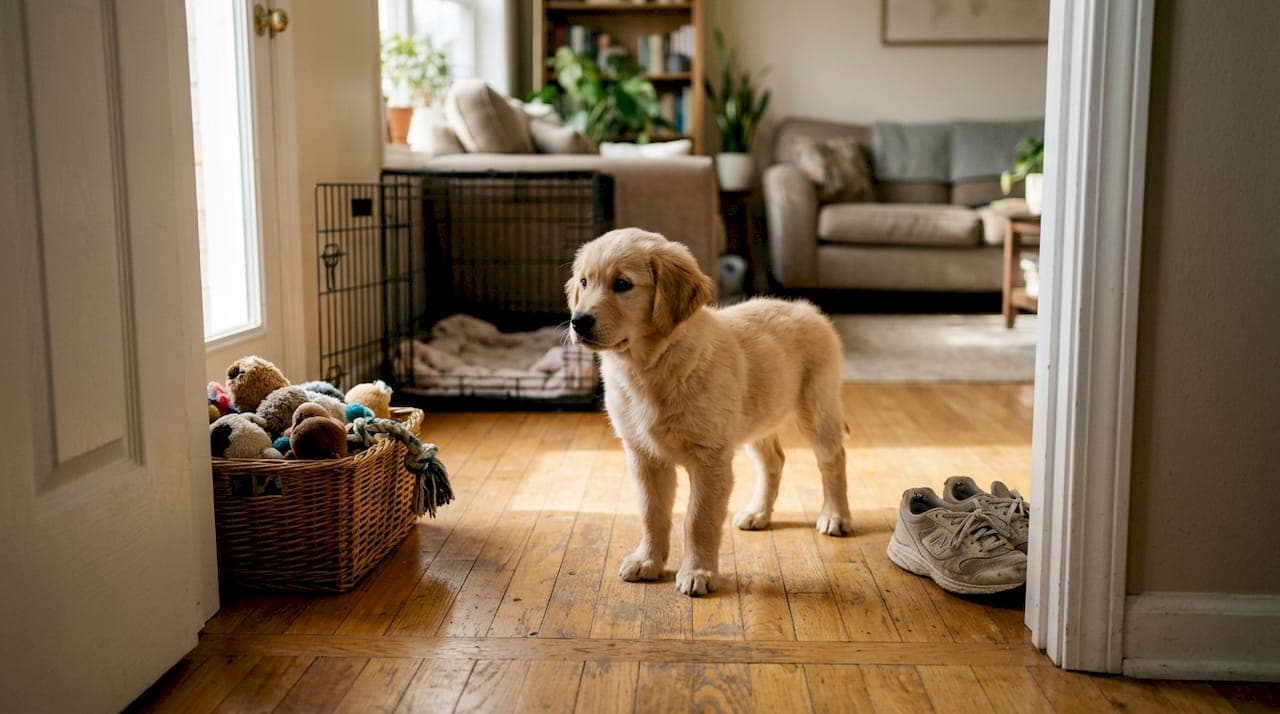
Bringing a new puppy home is one of the most exciting things you’ll ever do, but it can also feel surprisingly overwhelming. Your puppy has just left everything familiar, including their mother, their littermates, and every scent they’ve ever known. In those first hours, they’re relying entirely on you to help them feel safe. The good news is that with a little preparation and the right approach, you can make this transition far smoother than you might expect. This guide walks you through every stage, from setting up your home before arrival to managing those tricky first introductions.
Table of Contents
-
Establishing a routine: feeding, potty training, and settling in
-
Decompression: helping your puppy adjust and avoid overwhelm
-
Introducing your puppy to family members, children, and other pets
-
Troubleshooting and frequently asked questions for first-time owners
Key Takeaways
| Point | Details |
|---|---|
| Start with safe setup | Remove hazards and prepare essentials before your puppy comes home. |
| First moments matter | Calm, gentle welcomes help reduce stress and encourage trust. |
| Set clear routines | Frequent potty breaks, feeding times, and safe spaces help puppies adjust faster. |
| Go slow with introductions | Supervised, gradual meetings with family and pets prevent overwhelm and set the stage for lifelong bonds. |
| Consistency beats perfection | Patience and predictable routines are key—your puppy will settle in with gentle guidance. |
Essential preparations before bringing your puppy home
Now that you know what a big moment your puppy’s arrival will be, it’s time to set up your home so they’re safe, calm, and ready to explore.
Puppy-proofing is not optional. Before your puppy sets a single paw inside, you need to remove or secure anything that could hurt them. Electrical cords, household chemicals, and small objects are among the most common hazards, and baby gates are essential for blocking off stairs or rooms that aren’t yet safe. Think of it like childproofing, but for a creature that chews everything.
Your comprehensive puppy essentials list, including everything from nutritious food and comfortable bedding to essential toys, grooming supplies, and training tools to ensure your new puppy’s well-being and happinessshould be ready before the day of arrival. The basics include a crate, food and water bowls, a collar and lead, age-appropriate toys, a comfortable bed, and cleaning supplies for inevitable accidents. Crucially, match the food to your breeder’s brand to avoid stomach upset during the first week. Switching food too quickly is one of the most common first-time owner mistakes.
Essential supplies checklist:
-
Crate with a soft blanket or bedding
-
Food and water bowls (stainless steel is easiest to clean)
-
Collar, ID tag, and lead
-
Puppy-safe chew toys and comfort toys
-
Enzymatic cleaner for accidents
-
Puppy food matching the breeder’s brand
-
Baby gates for restricted areas
| Supply | Why it matters |
|---|---|
| Crate | Provides a safe, den-like space for rest |
| Enzymatic cleaner | Removes scent to discourage repeat accidents |
| Matching food | Prevents digestive upset during transition |
| Baby gates | Limits access to hazards and unsafe areas |
| Comfort toy | Familiar scent can ease separation anxiety |
Pro Tip: Set up all your puppy’s supplies in one designated room before they arrive. Letting your puppy discover their space gradually, rather than all at once, reduces sensory overload and helps them settle faster. You can also use our puppy calm support checklist to make sure nothing gets missed.
The first hour: what to do when your puppy arrives
With your home prepped, you’ll want your puppy’s very first moments to be as calm and reassuring as possible.
The very first thing you should do when you arrive home is take your puppy straight to their designated toilet spot outdoors. This single habit sets the foundation for house training from minute one. After that, bring them inside and limit them to one room initially, keeping introductions low-key and supervised. Resist the urge to show them the whole house straight away.
Step-by-step for the first hour:
-
Take your puppy directly to the outdoor toilet spot
-
Allow them to sniff and explore calmly without rushing
-
Bring them inside to their designated room only
-
Let them investigate at their own pace, without crowding
-
Offer water and a small amount of food
-
Keep voices low and movements slow
-
Avoid inviting friends or extended family over on day one
“Rushing or overwhelming your puppy in the first hours can cause stress responses that delay bonding and make house training harder. Let your puppy lead the pace of exploration.” — AKC Expert Advice
For more detail on managing those critical early moments, our first hour puppy tips cover everything from body language to crate introduction. The calmer you are, the calmer your puppy will be. They read your energy more than you might realise.
| First hour action | Purpose |
|---|---|
| Toilet spot first | Begins house training immediately |
| One room only | Prevents sensory overload |
| Low-key introductions | Reduces fear and stress |
| Slow movements | Signals safety and calm |
Establishing a routine: feeding, potty training, and settling in
Now that your puppy’s been welcomed into a calm setting, setting up routines is the next key to helping them feel at home.
Young puppies need 3 to 4 meals per day is generally recommended for puppies during their growth phase to ensure they receive adequate nutrition and energy, For example, a young Labrador Retriever might be fed three smaller meals in the morning, midday, and evening, while a smaller breed like a Chihuahua may require four smaller meals to prevent hypoglycemia. This feeding schedule helps maintain stable blood sugar levels and supports healthy development, especially during the critical first few months when puppies are rapidly growing and learning to adjust to solid foods., served at consistent times. Predictable mealtimes help regulate their digestion and make toilet training far more manageable. Pair every meal with a toilet trip outside, and take your puppy out every 60 to 90 minutes throughout the day, as well as after naps and play sessions.
When to take your puppy outside:
-
Immediately after waking up
-
Within 15 minutes of every meal
-
After every play session
-
Every 60 to 90 minutes during the day
-
Last thing before bed
The crate is your best friend during this period. Used correctly, it becomes a safe, den-like space your puppy actively chooses to rest in, not a punishment. Introduce it gradually with treats and praise, and never use it as a consequence for bad behaviour. You should also book a vet visit within the first week to check vaccinations, deworming, and general health. Our Puppy training tips can help you build on these early foundations.
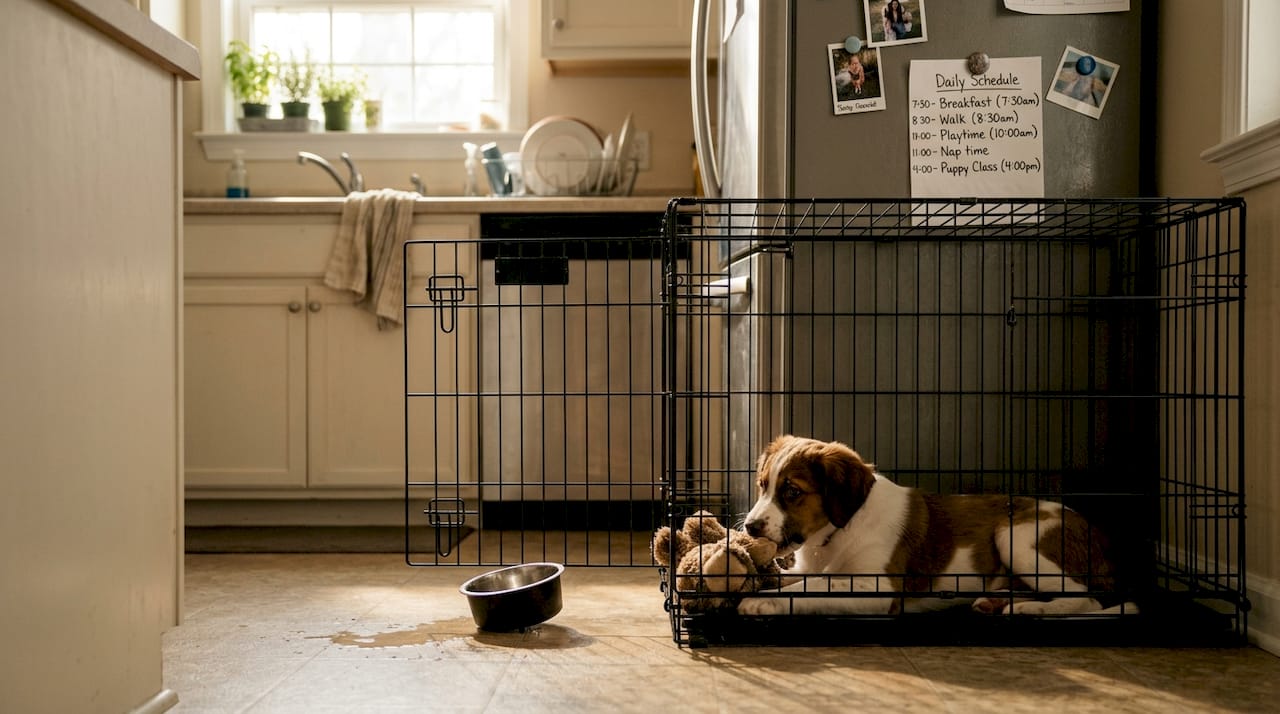
Pro Tip: Write out a simple daily timetable and stick it somewhere visible, like the fridge. Include feeding times, toilet trips, nap windows, and play sessions. Consistency is what makes routines work, and a visible schedule helps everyone in the household stay on the same page.
Decompression: helping your puppy adjust and avoid overwhelm
Routines help, but emotional adjustment matters just as much. Here’s how to support that process.
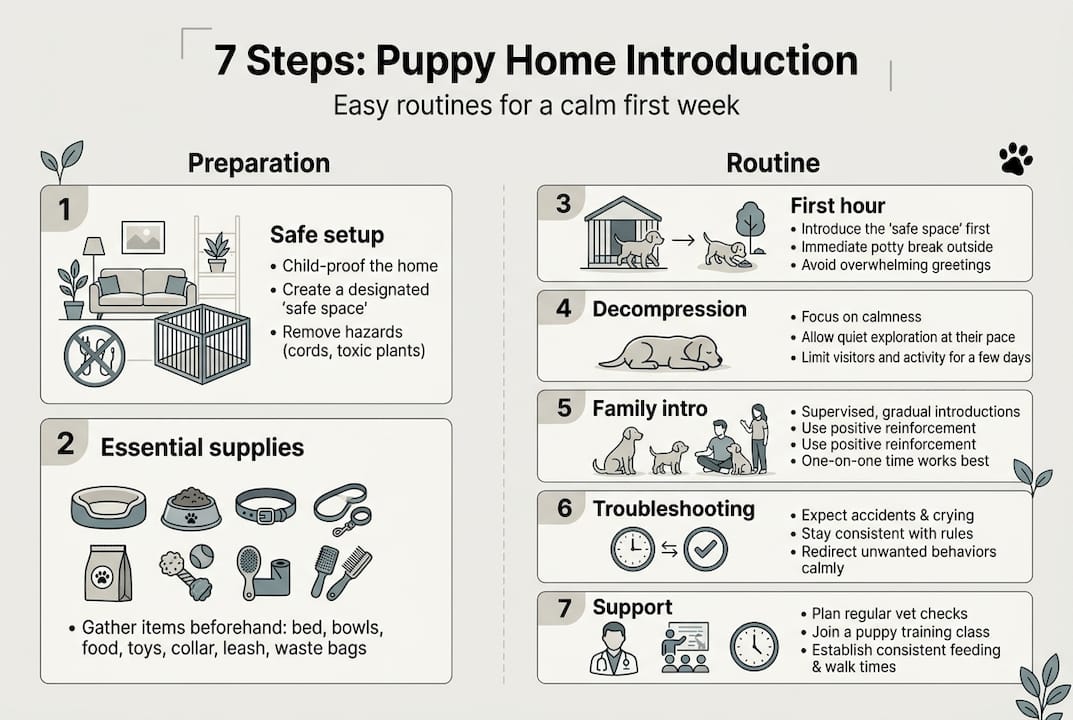
Decompression is the period your puppy needs to mentally and emotionally settle into their new environment. Most puppies need 3 to 14 days for initial adjustment, with full comfort sometimes taking several weeks or even months. During this time, less is genuinely more. Avoid busy outings, large gatherings, and back-to-back new experiences.
Signs your puppy may be overwhelmed:
-
Excessive panting or yawning
-
Hiding or retreating to a corner
-
Refusing food or water
-
Persistent whining or barking
-
Trembling or low body posture
-
Avoiding eye contact
Some puppies, particularly those who were less socialised before rehoming, may need weeks or months of careful monitoring before they feel truly comfortable. If your puppy shows persistent fear responses, avoid forcing interactions and consider seeking advice from a qualified behaviourist. Our puppy settle-in checklist and calming support for anxious puppies offer practical next steps.
“Consistency is more important than perfection. Allow your puppy to set the pace, and trust that small, calm moments build lasting confidence.”
Introducing your puppy to family members, children, and other pets
Once your puppy is settling emotionally, it’s time for thoughtful introductions to the rest of your household.
For resident dogs, always introduce on neutral ground such as a park or quiet street, with both dogs on leads. Keep the first meeting short, watch body language closely, and give both dogs a break before trying again indoors. Never force them together and never leave them unsupervised in the early days.
For cats, the approach is different. Ensure your cat always has escape routes and quiet spaces they can retreat to. Let the cat set the pace entirely. Some cats adjust within days; others take weeks. Patience here pays off enormously.
Introducing your puppy to children:
-
Always supervise, without exception
-
Teach children to approach calmly and quietly
-
No hugging, climbing on, or chasing the puppy
-
Let the puppy approach the child, not the other way around
-
Keep first meetings short and positive
Pro Tip: Short, positive exposures work far better than long, stressful meetings. Five calm minutes leaves a good impression. Thirty chaotic minutes can set back trust by days. For more introduction tips, including how to manage multi-pet households, we’ve got you covered. The Animal Humane Society also recommends keeping initial child introductions low-key and structured.
Troubleshooting and frequently asked questions for first-time owners
Even with a plan, you may have questions or run into bumps. Here’s how to handle the trickiest early days.
Night-time crying is one of the most common challenges in the first week. Your puppy is not being naughty. They’re grieving the loss of their littermates and adjusting to silence. A warm water bottle wrapped in a blanket, a ticking clock, or a worn item of your clothing in their crate can all help. Most puppies settle within 1 to 2 weeks, so get your free puppy checklist here for extra support.
Common first-week challenges and solutions:
-
Crying at night: Use warmth and familiar scent in the crate; avoid rushing in immediately
-
Toilet accidents: Increase outdoor trips; never punish, simply clean thoroughly
-
Refusing food: Check for stress signs; stick to the breeder’s food brand
-
Excessive chewing: Redirect to appropriate toys; puppy-proof more thoroughly
-
Hiding or fearfulness: Give space; do not force interaction
Socialisation is critical between 3 and 14 weeks, but it must be balanced with decompression. Flooding your puppy with new experiences too quickly can create fear rather than confidence. Gradual, positive exposures are always more effective than rushing the process. Our puppy training support can guide you through this balance week by week.
Remember: consistency over perfection is the mantra every first-time owner needs. You will make mistakes. Your puppy will have accidents. That is entirely normal. What matters is showing up calmly and consistently every single day.
Support and resources for new puppy parents
If you want extra support beyond these tips, Calm-Companions is here to help you through every stage of your puppy’s first week and beyond.
We know the first week with a new puppy can feel like a lot to manage on your own. That’s exactly why we created our free week-1 calm checklist, a practical, day-by-day guide covering essential routines, night settling techniques, and behaviour management. It’s designed specifically for first-time owners who want to feel prepared rather than reactive. You can also browse our puppy essentials range for trusted product recommendations that support a calmer, more confident start. Sign up today and get your free checklist delivered straight to your inbox.
Frequently asked questions
How long does it take for a puppy to adjust to a new home?
Most puppies settle in within 1 to 2 weeks, but full comfort can take several weeks, particularly for anxious or less-socialised pups.
What should I do first when my puppy arrives at home?
Take your puppy straight to their outdoor toilet spot, then allow them to explore one quiet room calmly before any further introductions.
Should I introduce my puppy to my other pets straight away?
Wait until your puppy is calm and settled, then arrange short, supervised meetings on neutral ground, giving existing pets plenty of space and breaks.
How can I prevent my puppy from becoming overwhelmed?
Limit new experiences in the first fortnight, keep daily routines consistent, and allow your puppy quiet rest time after any excitement or new encounters.