
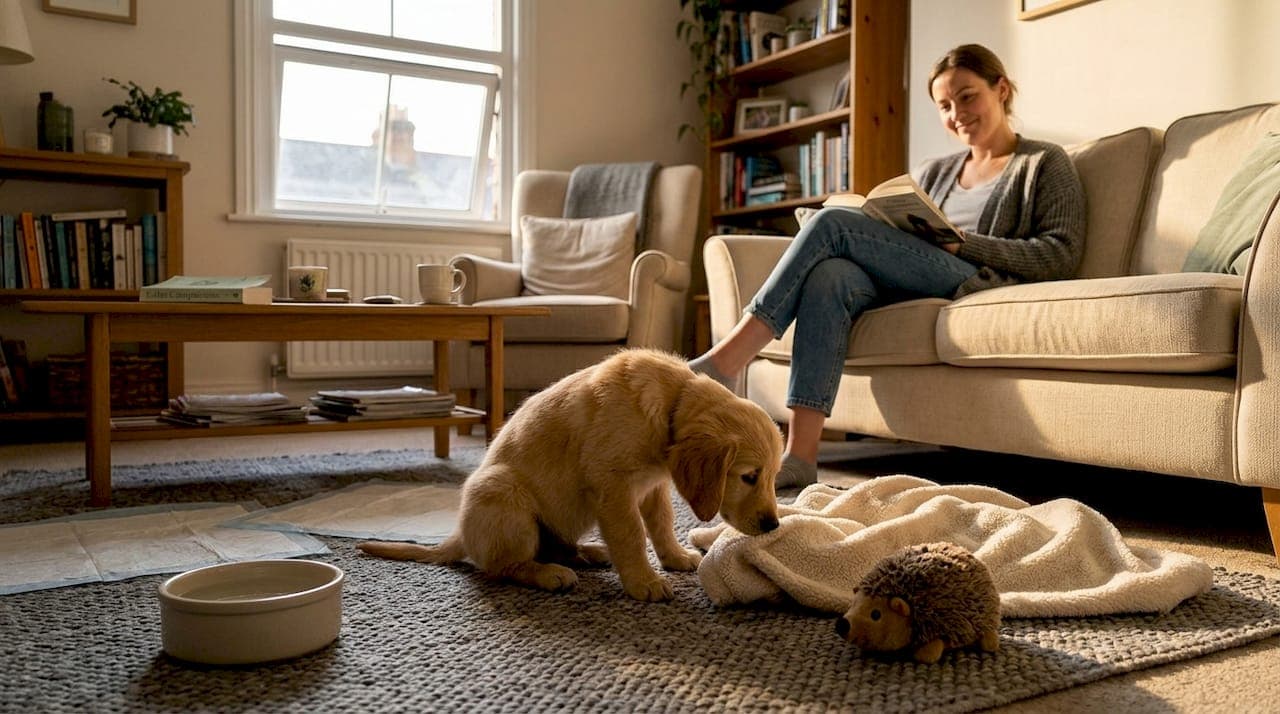
Bringing a new puppy home is one of the most exciting things you can do, but it can also feel overwhelming within the first few hours. Many first-time owners worry they are doing something wrong when their puppy whimpers, hides, or refuses to eat. The good news is that with a clear plan, consistent routines, and a calm environment, you can give your puppy the best possible start. The tips in this article are grounded in expert guidance and designed to help you feel confident, not anxious, during those first crucial days and weeks.
Table of Contents
Key Takeaways
| Point | Details |
|---|---|
| Establish a routine | Predictable feeding, toileting, and naptime help your puppy feel secure from day one. |
| Limit and gradually expand space | Start your puppy in a single safe room and extend access as they settle. |
| Prioritise decompression | Allow your puppy quiet time and a calm environment before many introductions. |
| Crate and positive training | Build a supportive association with the crate and only use positive reinforcement methods. |
| Expect phases and setbacks | Normal development includes fear, teething, and teenage stages—support and consistency are key. |
Key principles for a stress-free transition
Before you do anything else, understand that your puppy has just left everything familiar: their mother, their littermates, and every smell they have ever known. That is a significant change for a small animal. The single most important thing you can do in the first few days is allow decompression, which simply means giving your puppy time and space to adjust without pressure.
Experts recommend you prioritise decompression over socialisation in those early days, because rushing introductions or activities can cause stress stacking, where small stressors pile up and overwhelm your puppy. Positive reinforcement only, no punishment, is the rule from day one.
Here are the core principles to keep in mind:
-
Keep things calm and quiet for the first 48 to 72 hours
-
Use positive reinforcement such as treats, praise, and gentle play to reward good behaviour
-
Stick to a routine from the very first morning, because predictability is comforting for puppies
-
Avoid overwhelming your puppy with too many new people, sounds, or spaces at once
Consistency in the first week prevents long-term problems like separation anxiety and poor housetraining. Prevention is always easier than correction, and the habits you build now will shape your dog’s behaviour for years.
“The first week sets the tone for everything that follows. A calm, structured start is the greatest gift you can give your new puppy.”
For practical, day-by-day support, the week 1 calm support tips on Calm-Companions are a brilliant starting point.
Pro Tip: Resist the urge to invite friends and family over to meet the puppy in the first few days. It feels exciting, but it can genuinely overwhelm a young dog who is still processing a huge life change.
Prepare your home: Create a calm, safe haven
Your home environment matters enormously. A puppy who feels safe and contained is far less likely to develop anxious behaviours than one who is given free run of a large, unfamiliar house.
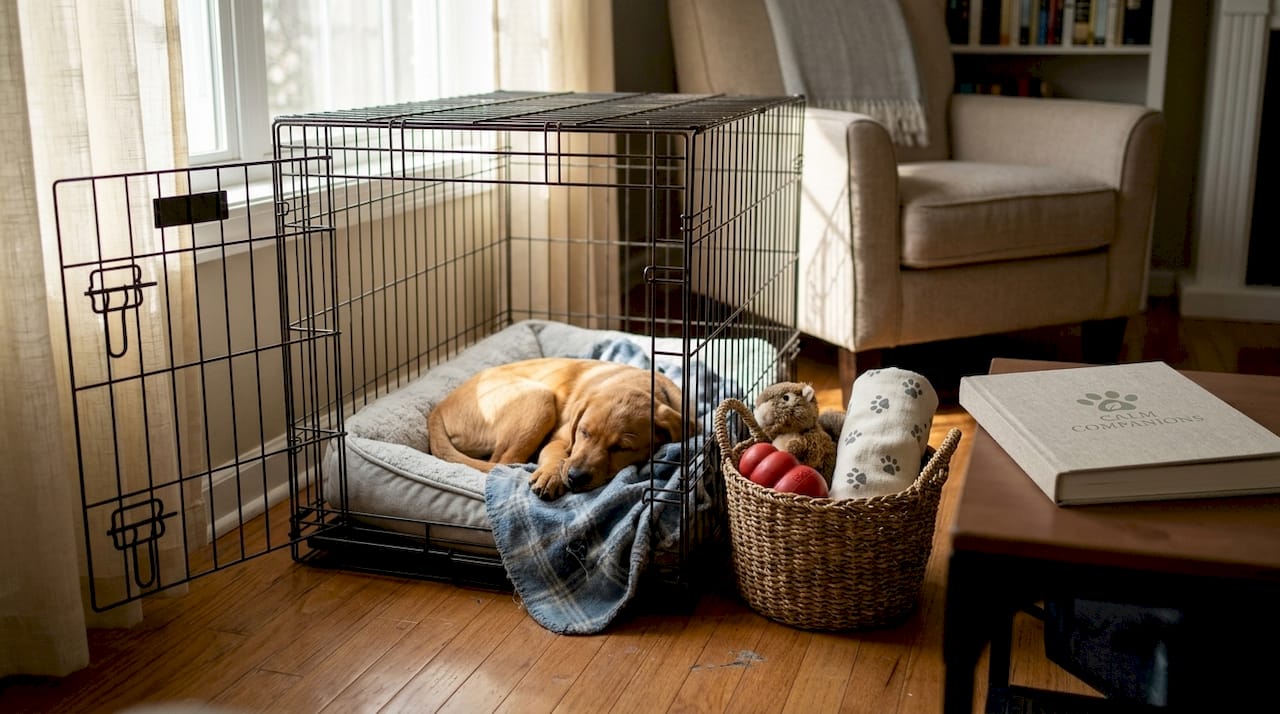
The key is to limit access to one room initially and introduce new areas gradually, one at a time, to avoid overwhelming your puppy. Use baby gates, playpens, or simply close doors to keep things manageable.
Before your puppy arrives, puppy-proof each area thoroughly:
-
Secure electrical cords and tuck them out of reach
-
Remove toxic plants, cleaning products, and small objects that could be swallowed
-
Store shoes, bags, and clothing in closed cupboards
-
Check for gaps behind furniture or appliances where a small puppy could get stuck
For bedding, choose something soft and washable. A blanket that carries the scent of the puppy’s previous home can be incredibly soothing in the first few nights. For toys, opt for size-appropriate options without small parts that could be chewed off and swallowed.
Pro Tip: Place your puppy’s bed or crate in a corner rather than the middle of a room. Corners feel more secure because there are fewer directions from which surprises can come.
The puppy essentials checklist on Calm-Companions covers everything you need to have ready before your puppy walks through the door.
The first week schedule: Routine for comfort and confidence
Puppies thrive on predictability. When they know what is coming next, their stress levels drop and they settle faster. A consistent daily schedule is not about being rigid; it is about giving your puppy a framework they can rely on.
Establish a consistent daily routine with fixed times for feeding (three times per day for young puppies), potty breaks, playtime, and naps. Young puppies need between 16 and 20 hours of sleep each day, so build in plenty of rest time.
Here is a sample daily schedule to get you started:
| Time | Activity |
|---|---|
| 7:00 am | Wake up, immediate toilet trip outside |
| 7:15 am | Breakfast |
| 7:30 am | Short play session (10 to 15 minutes) |
| 8:00 am | Nap in crate (1 to 2 hours) |
| 10:00 am | Toilet trip, gentle exploration |
| 12:00 pm | Lunch |
| 12:30 pm | Short play, then nap |
| 3:00 pm | Toilet trip, calm interaction |
| 5:30 pm | Dinner |
| 6:00 pm | Play session, training practice |
| 8:00 pm | Final toilet trip |
| 10:00 pm | Bedtime toilet trip, settle in crate |
Pro Tip: Set phone alarms for toilet trips in the first week. It sounds excessive, but it dramatically reduces accidents and speeds up housetraining.
The routine support checklist from Calm-Companions can help you track your puppy’s daily rhythm and spot patterns quickly.
Introduce crate training from day one
A crate is not a cage or a punishment. Used correctly, it becomes your puppy’s safe den, a place they choose to rest and feel secure. The key is building a positive association from the very first day.
Introduce the crate on day one by placing it in your bedroom at night so your puppy can hear and smell you. Use it for naps during the day, and always pair it with something positive.
Follow these steps for a gentle introduction:
-
Place the crate in a quiet corner with the door open and a soft blanket inside
-
Toss treats near and then inside the crate without closing the door
-
Feed your puppy their meals just inside the crate entrance, then gradually move the bowl further in
-
Once your puppy enters willingly, close the door for 30 seconds, then open it calmly
-
Gradually increase the time the door is closed over several days
-
Never use the crate as a punishment, and never force your puppy inside
Pro Tip: Cover three sides of the crate with a blanket to create a den-like feel. This simple step can make a significant difference to how quickly your puppy settles.
For more detailed guidance, the puppy crate training guidance section on Calm-Companions walks you through the process step by step.
Start toilet training straight away
The earlier you start toilet training, the faster your puppy will learn. Puppies have small bladders and limited control, so the goal is to set them up to succeed rather than waiting for accidents to happen.
Take your puppy to a designated outdoor spot after every car ride, meal, nap, and play session. Use a consistent command such as “go potty” each time, and reward immediately with a treat and calm praise the moment they go in the right place.
Key habits for successful toilet training:
-
Go outside every 30 to 60 minutes in the first week, regardless of whether your puppy seems to need it
-
Use the same spot each time so the scent acts as a cue
-
Reward within three seconds of the puppy finishing, not when you get back inside
-
Stay calm during accidents and clean thoroughly with an enzymatic cleaner to remove the scent
-
Never punish accidents, as this creates anxiety and can make your puppy hide to toilet rather than signal
Pro Tip: Keep a small pot of treats by the back door so you are always ready to reward the moment your puppy performs outside.
The free toilet training advice on Calm-Companions includes additional tips for night-time training and managing setbacks.
Temperature-check introductions: People and other pets
Your puppy is curious, but they are also easily overwhelmed. Social introductions should be gradual, calm, and always on your puppy’s terms.
For the first few days, minimise introductions to immediate family only, one person at a time, with no guests visiting. For existing pets, introduce on neutral territory with both animals on leads, allow sniffing at a distance, and give each animal separate breaks and their own safe space.
Practical tips for smooth introductions:
-
Ask family members to crouch down rather than loom over the puppy
-
Let the puppy approach first rather than reaching out to grab them
-
Keep initial meetings short, no more than a few minutes, and end on a positive note
-
Supervise all interactions between your puppy and other pets for the first few weeks
“A puppy who feels in control of their social interactions is far more likely to grow into a confident, friendly adult dog.”
Patience here pays dividends. Rushing introductions is one of the most common mistakes new owners make, and it can create lasting wariness in a young dog.
What to expect: The 3-3-3 settling-in timeline
One of the most reassuring frameworks for new puppy owners is the 3-3-3 rule. It sets realistic expectations and helps you understand what your puppy is experiencing at each stage.
Adjustment benchmarks work like this:
| Phase | What to expect |
|---|---|
| 3 days | Puppy is overwhelmed, may not eat well, may be quiet or clingy |
| 3 weeks | Decompression begins, personality starts to emerge, routines feel familiar |
| 3 months | Full settling, confident behaviour, strong bond established |
Understanding this timeline means you will not panic if your puppy seems subdued in the first few days. It is completely normal. Your job is simply to keep things calm, consistent, and positive.
For a deeper look at what to expect as your puppy grows, the puppy development timeline on Calm-Companions is a helpful reference.
Stages and setbacks: Navigating puppy development quirks
Even when you do everything right, there will be phases that feel like a step backwards. This is entirely normal and understanding why it happens makes it far less stressful.
Fear periods occur at 8 to 12 weeks and again at 6 to 14 months, when puppies can suddenly become wary of things they previously ignored. Teething between 12 and 16 weeks increases biting and chewing. Adolescence between 6 and 9 months often brings regression in training, where a puppy who seemed to know all the rules suddenly appears to forget them.
How to navigate these phases:
-
During fear periods, avoid forcing your puppy to face scary things. Let them observe from a safe distance and reward calm behaviour
-
During teething, redirect chewing onto appropriate toys and keep valuable items out of reach
-
During adolescence, go back to basics with training. Short, frequent sessions with high-value rewards work best
-
If behaviour seems extreme or your puppy is not eating, sleeping, or toileting normally, consult your vet
For more support with specific challenges, the handling puppy behaviour issues section and expert puppy advice pages on Calm-Companions are excellent resources.
Support your puppy’s transition with Calm-Companions
Knowing what to do is one thing. Having the right tools and support to hand when you are sleep-deprived and second-guessing yourself at 2 am is another entirely. That is exactly where Calm-Companions comes in.
The free week 1 checklist covers everything from night settling to feeding schedules and behaviour management, all in one easy-to-follow guide you can access straight away. If you need help with specific challenges, the training support resources section offers practical, jargon-free guidance for common puppy issues. And before your puppy even arrives, the puppy essentials bundle ensures you have everything in place for a calm, confident start. You do not have to figure this out alone.
Frequently asked questions
How long does it take for a puppy to feel at home?
Many puppies begin to relax by day 3, with their real personality emerging around the 3-week mark and full settling typically achieved by 3 months.
What should I do if my puppy has accidents in the house?
Clean the area thoroughly with an enzymatic cleaner and continue your toilet schedule without reacting negatively, as punishing accidents only creates anxiety and slows progress.
When can my puppy meet new people and other dogs?
Keep introductions to immediate family only for the first few days, then add new faces slowly and always with supervision, following the gradual introduction approach recommended by experts.
How many hours a day do puppies sleep?
Young puppies typically need 16 to 20 hours of sleep each day, so building plenty of nap time into your schedule is essential, not optional.
Are there stages when puppy behaviour gets worse?
Yes, fear periods, teething, and adolescence can all bring temporary challenges, but these are normal developmental phases that pass with consistent, patient handling.