
TL;DR:
Puppy night-time crying is normal and driven by separation anxiety and unfamiliar surroundings.
Consistent, calm responses and a secure sleeping environment help puppies settle faster.
Building trust and patience during the process fosters a stronger owner-puppy bond and long-term calmness.
Bringing a new puppy home is one of life’s great joys, right up until 2am when the whimpering starts and you’re lying there wondering what you’ve done wrong. You haven’t done anything wrong. Night-time crying is one of the most common challenges new puppy owners face, and the good news is that it rarely lasts long when you respond in the right way. This article walks you through why puppies cry, how to set up a settling environment, what to do when the crying starts, and how to troubleshoot the moments when nothing seems to work.
Table of Contents
Key Takeaways
| Point | Details |
|---|---|
| Understand normal puppy behaviour | Night-time crying is common for new puppies adjusting to unfamiliar surroundings. |
| Prepare a calm bedtime environment | A secure, comfortable sleep area and soothing bedtime routine help reduce distress. |
| Follow consistent responses | Gentle, routine reactions to crying speed up adaptation and build puppy trust. |
| Address mistakes promptly | Recognising and correcting common errors prevents bigger behaviour challenges. |
| Seek expert support when needed | Professional guidance or resources can ease tough transitions and health concerns. |
Understanding why puppies cry at night
Before you can solve the problem, it helps to understand what’s driving it. A puppy leaving its litter is experiencing something genuinely disorienting. It has gone from a warm pile of siblings and a familiar mother to a quiet, unfamiliar room with new smells and no company. That’s a lot to process for a small animal.
Most puppies cry at night due to separation anxiety and unfamiliar surroundings. This is not a behavioural problem. It is a completely normal stress response to a significant change. Understanding that distinction matters, because it shapes how you respond.
The most common reasons for night-time crying include:
-
Separation anxiety: Your puppy is used to constant company and finds solitude frightening.
-
Hunger or thirst: A young puppy has a small stomach and may need a late feed or access to water.
-
Needing to toilet: Puppies under 12 weeks often cannot hold their bladder through the night.
-
Physical discomfort: A sleeping surface that is too cold, too hard, or too exposed can cause distress.
-
Unfamiliar sounds: Central heating clicking on, traffic, or even silence itself can unsettle a puppy.
It is worth distinguishing between adjustment crying and distress crying. Adjustment crying tends to be intermittent, settles when you appear, and reduces over several nights. Distress crying is more urgent, persistent, and often accompanied by physical symptoms.
“A puppy that cries and then settles within a few minutes of reassurance is adapting. A puppy that cannot settle at all, or shows signs of physical illness, needs closer attention.”
The behavioural science behind this is straightforward. Puppies are pack animals. Their instinct tells them that being alone at night is dangerous. When they cry, they are not being manipulative. They are communicating a genuine need. Responding to that need with calm consistency, rather than frustration or avoidance, is the foundation of good puppy settling techniques and sets the tone for everything that follows.
Preparing your home for a calmer night
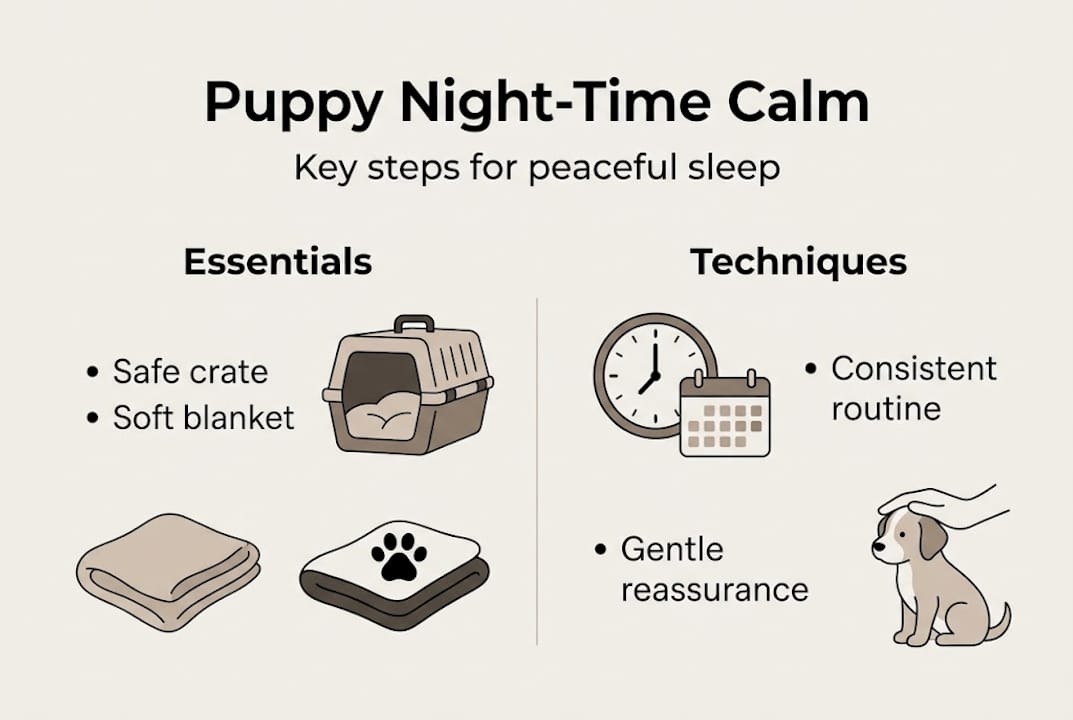
A secure, comfortable sleeping space is essential for reducing puppy distress overnight. Getting this right before your puppy arrives, or before the next night begins, makes a measurable difference.
Here is a quick reference table for the essentials:
| Item | Purpose | Notes |
|---|---|---|
| Crate or pen | Creates a safe, defined space | Should be large enough to stand and turn |
| Soft bed or blanket | Comfort and warmth | Washable materials are practical |
| Water bowl | Prevents thirst-related waking | Spill-proof options work well overnight |
| Comfort item | Reduces separation anxiety | A worn item of your clothing works well |
| Covered crate top | Reduces visual stimulation | A light blanket over three sides helps |
Location is often underestimated. Placing your puppy’s sleeping area in a completely separate part of the house can amplify anxiety. Many owners find that keeping the crate in or near their bedroom for the first week or two helps the puppy settle faster, because it can hear and smell you. Once it is sleeping reliably, you can gradually move the crate to its permanent position.
Temperature matters too. Puppies lose body heat quickly. The sleeping area should be warm but not stuffy, away from draughts, and not directly under air vents.
Key preparation steps:
-
Establish a consistent bedtime routine, including a final toilet trip, a short calm play session, and then quiet time.
-
Place a recently worn item of your clothing in the crate to provide scent reassurance.
-
Avoid making the crate a place of punishment. It should always be associated with safety and rest.
-
Feed the last meal at least two hours before bed to reduce overnight toilet urgency.
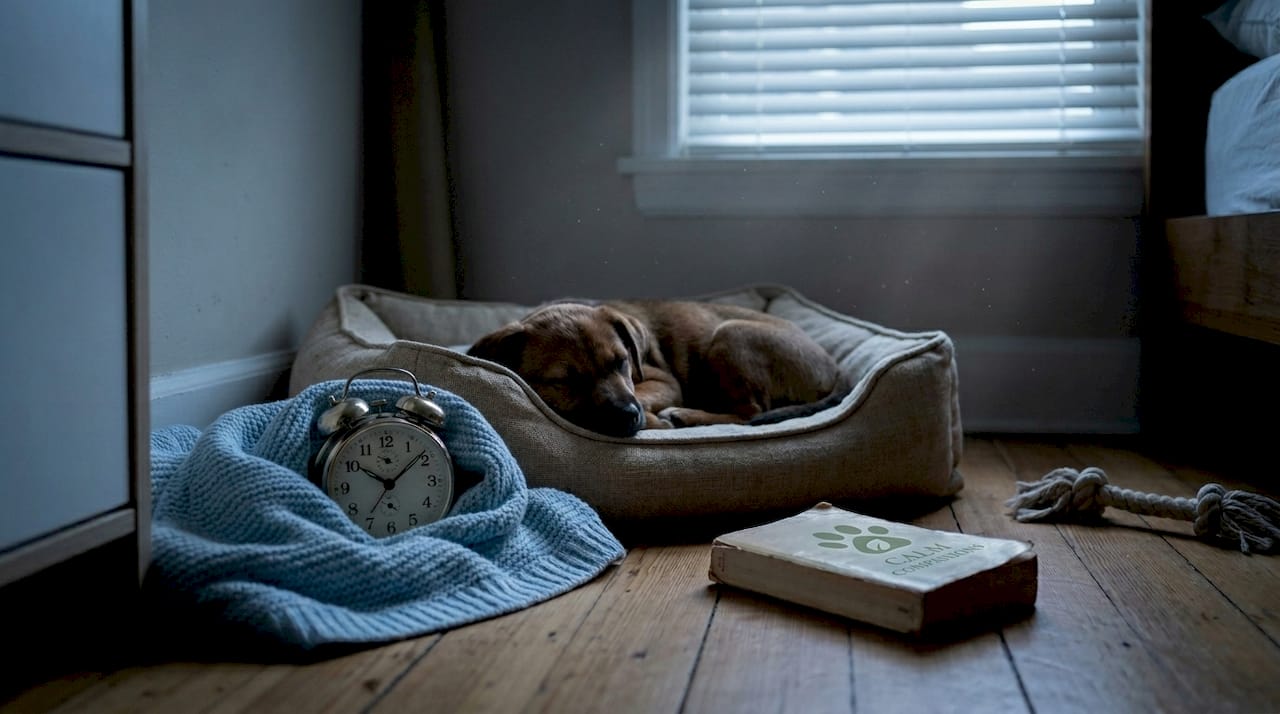
Pro Tip: A ticking clock wrapped in a blanket placed near (not inside) the crate can mimic the sound of a mother’s heartbeat and help a puppy settle more quickly. It sounds simple, but many owners are surprised by how effective it is.
For a broader view of getting your home ready, the puppy transition tips on our blog cover the full first-week setup in detail. You can also explore practical puppy calming steps to build on this foundation.
Step-by-step guide to handling night-time puppy crying
Responding calmly and consistently to night-time crying makes overnight settling faster and less stressful. When the crying starts, follow these steps rather than reacting on instinct.
-
Listen first. Wait 30 to 60 seconds before responding. Sometimes a puppy will resettle on its own. Rushing in immediately can teach it that crying produces instant attention.
-
Assess the cry. Is it urgent and escalating, or intermittent and quietening? This tells you how quickly to act.
-
Check the basics. Does it need to toilet? Is it too cold? Is the water bowl empty? Address the physical need first.
-
Offer calm reassurance. Speak softly, avoid switching on bright lights, and keep interaction minimal. You are there, but it is still night-time.
-
Return to bed. Once the puppy is settled, leave calmly. Prolonged fussing can inadvertently reward the crying.
Two common response approaches are worth comparing:
| Approach | What it involves | Best for |
|---|---|---|
| Direct intervention | Going to the puppy immediately every time | Very young puppies under 10 weeks |
| Gradual independence | Waiting briefly before responding, then reducing visits | Puppies 10 weeks and older |
Neither approach is wrong. The key is consistency. Switching between the two night to night confuses your puppy and slows progress. Settle on one approach and stick with it for at least five nights before judging whether it is working.
Pro Tip: Keep a small torch by your bed rather than turning on overhead lights. Bright light signals daytime to a puppy’s brain and can make resettling much harder.
Building calm early training habits from week one pays dividends well beyond the first few nights. You are not just solving a short-term problem. You are teaching your puppy that night-time is safe and that you are reliably present without being constantly available.
Troubleshooting common mistakes and unexpected issues
Even with the right setup and approach, some puppies take longer to settle. More often than not, the issue comes down to a handful of common mistakes that are easy to correct once you spot them.
The most frequent errors include:
-
Overreacting to every sound: Running in the moment you hear a whimper teaches your puppy that noise equals immediate company. This can extend the settling period significantly.
-
Inconsistent schedules: Feeding, toileting, and bedtime at different times each night removes the predictability that puppies rely on to feel safe.
-
Neglecting physical needs before bed: Skipping the final toilet trip or forgetting water almost guarantees a middle-of-the-night wake-up.
-
Too much stimulation before bed: Energetic play right before sleep winds a puppy up rather than down. A calm 10-minute wind-down period makes a real difference.
Ignoring repeated distress or inconsistent routines prolongs adaptation and may lead to larger behaviour problems down the line. This is worth taking seriously. A puppy that learns it cannot rely on you for comfort may develop anxiety that extends well beyond night-time.
“Consistency is not about being rigid. It is about being predictable enough that your puppy can relax, because it knows what comes next.”
Some crying does signal something more serious. Watch for these signs and contact your vet if you notice them:
-
Crying accompanied by vomiting or diarrhoea
-
Lethargy or refusal to eat during the day
-
Visible discomfort when touched or moved
-
Crying that does not reduce at all after two weeks
Pro Tip: Keep a simple log for the first two weeks. Note the time, duration, and what settled your puppy each night. Patterns often emerge that tell you exactly what the trigger is, and that knowledge is genuinely useful if you need to speak to a vet or trainer.
For deeper guidance on building the trust that underpins good night-time behaviour, the puppy trust and transition resource covers the leadership side of settling in a way that most basic guides skip over.
A fresh perspective on handling night-time puppy crying
Most advice focuses on stopping the crying as quickly as possible. That is understandable. Nobody enjoys broken sleep. But here is something worth sitting with: a puppy that cries and then settles is actually doing something healthy. It is communicating, being heard, and learning that the world is safe.
The owner-puppy bond is built in those quiet, 3am moments when you go to check and your puppy sees your face and relaxes. That is not weakness or bad training. That is trust being deposited, one small interaction at a time.
What most guides miss is that your emotional state matters as much as your technique. A tense, frustrated owner communicates anxiety to a puppy just as clearly as a calm one communicates safety. If you find yourself dreading bedtime, that energy transfers.
For a peaceful puppy start, the most powerful thing you can do is approach each night with patience rather than a strategy to win. The crying will pass. What remains is the relationship you built while it was happening.
Discover Calm-Companions support for puppy night-time settling
Night-time settling is just one part of a bigger picture, and you do not have to figure it out alone. At Calm-Companions, we have put together resources specifically designed for the first week at home, including a free weekly checklist that covers bedtime routines, overnight responses, and daytime habits that make nights calmer.

Our Puppy Calm Support Guide is free to download and gives you a clear, day-by-day structure for the settling-in period. If you want to go further, our puppy essentials guide covers everything from sleeping setup to feeding schedules, and our puppy training help section connects you with practical advice for building confidence and calm from the very first night.
Frequently asked questions
How long does a puppy usually cry at night when settling in?
Puppies may take up to two weeks to adjust to night-time routines, though many settle within a few nights when their environment and routine are consistent. Every puppy is different, so try not to measure yours against an exact timeline.
Should I ignore my puppy’s night-time crying or comfort them?
Consistent, gentle attention builds trust and accelerates adaptation, so ignoring distress entirely is not recommended. A calm, brief check-in is far more effective than either rushing in immediately or leaving your puppy to cry without any response.
What essentials should I have for my puppy’s sleeping area?
Comfort items and secure space are vital to reduce overnight anxiety, so make sure you have a soft bed, a crate or pen, nearby water, and a familiar-scented item before the first night. Getting this right in advance removes a lot of the guesswork.
When does puppy crying indicate a health issue?
Persistent distress with physical symptoms such as vomiting, diarrhoea, or lethargy should be assessed by a vet promptly. If the crying is unusual in character or does not reduce at all after two weeks, professional advice is the right next step.