
TL;DR:
Puppy overexcitement is driven by biological development and environmental triggers, not misbehavior.
Unmanaged excitement can lead to long-term behavioral issues like anxiety and reactivity.
Consistent routines, calm management, and early training foster a confident, well-behaved adult dog.
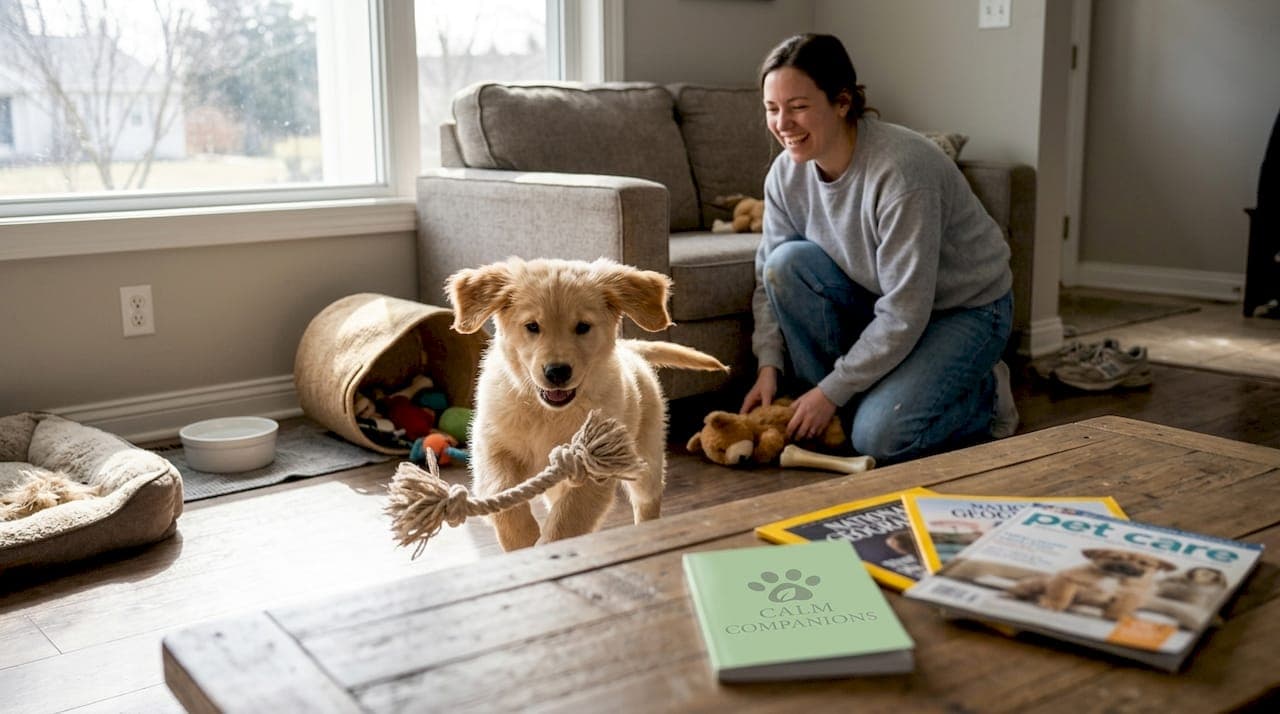
Most new puppy owners see a bouncing, barking, zoomie-sprinting pup and think: this is just what puppies do. And they’re right, to a point. Excitement is a normal part of puppy life. But there’s a widespread and costly assumption that it will simply fade with age. It won’t, not without guidance. Puppy excitement is driven by real developmental forces, and if left unmanaged, it can quietly grow into habits that are far harder to shift later. This guide explains why excitement happens, what’s at stake if you ignore it, and exactly what you can do about it starting this week.
Table of Contents
Key Takeaways
| Point | Details |
|---|---|
| Early action pays off | Managing excitement from the start prevents unwanted behaviours and eases training for life. |
| Unmanaged excitement has risks | Failure to guide excitable puppies can lead to stress, accidents, and future behavioural issues. |
| Simple routines help | Step-by-step actions at home make calming your puppy easy, even for first-time owners. |
| Support is available | Expert advice and resources can give you and your puppy the best possible start together. |
Understanding why puppies get overexcited
Before you can manage something, you need to understand it. Puppy overexcitement isn’t misbehaviour. It’s biology. During the first few months of life, a puppy’s brain is developing at a remarkable pace. Neural pathways are forming, hormones are surging, and the nervous system is still learning how to regulate itself. The result is a creature with enormous energy, very little impulse control, and an intense curiosity about everything.
Puppy behaviour management experts note that excitement is often a result of developmental changes and environmental stimulation. In other words, your puppy isn’t being naughty. They’re being a puppy. But understanding the triggers helps you respond more effectively.
Common triggers for over excitement include:
-
New environments: Everything is unfamiliar, which sends the brain into high alert.
-
Meeting people: Social interaction floods a puppy with stimulation.
-
Unfamiliar sounds: Doorbells, traffic, and other noises can spike arousal instantly.
-
Playtime: Rough-and-tumble play can escalate quickly without clear boundaries.
-
Feeding time: Anticipation of food is one of the most reliable excitement triggers.
Excitement also plays a genuine role in healthy development. It drives socialisation, helps puppies bond with their family, and motivates them to explore and learn. The goal is never to eliminate excitement but to help your puppy experience it without losing control.
Here’s a quick look at how puppy development affects excitement levels across the early weeks:
| Age | Brain development stage | Typical excitement level |
|---|---|---|
| 8 to 10 weeks | Rapid sensory growth | Very high |
| 10 to 12 weeks | Social bonding phase | High, with brief calm periods |
| 12 to 16 weeks | Impulse control emerging | Moderate, more manageable |
| 4 to 6 months | Adolescent energy surge | High again, testing boundaries |
With early puppy training introduced during these windows, you can shape how your puppy responds to stimulation before habits become entrenched.
Risks of unmanaged excitement in puppies
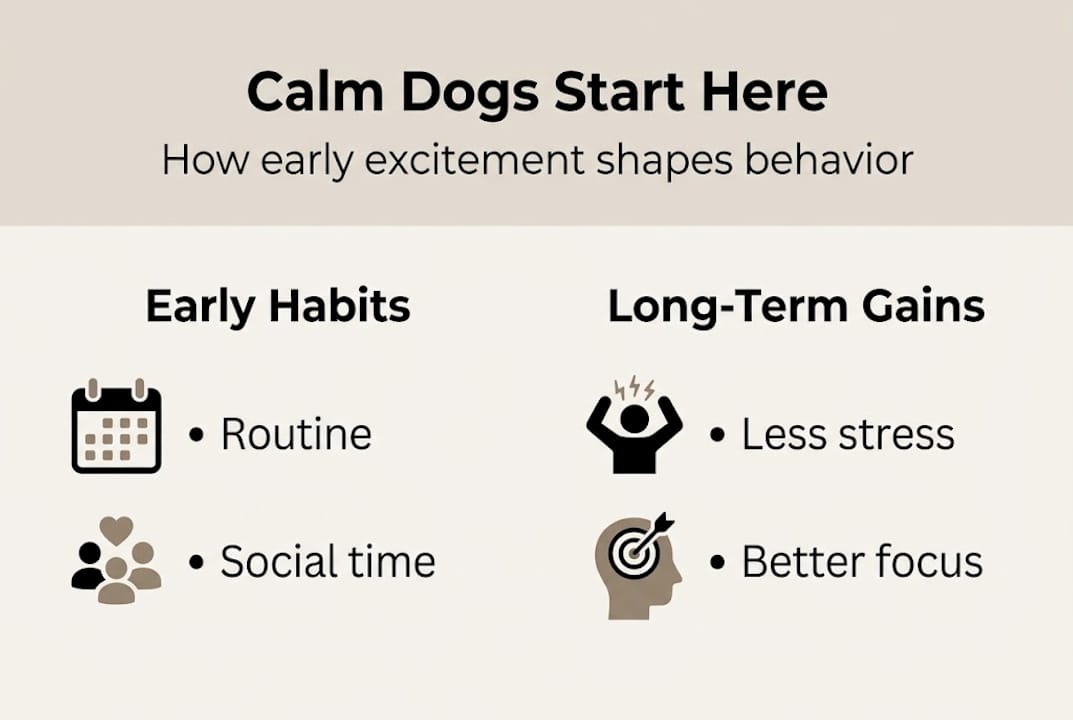
Once you understand why puppies get overexcited, it’s vital to recognise what’s at stake if this behaviour goes unmanaged. The short-term issues are frustrating enough: jumping up at guests, nipping hands during play, toileting accidents triggered by over-arousal, and general chaos at mealtimes. These feel manageable when your puppy is eight weeks old and weighs two kilograms. They feel very different at six months.
The longer-term risks are more serious. Puppy behavioural red flags research shows that unchecked excitement can develop into biting, persistent barking, or anxiety. A puppy who was never taught to settle may become a dog who cannot tolerate being alone, who reacts aggressively to visitors, or who destroys furniture when bored. These aren’t character flaws. They’re the predictable outcome of missed early management.
Statistic to consider: A significant proportion of dogs surrendered to rescue centres each year display behaviour problems that owners trace back to the puppy stage, including hyperactivity, reactivity, and poor impulse control.
Here’s how the two paths compare:
| Managed puppy | Unmanaged puppy |
|---|---|
| Learns to greet calmly | Jumps and nips at visitors |
| Settles in crate or bed | Cannot relax without stimulation |
| Responds to basic commands | Ignores cues when aroused |
| Grows into a confident adult | May develop anxiety or reactivity |
| Easier to train as they mature | Requires intensive remedial work |
If excitement is left unchecked, the consequences tend to follow a clear sequence:
-
Reinforced habits: Every time excitement is rewarded with attention, even negative attention, the behaviour strengthens.
-
Escalating intensity: Without boundaries, arousal levels increase over time, making calm harder to achieve.
-
Entrenched patterns: By adolescence, the behaviour is deeply wired and far more resistant to change.
The window between eight and sixteen weeks is genuinely critical. Acting during this period is not about being strict. It’s about being kind to your future self and your dog.
How managing excitement shapes behaviour and learning
With the risks clear, let’s see how hands-on management of excitement actually benefits you and your puppy. The effects are immediate and cumulative. When you begin guiding your puppy’s arousal levels from day one, daily life becomes noticeably calmer. Mealtimes are quieter. Training sessions are more productive. Visitors don’t dread coming over.
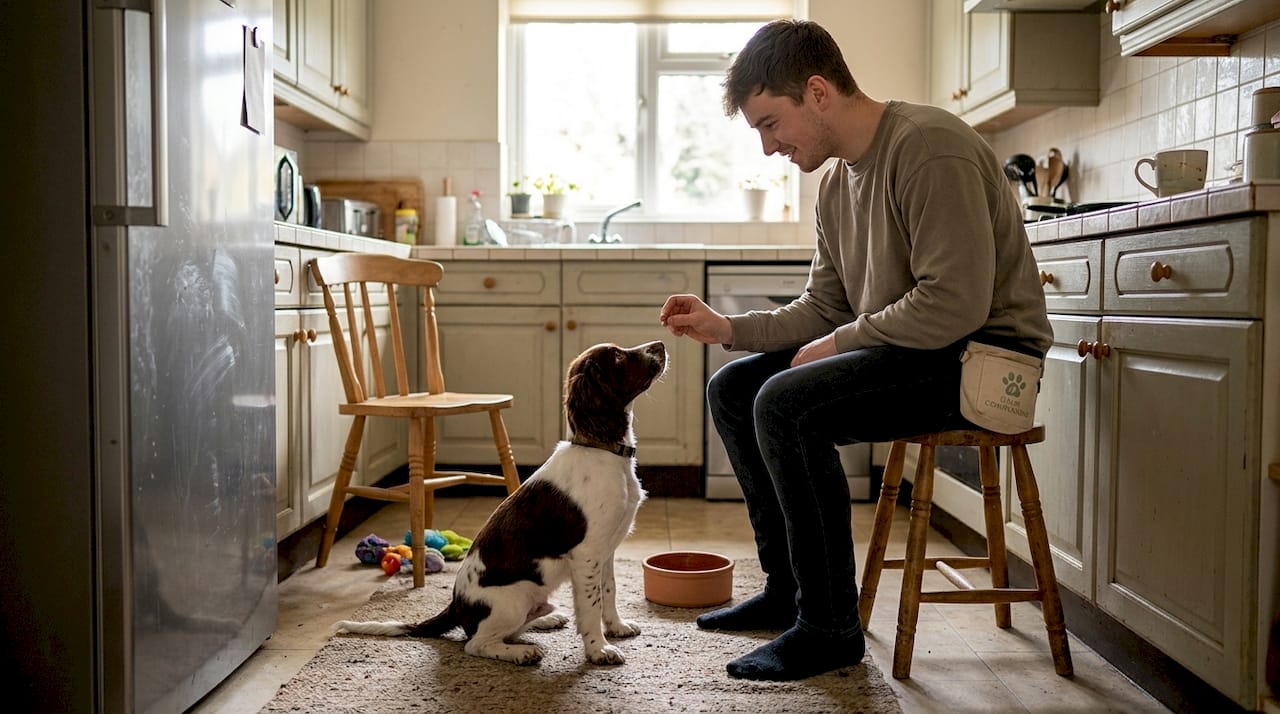
Early puppy training evidence shows that positive behaviour management leads to confident, calm adult dogs. That’s not a vague promise. It reflects what happens neurologically when puppies are consistently guided: they learn that calm behaviour gets rewarded, and they seek that state more readily over time.
The social benefits alone are worth the effort:
-
Safer interactions with children: A puppy who doesn’t jump or nip is far less likely to accidentally hurt a small child.
-
Better relationships with other dogs: Calm puppies read social cues more accurately and are less likely to provoke conflict.
-
Easier vet and grooming visits: A dog who can settle on command is a joy to handle in professional settings.
-
More freedom over time: A well-managed puppy earns more off-lead time, more social outings, and more trust.
Understanding puppy social cues also helps you spot when excitement is tipping into something more problematic. Watch for whale eye (showing the whites of the eyes), stiff posture, or a high rigid tail. These signals suggest your puppy is moving from playful excitement into over-arousal, and that’s your cue to intervene before things escalate.
Pro Tip: If your puppy’s excitement regularly tips into snapping, frantic circling, or inability to respond to their name, it’s time to reassess your routine. A stress-free puppy transition begins with predictable structure, not just correction in the moment.
Practical strategies to manage puppy excitement at home
Now for the most important part: what you can do, starting today, to guide your puppy’s excitement in positive directions. Simple techniques for calming a new puppy can help puppies settle quickly and reduce overexcitement, and you don’t need professional equipment or hours of free time to use them.
Follow this step-by-step approach:
-
Establish a consistent daily routine. Feed, walk, train, and rest at the same times each day. Predictability reduces anxiety and lowers baseline arousal.
-
Create a designated calm zone. A crate, pen, or quiet corner gives your puppy a place to decompress. Introduce it positively with treats and comfort items.
-
Practise calm greetings. Ask visitors to ignore your puppy until all four paws are on the floor. Reward that calm behaviour immediately.
-
Use short, frequent training sessions. Five minutes of focused training three times a day is more effective than one long session and keeps arousal manageable.
-
Redirect rather than react. When your puppy gets overexcited, calmly offer a chew toy or lead them to their calm zone. Avoid shouting, which adds to the arousal.
“The puppy who learns to settle today is the dog who walks calmly beside you tomorrow. Calm is a skill, and like any skill, it needs to be taught.”
Pro Tip: One of the most common mistakes owners make is giving attention during excitement. Even eye contact or a firm “no” can reinforce the behaviour. Turn away, wait for calm, then reward. It feels counterintuitive, but it works.
For busy days when structured training isn’t possible, keep these quick wins in your back pocket:
-
Scatter a handful of kibble on the lawn for slow sniffing (mentally tiring and naturally calming).
-
Use a lick mat with peanut butter or wet food to occupy and soothe.
-
Play gentle, low-arousal games like hide-and-seek with treats rather than high-energy chase.
-
Keep greetings brief and boring when you arrive home.
For more detailed guidance on practical steps to calm a new puppy, including night routines and settling techniques, there’s a wealth of structured support available to help you through the first weeks.
A fresh perspective: why ‘cute chaos’ now means trouble later
Here’s something we see repeatedly at Calm-Companions: owners who laughed off their puppy’s wild behaviour in week one are often the same owners desperately seeking help in month six. The chaos that seemed endearing at eight weeks feels very different when it’s attached to a 20-kilogram adolescent dog who won’t stop jumping at strangers.
The conventional wisdom is that puppies grow out of it. Some do, slightly. But the ones who genuinely settle into calm, well-adjusted adults almost always had owners who took early management seriously. Not harshly. Not rigidly. But consistently.
Dismissing excitable behaviour as “just being a puppy” misses a narrow and genuinely precious window. The essential guide to puppy behaviour is clear on this: early patterns shape adult temperament far more than most owners realise. Every time you reward calm, you’re building a dog. Every time you inadvertently reward chaos, you’re building that too. The choice, right now, is yours.
Get hands-on support for a calmer, happier puppy
If reading this has made you realise your puppy needs more structured support, you’re in exactly the right place. Managing excitement is one of the most impactful things you can do in those first weeks, and you don’t have to figure it out alone.
Get your free puppy calm Guide from Calm-Companions, designed specifically for the first week at home. It covers daily routines, settling techniques, and behaviour management in a simple, actionable format. For owners who want to go further, our puppy behavioural solutions section offers targeted advice for common challenges. And if you feel your puppy’s excitement is beyond typical, personalised training help is available to guide you with expert support tailored to your situation.
Frequently asked questions
What is the ideal age to start managing a puppy’s excitement?
Start as soon as you bring your puppy home, ideally from eight weeks onwards. Early management builds confidence and calmness before habits have a chance to take hold.
Can unmanaged excitement lead to behavioural problems?
Yes. Without proper guidance, overexcitement can escalate into biting, barking, anxiety and other persistent issues that become much harder to address in adolescence.
Is excitement always a bad sign in puppies?
Not at all. Some excitement is healthy and entirely normal. The key is balance: excitement must be guided with calm routines so it doesn’t become the puppy’s default state.
What are simple techniques to calm a puppy quickly?
Try calm greetings, redirecting with a chew toy, or guiding your puppy to a quiet space. Simple calming methods like lick mats and sniff games are especially effective for rapid settling.