
TL;DR:
Creating a structured routine helps reduce puppy stress and promotes healthy habits.
Early socialisation and training establish positive behaviors and confidence for lifelong well-being.
Consistency, patience, and support are key to navigating challenges in puppy ownership.
Bringing a new puppy home is one of the most exciting things you can do, but within 48 hours many owners find themselves exhausted, confused, and quietly wondering what they have got themselves into. The whining, the biting, the accidents on the carpet, the 3am wake-up calls. None of it means you are doing it wrong. It means you have a normal puppy. The good news is that with the right structure, a little patience, and a clear plan, the chaos settles faster than you think. This guide walks you through every key area of puppy behaviour management, from daily routines and toilet training to socialisation and handling the tough emotional days in between.
Table of Contents
Key Takeaways
| Point | Details |
|---|---|
| Structure sets the tone | A predictable routine is the foundation for calmer puppy behaviour and reduces owner stress. |
| Positive reinforcement always wins | Reward good behaviours with praise and treats, never punish mistakes as it causes fear. |
| Tired puppies behave better | Frequent naps and adequate play prevent overtiredness and reduction in nipping or chaos. |
| Socialisation shapes the future | Early gentle socialisation between 3–16 weeks lays the groundwork for confidence and calm. |
| Consistency brings results | Patience, support, and sticking to new habits make even rocky puppy periods easier to manage. |
Set up for success: daily routines and environment
With the challenges acknowledged, let us begin with the essential preparations every new owner should make. The single most powerful thing you can do in week one is create structure. All new puppies experience stress when leaving their litter, and a predictable routine is the fastest way to reduce that anxiety for both of you.
A good daily routine covers four pillars: feeding, toilet breaks, play, and rest. Puppies need feeding three times a day, toilet breaks every two to four hours, short bursts of play, and a surprising amount of sleep. In fact, most puppies need 16 to 18 hours of sleep per day, which means a lot of your job is simply protecting their rest time.
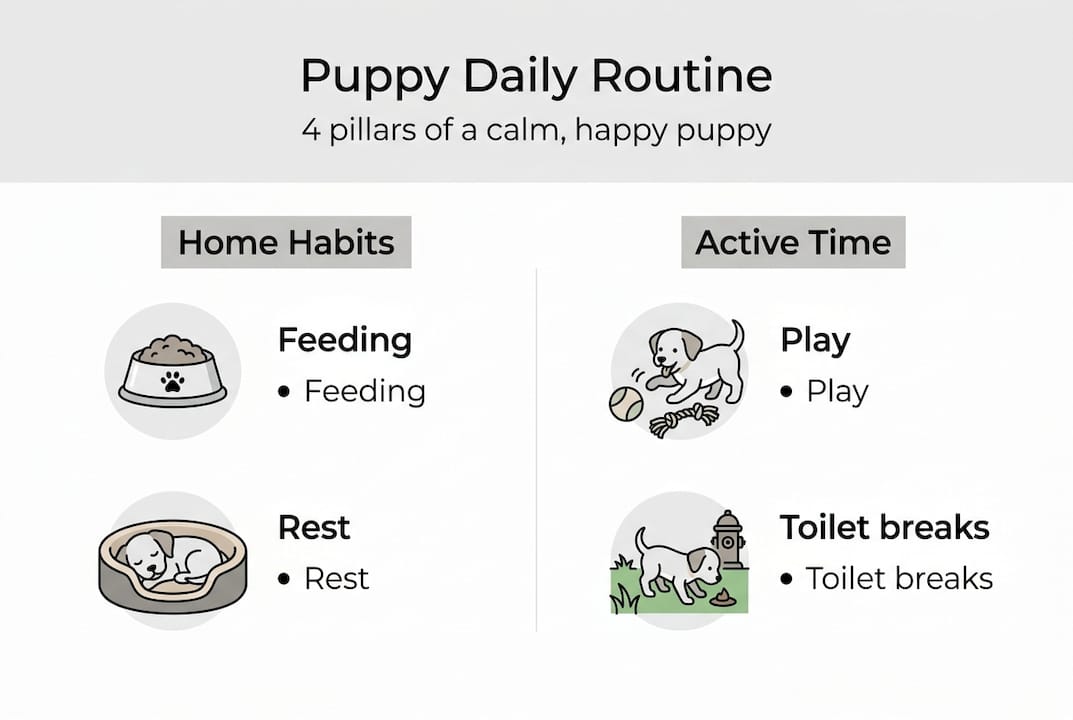
Here is a simple sample daily schedule to get you started:
| Time | Activity |
|---|---|
| 7:00am | Wake up, immediate toilet break |
| 7:30am | Breakfast |
| 8:00am | Short play session (10 mins) |
| 8:30am | Nap time |
| 11:00am | Toilet break, gentle exploration |
| 12:00pm | Lunch |
| 12:30pm | Nap time |
| 3:00pm | Toilet break, play session |
| 5:30pm | Dinner |
| 6:00pm | Calm activity, toilet break |
| 10:00pm | Final toilet break, bed |
Before your puppy even arrives, take time to puppy-proof your space. Block off cables, remove toxic plants, and secure anything chewable at floor level. Our puppy transition tips cover the full environmental checklist in detail.
Key things to prepare before day one:
-
A crate or playpen in a quiet corner
-
Baby gates to limit access to one or two rooms
-
Non-slip bedding and a worn item of your clothing for comfort
-
A consistent feeding spot away from foot traffic
For puppy night settling, keep the sleep area close to you initially and reduce stimulation in the hour before bed.
Pro Tip: When introducing your puppy to your home, confine them to one room for the first few days. A smaller space feels safer and reduces overwhelm, which means less whining and faster settling.
Master the basics: potty and crate training
After creating routines and a safe environment, the next challenge is teaching key life skills. Potty training and crate training are the two foundations that everything else builds on, and getting them right early saves enormous frustration later.
For potty training, follow these steps:
-
Take your puppy outside every two to four hours, after every meal, after every nap, and after every play session.
-
Choose one consistent toilet spot in the garden and always go there first.
-
Wait quietly. Do not chat or play until they have done their business.
-
The moment they finish, reward immediately with calm praise and a small treat.
-
If an accident happens indoors, clean it thoroughly with an enzyme cleaner and say nothing to your puppy.
Never scold for accidents. Punishment creates fear around toileting, which makes the problem worse, not better.
Patience is not passive. Every calm response to an accident is an active investment in your puppy’s confidence and your long-term relationship.
For crate training, the goal is to make the crate feel like a den, not a prison. Introduce it gradually with treats and meals inside before ever closing the door. Since puppies sleep 16 to 20 hours per day, the crate quickly becomes associated with rest and safety.
| Feature | Crate | Playpen |
|---|---|---|
| Best for | Sleep, alone time training | Supervised play, wider space |
| Size | Just big enough to stand and turn | Larger, flexible area |
| Ideal age | From day one | From day one |
| Prevents accidents | Yes, when sized correctly | Less effective |
For more on building calm confidence from the start, our early puppy training tips walk through week one in detail. The RSPCA also offers excellent guidance on positive toilet training if you want further reassurance.
Tackle biting, chewing, and playful chaos
With toilet and crate habits building, it is time to focus on managing energetic behaviours and setting boundaries. Biting is the behaviour that surprises new owners most. It feels aggressive, but it is almost always normal puppy communication and play. Your job is not to stop it entirely but to teach your puppy how hard is too hard.
This is called bite inhibition, and here is how to build it:
-
When your puppy bites too hard, yelp loudly and end play immediately by turning away or standing up.
-
Wait 30 seconds, then calmly re-engage.
-
If biting continues, use a short time-out in the crate (one to two minutes only).
-
Always redirect to an appropriate chew toy before re-engaging.
-
Enrol in a puppy class so your dog can also learn bite inhibition from other puppies.
-
Never use your hands as toys, as this teaches puppies that skin is fair game.
Chewing is a separate issue driven by teething and curiosity. The solution is not to punish but to puppy-proof your home and provide better alternatives. Bully sticks, rubber chew toys, and frozen treat toys are all excellent options. Supervision indoors, or using a light lead attached to you, prevents destructive chewing before it becomes a habit.
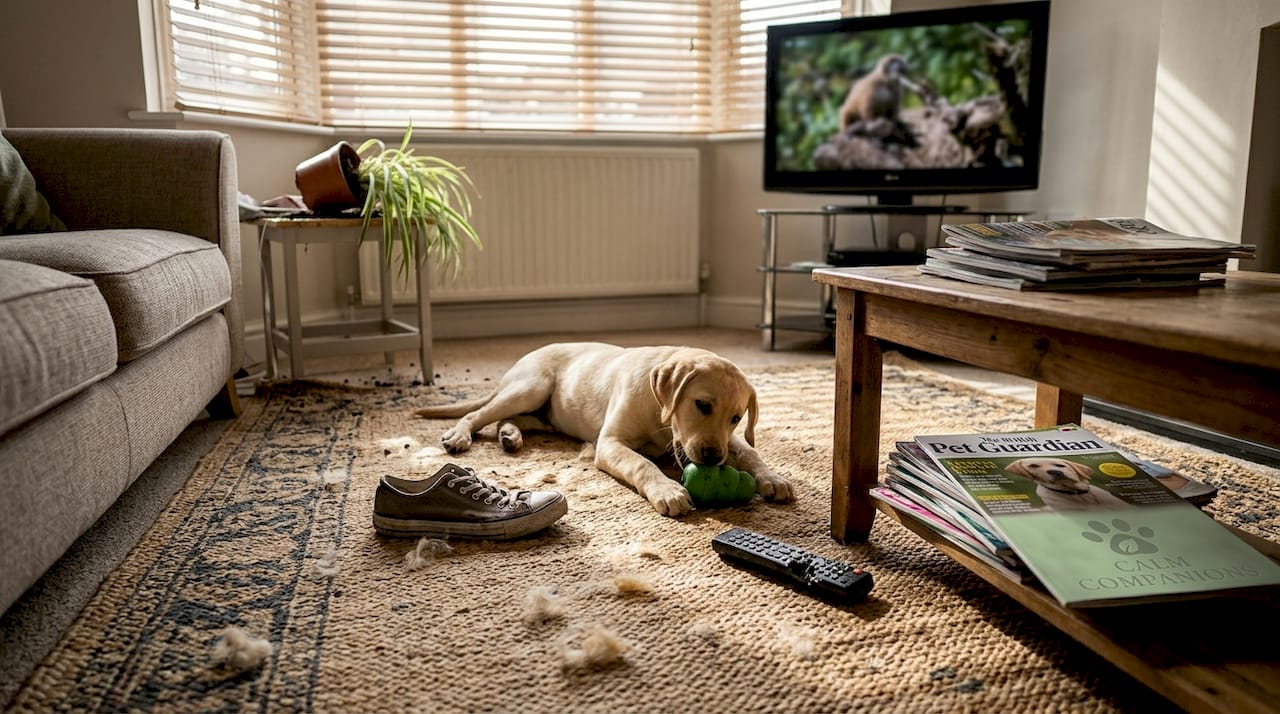
For broader guidance on reading your puppy’s body language and pack behaviour, our puppy pack training resource is worth bookmarking.
Pro Tip: Overtired puppies bite significantly more. If your puppy goes into a biting frenzy in the late afternoon or evening, the answer is usually a nap, not more training. Build enforced rest into your daily schedule and watch the biting reduce.
Socialisation and building positive habits
Understanding energetic behaviours, owners must also begin careful socialisation within the best developmental window. This is arguably the most time-sensitive part of raising a well-adjusted dog, and many owners miss it simply because they are not aware it exists.
The critical socialisation window runs from 3 to 16 weeks old. During this period, positive exposures to people, sounds, surfaces, and environments shape your puppy’s emotional responses for life. Miss this window and you face a much harder road building confidence later.
Stat to know: Up to 65% of a dog’s adult behaviour is shaped by early environmental experience, making these first weeks genuinely irreplaceable.
Here is a practical socialisation process:
-
Start with low-intensity exposures: different floor surfaces, gentle household sounds, calm visitors.
-
Introduce new people one or two at a time, letting the puppy approach rather than forcing contact.
-
Take short outings to quiet streets, parks, and car journeys before full vaccination if carried safely.
-
Enrol in a reputable puppy class where controlled interaction with other dogs is supervised.
-
Watch your puppy’s body language. Yawning, lip-licking, and turning away are stress signals. Back off and try again another day.
Socialisation is not about flooding your puppy with experiences. It is about building a positive association with novelty. Slow and steady wins here. For a week-by-week breakdown, our guide on week 1 puppy socialisation is a helpful companion resource.
Common challenges and staying the course
After mastering routines and socialisation, even the best plans encounter hurdles. Knowing what to expect makes those hurdles far less demoralising.
Typical roadblocks many owners face include:
-
The puppy blues: Feeling regret, exhaustion, or anxiety in the first weeks is extremely common. It does not mean you made a mistake.
-
Regression: A puppy who was doing brilliantly with toileting or sleeping may suddenly go backwards. This is normal, especially during growth spurts.
-
Adolescence: Between six and eighteen months, many dogs test boundaries again. Expect it rather than being blindsided by it.
-
Inconsistency fatigue: When you are tired, rules slip. This is where setbacks most often occur.
The most important thing you can do is maintain consistency even when progress feels invisible. Supervision for the first six months is essential. Whether your puppy is crated, tethered to you, or in a safely enclosed outdoor space, keeping a close eye prevents bad habits from forming in the first place.
Progress with puppies is rarely linear. Two steps forward and one step back is still forward.
If you are struggling emotionally, reach out. Online communities, local puppy classes, and resources like our puppy transition advice can make a real difference. You can also find practical tools for calming a new puppy when stress peaks. The RSPCA also has useful guidance on navigating puppy adolescence when that phase arrives.
A fresh perspective on settling in with your puppy
Having covered the core strategies and common challenges, let us rethink what real success with a puppy actually looks like. Most advice, including the kind you have just read, presents puppyhood as a problem to be solved with the right system. And while structure genuinely helps, rigid adherence to a perfect schedule can become its own source of stress.
The truth is that every puppy is different. Some settle in three days. Others take three months. Neither is a reflection of your skill as an owner. What matters far more than following a textbook routine is your ability to adapt, reset, and keep showing up calmly after a hard day.
Owning your mistakes openly, rather than spiralling into guilt, is one of the most underrated skills in puppy raising. You will have bad days. You will raise your voice. You will skip a training session. None of it is catastrophic. What counts is what you do next.
Pro Tip: Keep a brief daily note of one challenge and one win. After two weeks, patterns emerge that tell you far more about your puppy than any generic guide can. It also reminds you how far you have both come.
If you notice anything that feels beyond normal puppy behaviour, our guide to puppy behavioural red flags helps you identify when to seek professional support.
Practical support for calmer puppy days
For those needing a little extra support or structure on their journey, dedicated resources are available. Managing a puppy’s behaviour is far easier when you have a clear plan to follow rather than piecing advice together from multiple sources.
At Calm-Companions, we have put together a free weekly checklist designed specifically for new puppy owners navigating that critical first week. It covers daily routines, night settling, and behaviour management in one simple, printable format. You can access the puppy calm support checklist directly from our homepage. If you need more tailored guidance, our puppy training help resources go deeper into specific challenges. You do not have to figure this out alone.
Frequently asked questions
How do I cope if my puppy refuses to sleep through the night?
Ensure your puppy’s day includes enough active play, enforced naps, and a calm wind-down before bed. Since puppies need 16 to 20 hours of sleep daily, a structured daytime routine usually resolves night waking within one to two weeks.
Why does my puppy bite more in the evenings?
Evening biting is almost always a sign of overtiredness rather than aggression. Build a scheduled nap into the late afternoon, redirect biting to toys, and avoid high-energy play in the hour before bed. Overtired puppies bite more, so enforcing rest is the most effective solution.
When should I start socialising my puppy?
Begin as early as possible, ideally from three weeks old with gentle home-based exposures. The critical socialisation window runs to 16 weeks, so positive introductions to people, sounds, and environments during this time have a lasting impact on adult behaviour.
Is it normal to feel overwhelmed in the first weeks with a puppy?
Absolutely. The so-called ‘puppy blues’ affect a significant number of new owners and are nothing to be ashamed of. Consistent routines and support make the adjustment easier, and the intensity almost always eases within the first month.