
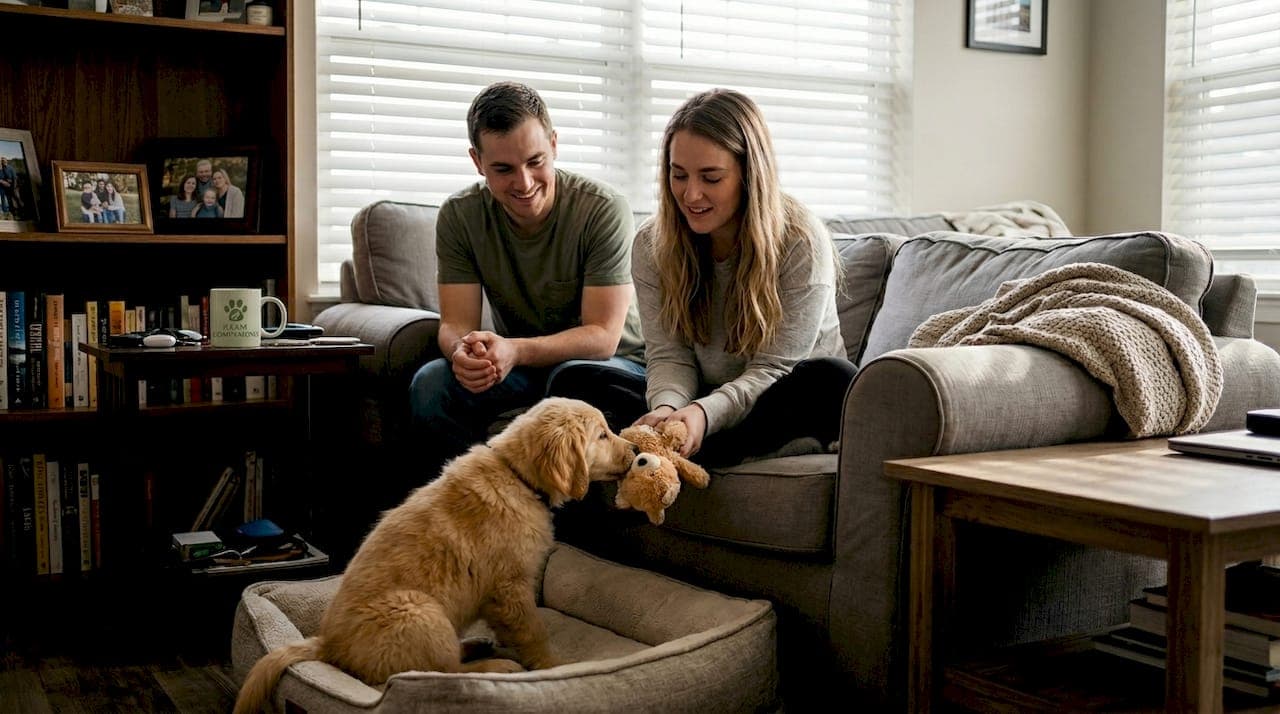
Many new puppy owners arrive home convinced they need to be firm, strict, and in charge from the very first moment. The pressure to "establish dominance" is everywhere, yet this approach often backfires, creating anxious, over-aroused puppies rather than calm, settled ones. Calm leadership is built on energy and supportive structure, not dominance or control. When you lead with composure and clear routines, your puppy learns to trust you rather than test you. This article walks you through what calm leadership genuinely means, why it works so well in those crucial early weeks, and exactly how to put it into practice every single day.
Table of Contents
- Understanding calm leadership: The basics and the myths
- How calm leadership shapes your puppy's behaviour
- Core techniques: Putting calm leadership into daily practice
- Common mistakes and troubleshooting calm leadership
- Why calm leadership isn't just a trend – it changes everything
- Ready for calmer days with your puppy?
- Frequently asked questions
Key Takeaways
| Point | Details |
|---|---|
| Not dominance focused | Calm leadership is about guidance and energy, not asserting dominance over your puppy. |
| Routine matters most | Consistent routines help puppies feel safe, reduce anxiety, and guide better behaviour. |
| Positive methods work | Supportive, calm training leads to easier transitions and improved trainability for life. |
| Address mistakes early | Common missteps—like inconsistent responses—are easy to fix with a reset and consistent cues. |
Understanding calm leadership: The basics and the myths
Calm leadership is not about being passive or letting your puppy do whatever it likes. It is about managing your own energy first, so your puppy can take cues from you rather than from its own anxiety. Before you enforce a rule or redirect a behaviour, your state of mind matters enormously. Puppies are incredibly sensitive to emotional signals, and a tense, reactive owner almost always produces a tense, reactive puppy.
One of the biggest myths new owners encounter is the idea that being a good leader means being "alpha." This concept has been widely misunderstood. True leadership in the context of pack behaviour in puppies is not about physical dominance or harsh corrections. It is about being a calm, reliable presence that your puppy can orient towards when the world feels overwhelming.
This approach draws directly from Cesar Millan's calm-assertive energy, which emphasises the quality of your energy over the forcefulness of your commands. The goal is to be steady, not loud.
Here is what calm leadership actually looks like in practice:
- Consistent routines that your puppy can predict and rely on
- Clear, quiet cues rather than repeated shouting or frustrated corrections
- Structured management of the environment, such as using baby gates and crates, so your puppy cannot rehearse unwanted behaviours
- Calm re-direction when things go wrong, without drama or punishment
"True leadership means guiding your dog with confidence and kindness, not fear or force." This is the foundation of supportive structure in dog training.
The benefits of this approach are immediate and measurable. Puppies raised with calm leadership show reduced arousal levels, less separation anxiety, and faster bonding with their owners. They learn that their environment is predictable, and that you are someone worth paying attention to.
How calm leadership shapes your puppy's behaviour
With an understanding of what calm leadership actually involves, it is vital to see how it tangibly changes your puppy's responses and emotions. The science here is genuinely encouraging.
Early cognitive experiences and positive methods significantly increase a puppy's trainability as an adult dog. This means the habits and emotional patterns you establish in the first weeks are not just helpful now. They shape who your dog becomes for the next decade or more.
Calm leadership reduces over-arousal, which is one of the most common problems new owners face. An over-aroused puppy bites harder, barks more, struggles to settle, and finds it nearly impossible to learn. By keeping your own energy measured and your routines predictable, you lower the overall arousal level in your home.
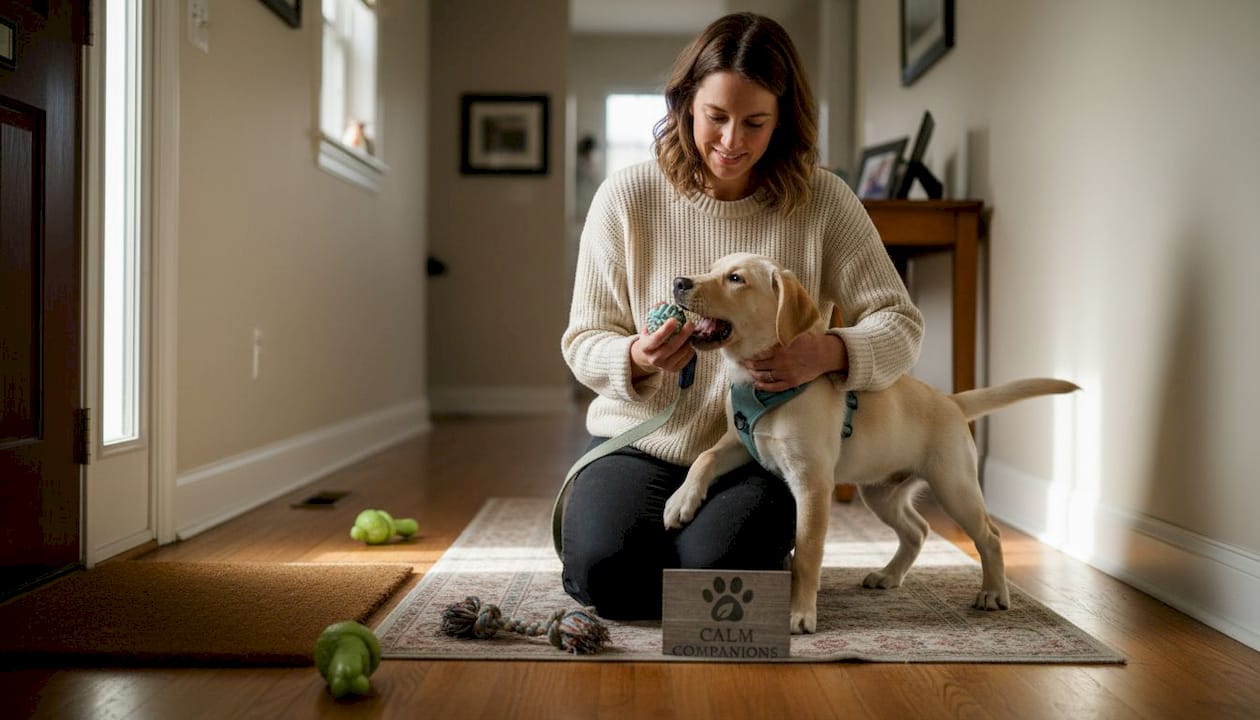
Here is a quick comparison of outcomes based on leadership style:
| Leadership approach | Puppy arousal level | Trainability | Bonding speed |
|---|---|---|---|
| Reactive and inconsistent | High | Low | Slow |
| Overly strict and punitive | Moderate to high | Variable | Slow |
| Calm and structured | Low to moderate | High | Fast |
Structured routines are particularly powerful in the early days. When a puppy knows when it will eat, sleep, play, and toilet, its nervous system can genuinely relax. Uncertainty is stressful for puppies, just as it is for people.
The benefits of calm leadership on behaviour include:
- Faster house training because routines create predictable toilet opportunities
- Reduced night-time distress as the puppy learns what to expect from the environment
- Improved focus during training because arousal is managed before sessions begin
- Fewer destructive behaviours linked to anxiety and boredom
For practical guidance on stress-free puppy transitions, the first week is the most critical window to establish these patterns. Getting it right early pays dividends for years.
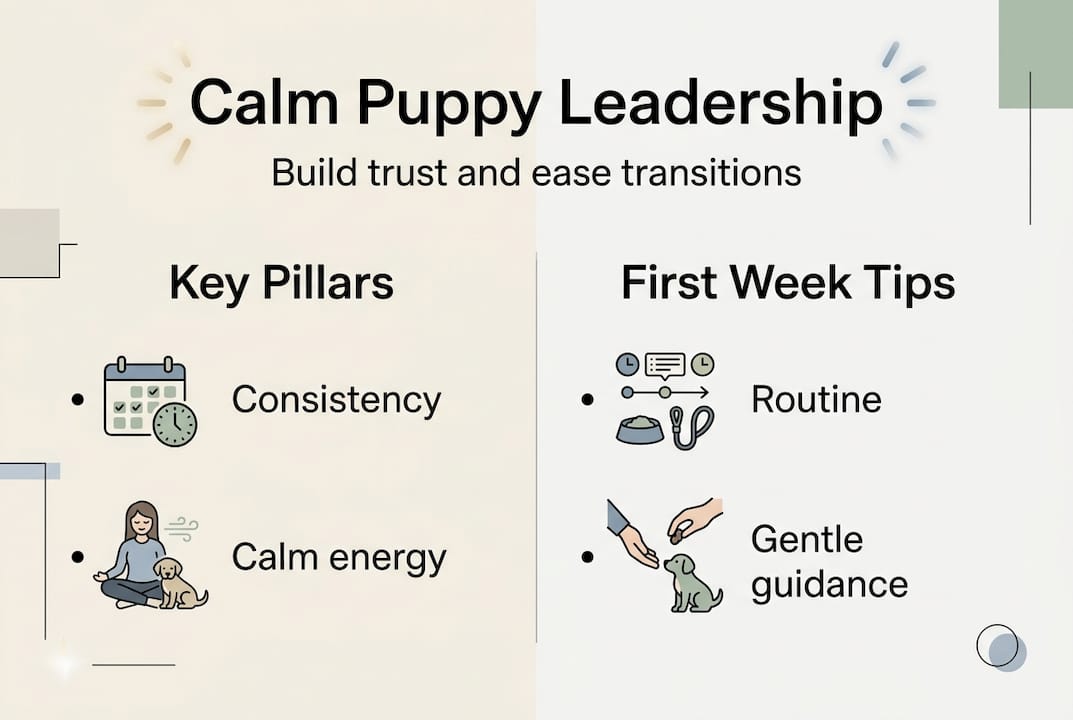
Key insight: Puppies do not misbehave out of spite. They misbehave because they are over-stimulated, under-structured, or unclear about what is expected. Calm leadership addresses all three of these root causes at once.
Core techniques: Putting calm leadership into daily practice
Seeing the power of calm leadership on behaviour, it is natural to ask how you can put these concepts into action each day. The good news is that the techniques are straightforward, even if they take some practice to make habitual.
Exercise, discipline, and affection in this order creates the structure and trust your puppy needs to feel settled. This sequence matters. A puppy that has not had sufficient physical and mental exercise will struggle to absorb training or settle calmly.
Here is a simple daily framework to follow:
- Morning routine: Short walk or play session to discharge energy before feeding. This sets a calm tone for the day.
- Feeding schedule: Feed at the same times each day. Make your puppy sit or wait briefly before the bowl goes down. This is a gentle, daily leadership moment.
- Training windows: Keep sessions to five minutes, two or three times a day. Short, focused, and always ending on a success.
- Structured rest: Use a crate or designated bed to encourage rest after activity. Puppies need far more sleep than most owners realise, around 16 to 18 hours per day.
- Evening wind-down: Reduce stimulation an hour before bed. Calm interaction, gentle stroking, and quiet signals to the puppy that the day is ending.
Reading your puppy's energy is a skill worth developing early. Before a training session or a new experience, notice whether your puppy is calm and attentive or bouncing and distracted. If it is the latter, a short walk or a few minutes of sniff-based activity will bring arousal down before you begin.
For a detailed guide on introducing your puppy home, the first days set the tone for everything that follows.
Pro Tip: Consistency is the single most powerful tool you have. Puppies do not need perfection from you. They need predictability. If your response to a behaviour changes from day to day, your puppy cannot learn what is expected.
Common mistakes and troubleshooting calm leadership
Of course, adopting a calm leadership style comes with its own set of challenges, especially in the excitement of puppyhood. Knowing the common pitfalls helps you avoid them before they become habits.
Mistake 1: Confusing calm leadership with leniency. Calm does not mean permissive. Your puppy still needs clear boundaries and consistent structure. Allowing jumping, nipping, or demand barking because you do not want to seem harsh is not calm leadership. It is the absence of leadership, and it creates confusion.
Mistake 2: Reacting emotionally to misbehaviour. When a puppy chews something it should not, the temptation is to react with frustration. That emotional spike is actually a form of reinforcement for some puppies, who find any attention rewarding. Supportive structure prevents over-arousal and reduces the frequency of these moments in the first place.
Mistake 3: Inconsistency between household members. If one person allows the puppy on the sofa and another does not, the puppy is not being naughty when it jumps up. It is simply confused. Align your household before the puppy arrives.
Here is a quick comparison of common missteps and their calm leadership alternatives:
| Common mistake | Calm leadership alternative |
|---|---|
| Shouting "no" repeatedly | Quietly redirect to an acceptable behaviour |
| Punishing after the fact | Manage the environment to prevent the behaviour |
| Ignoring over-excitement | Reset energy with a short walk before engaging |
| Inconsistent rules | Agree household rules before the puppy arrives |
Quick fixes when things go off track:
- Reset the energy: Step outside for two minutes. A brief change of scene works for both of you.
- Return to basics: Go back to a cue your puppy knows well and reward it. This rebuilds confidence and focus.
- Lower stimulation: Remove toys, reduce noise, and give your puppy a chance to settle before trying again.
For more calm leadership strategies that fit into real daily life, small adjustments consistently applied make the biggest difference.
Pro Tip: It is not just what you do, it is the energy you bring to it. A calm body, slow movements, and a quiet voice communicate safety to your puppy far more effectively than any command ever will.
Why calm leadership isn't just a trend – it changes everything
After working through the practicalities, there is something worth saying that most puppy guides leave out. Calm leadership is not a technique you apply to your puppy. It is a shift in how you show up as an owner.
Many people come to puppy ownership expecting to feel in control from day one. The reality is messier, louder, and more emotionally demanding than that. The owners who struggle most are not those with the most difficult puppies. They are those who cannot quickly reset their own emotional state when things go wrong.
The real work of calm leadership is internal. Your puppy is not watching what you do as much as it is feeling how you are. When you walk into a room carrying stress, your puppy picks that up within seconds. When you sit quietly and breathe slowly, it settles.
Authority built on fear fades quickly and leaves behind a dog that is either shut down or reactive. Trust built through real-life puppy training stories and consistent calm presence creates a dog that genuinely wants to be near you and work with you. That is not a small thing. That is the entire relationship.
The biggest change most owners notice is not in their puppy's obedience. It is in their puppy's emotional resilience, its ability to cope with new situations, and its sense of safety in the world. That comes from you.
Ready for calmer days with your puppy?
If this article has resonated with you, Calm-Companions exists precisely to support you through these early, sometimes overwhelming weeks. We know that knowing the theory and living it at 2am with a crying puppy are two very different things.
Our free week-1 puppy calm checklist gives you a practical, day-by-day structure covering routines, night settling, and energy management so you are never guessing what to do next. If you want more tailored support, explore our personalised training help or browse our recommended puppy essentials to set your home up for success. You do not have to figure this out alone.
Frequently asked questions
Is calm leadership suitable for all puppy breeds?
Yes, calm leadership works for every breed because it is grounded in emotional stability and supportive routines rather than breed-specific dominance. As true leadership means guiding with confidence and kindness, it applies universally regardless of size or temperament.
How quickly will my puppy respond to calm leadership?
Most puppies show noticeably calmer behaviour within a few days when routines and energy are consistent, though full trust typically develops over several weeks. Early routines and structure are the fastest route to a settled, responsive puppy.
What should I do if my puppy keeps acting out despite calm leadership?
Reassess your consistency across all household members and consider whether boundaries are genuinely clear, as persistent acting out usually signals missing structure rather than a difficult puppy. If problems continue, seeking professional guidance is always a sensible step.
What are the first signs my puppy feels secure with calm leadership?
You will notice quicker settling after activity, less frantic barking at everyday sounds, and your puppy choosing to rest near you rather than pacing. Routines help puppies feel secure and these positive signs typically emerge within the first week of consistent calm leadership.