
TL;DR:
- Preparing a calm, secure environment helps puppies settle faster.
- Consistent routines and gentle reassurance reduce puppy anxiety and promote confidence.
- Owner calmness and patience are essential for effective calming and successful adjustment.
Bringing a new puppy home is one of the most exciting things you can do, but those first few days can feel overwhelming for everyone involved. Your puppy has just left everything familiar: its mother, siblings, and the only home it has ever known. That confusion shows up as whining, restlessness, and sometimes non-stop crying. The good news is that calming a new puppy is absolutely achievable, even if you have never owned a dog before. In this guide, you will find practical tools, step-by-step actions, and honest troubleshooting tips to help your puppy settle quickly and confidently.
Table of Contents
- Preparing your home for a calm puppy
- Step-by-step routine for calming your new puppy
- Soothing techniques and positive reinforcement
- Night-time calm: Settling your puppy for restful sleep
- A fresh perspective: The hidden power of calm leadership
- Expert support for a peaceful puppy transition
- Frequently asked questions
Key Takeaways
| Point | Details |
|---|---|
| Prepare a safe space | Set up a quiet, secure area with the right essentials to reduce your puppy’s first-day stress. |
| Follow a daily routine | Consistent feeding, play and rest patterns help your puppy adjust and feel safe quickly. |
| Use positive reinforcement | Reward calm behaviour gently and avoid accidentally encouraging anxious actions. |
| Stay calm yourself | Your puppy looks to you for cues, so modelling a calm, patient attitude is vital. |
Preparing your home for a calm puppy
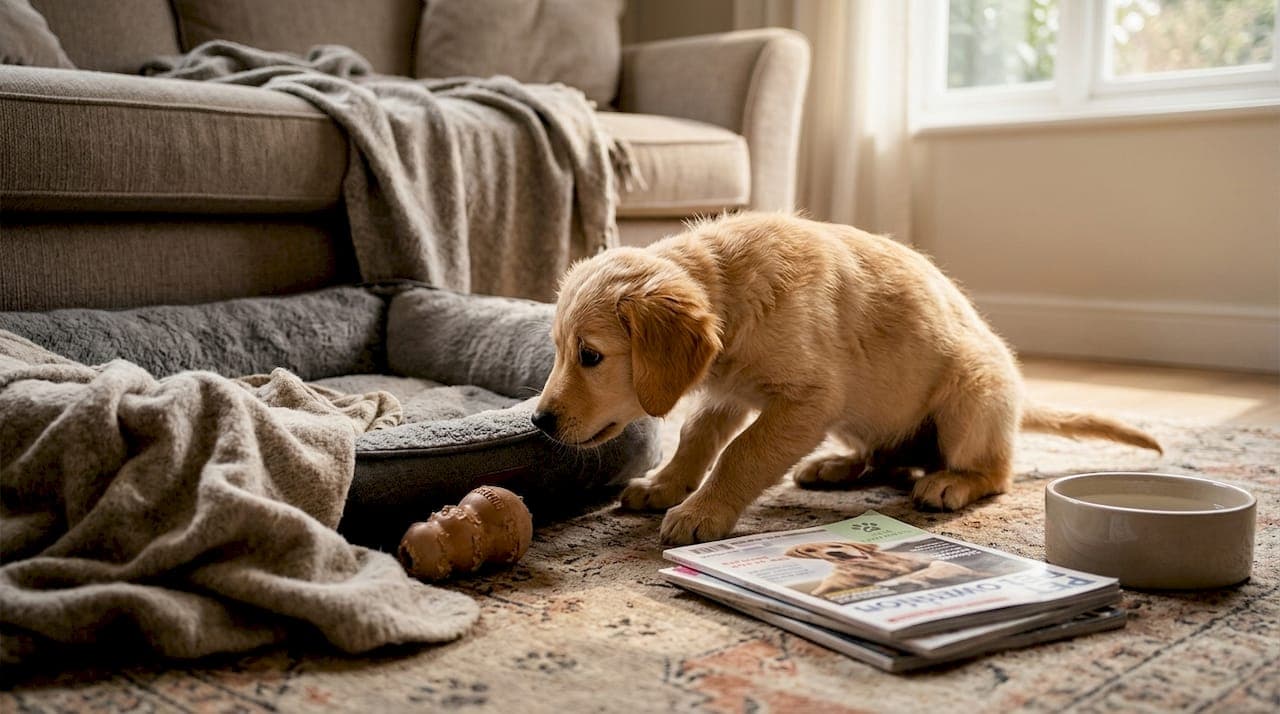
After recognising the initial stress, let's set up your home for success. The environment you create before your puppy even arrives will shape how quickly it relaxes and begins to trust you. A secure, comforting environment reduces stress for puppies, so getting this right from day one is worth every bit of effort.
Start by choosing a quiet corner of your home, away from the television, busy hallways, and loud appliances. This becomes your puppy's base. It should feel safe and predictable, not like the middle of a bustling household.
Here are the must-have items to gather before introducing your puppy to its new space:
- A cosy bed or crate with soft bedding
- A familiar-scented blanket from the breeder's home
- A soft comfort toy for snuggling
- Puppy pads placed nearby for toilet access
- Safe chew toys to redirect anxious energy
- A water bowl within easy reach
You can find a full list of recommended puppy essentials to help you stock up before your puppy arrives.
One of the most common questions new owners ask is whether to use a crate or an open bed. Both have merit, but they suit different puppies and households.
| Feature | Crate | Open bed |
|---|---|---|
| Sense of security | High, den-like feel | Lower, more exposed |
| Toilet training support | Very effective | Less structured |
| Freedom of movement | Restricted | Full |
| Best for | Anxious or unsettled puppies | Confident, calm puppies |
| Night-time settling | Excellent | Variable |
For most new puppies, a crate wins on settling speed. It mimics the enclosed, cosy feel of a den, which is deeply instinctive for dogs.
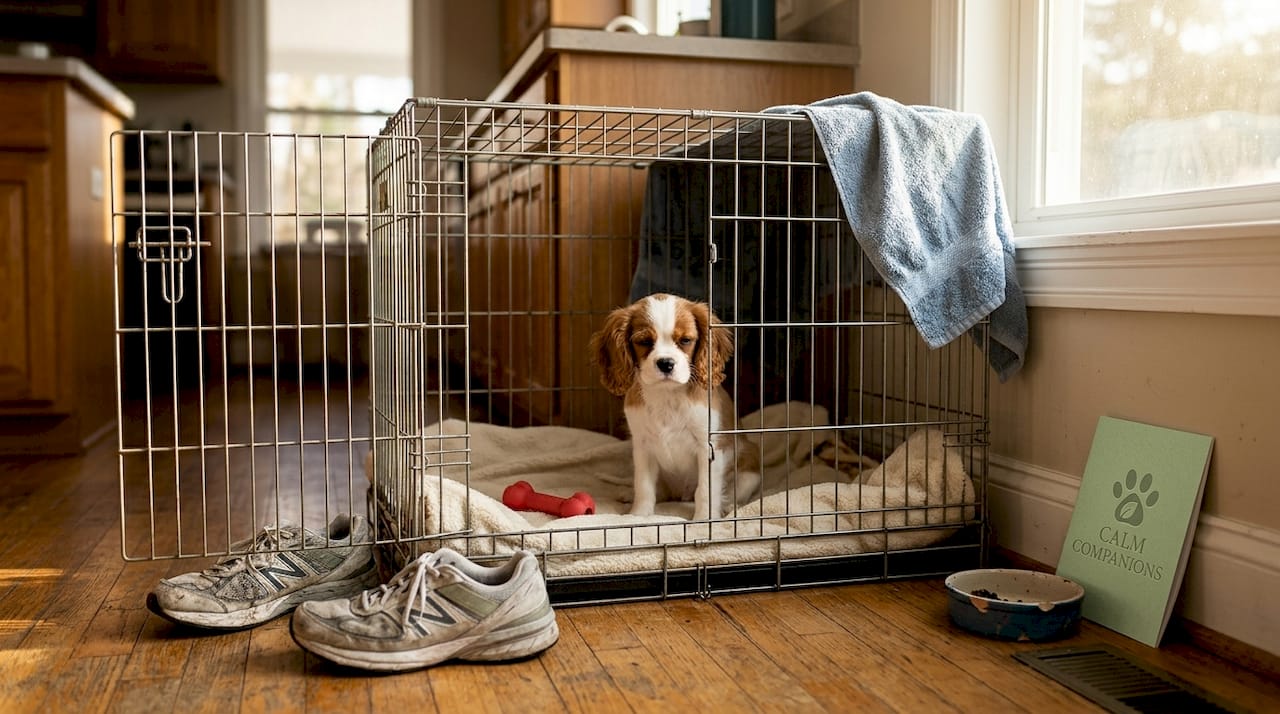
Pro Tip: Before collection day, ask your breeder to place a small cloth or soft toy in the whelping area for a few days. Bring it home with your puppy. That familiar scent acts as an instant comfort signal and can reduce the first-night crying dramatically.
Step-by-step routine for calming your new puppy
Once your space is ready, daily routines keep your puppy feeling secure. Puppies do not thrive on spontaneity. They thrive on knowing what comes next. Consistent routines help puppies adjust and reduce anxiety, because predictability tells your puppy that the world is safe.
Here is a simple example of a structured day versus an unstructured one:
| Time of day | Structured day | Unstructured day |
|---|---|---|
| Morning | Calm greeting, toilet, breakfast | Variable wake-up, inconsistent feeding |
| Mid-morning | Short play, nap | Overstimulation, no rest |
| Afternoon | Gentle training, toilet, rest | Erratic activity, overtired puppy |
| Evening | Social exposure, calm play | Hyperactivity, difficult to settle |
| Bedtime | Quiet wind-down, toilet, sleep | Prolonged crying, restless night |
The difference is significant. An unstructured day leaves your puppy guessing, which feeds anxiety. A structured day builds confidence.
Follow these steps each morning to set the right tone:
- Greet calmly. No loud excitement. Kneel down, speak softly, let your puppy come to you.
- Offer a toilet opportunity immediately. Take your puppy outside or to its pad before anything else.
- Serve breakfast at the same time each day. Predictable feeding anchors the whole routine.
- Allow calm play for 10 to 15 minutes. Keep it gentle and interactive, not chaotic.
- Enforce a rest period. Puppies need a great deal of sleep. Downtime is not optional.
- Repeat toilet trips every one to two hours throughout the day.
For more detailed transition tips covering the full first week, we have put together a practical guide to walk you through it.
Pro Tip: When using treats to reward calm behaviour, deliver them quietly and without fanfare. A calm reward reinforces a calm state. Squealing with delight when your puppy sits nicely will undo the very behaviour you are trying to encourage. Use the week-1 calm checklist to track your progress each day.
Soothing techniques and positive reinforcement
A solid routine sets the stage, but what about those stressful moments when your puppy is visibly anxious or unsettled? This is where in-the-moment techniques make all the difference.
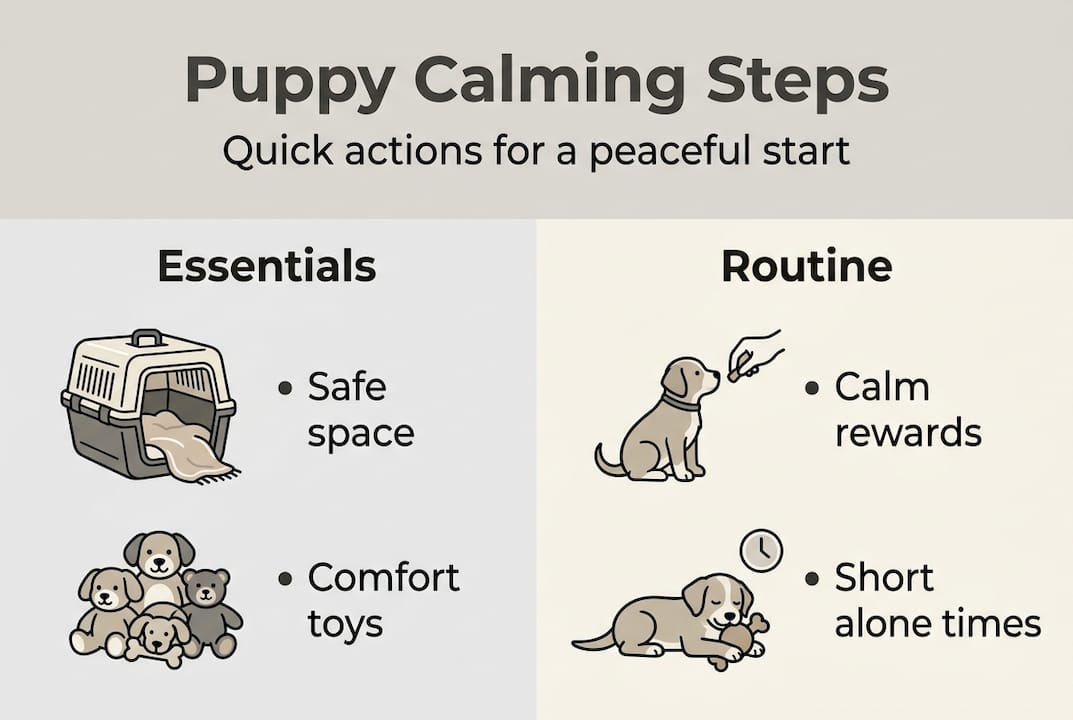
Gentle touch, soothing voice, and short periods of alone time help reduce new puppy anxiety. These are not complicated tools. They are small, consistent actions that signal safety to your puppy's nervous system.
Here are proven calming techniques you can use right now:
- Gentle stroking along the back or behind the ears, slow and rhythmic
- Soft, low talking rather than high-pitched or excited tones
- Slow, deliberate breathing near your puppy, which they genuinely pick up on
- Interactive puzzle toys that redirect anxious energy into focused activity
- Short, calm training sessions using simple commands like "sit" or "stay"
Positive reinforcement is your most powerful tool. When your puppy settles quietly, offer a small treat and quiet praise. When it chews its toy instead of whining, reward that choice. You are essentially showing your puppy which behaviours earn good things.
One of the trickiest parts of early training for calm is knowing when not to respond. If your puppy whines for attention and you immediately rush over, you have just taught it that whining works. Instead, wait for a brief pause in the noise, then calmly acknowledge it.
"The single most important calming tool in your home is you. Your puppy watches your energy constantly. When you are tense, it is tense. When you are steady, it learns to be steady too."
Teaching short alone times early is also essential. Place your puppy in its crate or bed, step out of sight for 30 seconds, then return calmly. Gradually increase the time. This builds the confidence your puppy needs to self-soothe, which pays dividends at night. Explore more on calm leadership to understand how your presence shapes your puppy's emotional world.
Night-time calm: Settling your puppy for restful sleep
Evening can often be the trickiest time for both puppies and owners. The house gets quieter, distractions disappear, and suddenly your puppy is alone with its thoughts, which for a young dog means anxiety tends to peak.
Most nighttime anxiety in puppies is natural and manageable with a structured bedtime routine. Understanding why it happens helps you respond with patience rather than frustration. Common causes include separation from the litter, unfamiliar sounds, a new sleeping space, and simply not being tired enough.
Follow these steps each evening to build a reliable bedtime routine:
- Pre-bed play session. A calm 10-minute play about an hour before bed helps burn off residual energy without overstimulating.
- Final toilet trip. Always go outside or to the pad immediately before settling your puppy for the night.
- Quiet wind-down time. Dim the lights, reduce noise, and let your puppy relax in its space.
- Place a comfort object in the sleeping area. The breeder's scent cloth or a soft toy works brilliantly here.
- Settle your puppy without fuss. Say a quiet goodnight, then leave. Lingering prolongs the anxiety.
Studies and owner reports consistently show that the majority of puppies begin settling through the night within one to two weeks when a structured bedtime routine is followed consistently. That is genuinely reassuring when night one feels impossible.
Pro Tip: Place a ticking clock wrapped in a soft cloth near your puppy's sleeping area. The rhythmic sound mimics a heartbeat and can significantly reduce whining. White noise played at low volume through a small speaker works equally well and is easy to set up on any phone.
A fresh perspective: The hidden power of calm leadership
With these practical steps in hand, it is vital to reflect on the bigger picture. Every checklist, every calming aid, and every routine in the world will have limited impact if you walk into the room radiating tension and worry. Puppies are extraordinarily sensitive to human emotional states. They are not reading your words; they are reading your body language, your breathing, and your energy.
Owners who model calm, patient behaviour see faster and more lasting results in puppy stress reduction. This is not soft advice. It is one of the most evidence-backed insights in dog behaviour.
The most common mistake new owners make is letting their own anxiety become contagious. You worry your puppy is not settling, so you hover. You hover, so your puppy never learns to self-soothe. It becomes a cycle. Breaking it requires you to make a conscious choice to project steadiness, even when you do not feel it.
Think of yourself as your puppy's emotional thermostat. When you stay regulated, your puppy's nervous system has something calm to mirror. Small, confident actions, like walking into the room without rushing over, placing food down without commentary, or leaving without a dramatic goodbye, all send a message: everything here is fine. Explore calm leadership further to build this skill intentionally.
Expert support for a peaceful puppy transition
If you would like even more support as you settle your puppy in, dedicated resources are available to help you every step of the way.
At Calm-Companions, we have built a free week-1 calm support checklist specifically designed for new puppy owners navigating that first, often chaotic week. It covers daily routines, night settling, and behaviour management in a simple, day-by-day format. Alongside the checklist, you will find a growing library of puppy training help and expert advice to support every stage of your puppy's settling-in journey. Whether you need the right tools or the right guidance, our puppy essentials kit has you covered from day one.
Frequently asked questions
How long does it take for a new puppy to settle and feel calm at home?
Most puppies begin to relax within one to two weeks if a routine is followed and the environment is calm. Structured routines and comforting environments help puppies settle faster, so consistency in those early days is everything.
Should I ignore my puppy when it cries at night?
Respond calmly to meet basic needs, but avoid over-attention, as gradually teaching self-soothing helps longer-term calm. Responding calmly and consistently at night supports self-soothing without reinforcing anxious habits.
What toys are best for calming anxious puppies?
Soft comfort toys and safe chew toys provide comfort and occupy anxious puppies effectively. Comfort objects and chews soothe puppies experiencing anxiety and are worth having from the very first day.
How should I introduce my puppy to people and other pets calmly?
Introduce your puppy gradually with lots of praise, short sessions, and always allow retreat to their safe space. Gradual socialisation reduces stress and builds confidence without overwhelming your puppy.
Can calming aids, like music or diffusers, really help?
Many puppies benefit from gentle background noise or pheromone diffusers, but these should complement, not replace, good routines and techniques. Aids can support calm but work best alongside a structured daily routine rather than as a standalone solution.
Recommended
- Essential puppy transition tips for a stress-free start
- Calm-Companions | Week-1 Puppy Calm Support (Free Checklist)
- Early puppy training: build calm and confidence from week 1
- Calm leadership for puppies: Build trust and ease transitions
- How to calm a dog: proven techniques for anxious pets – iPupPee
- 6 Effective Pet Calming Techniques for Urban Dog Owners – Teddy Pet