
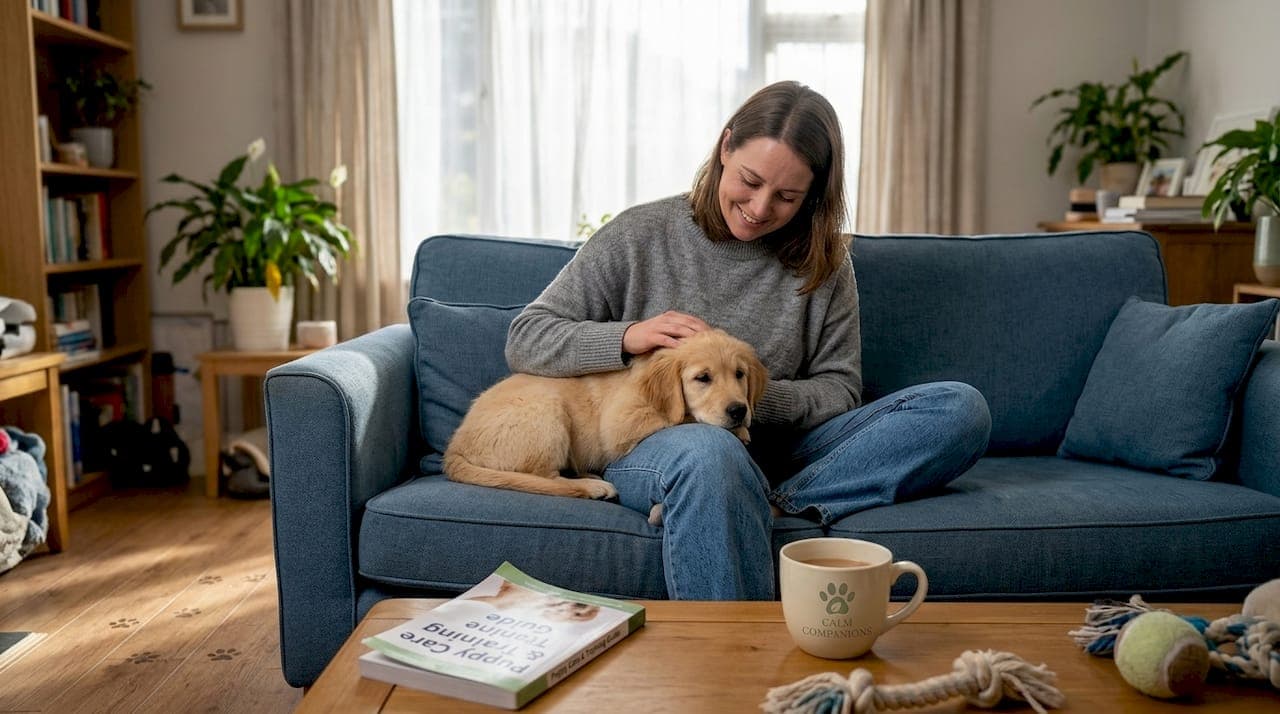
TL;DR:
- Over 78% of new puppy owners face behavioral challenges like biting, barking, and anxiety.
- Support options such as training classes, calls, checklists, and peer groups help manage early issues.
- Combining support types increases owner confidence and improves puppy adaptation and behavior outcomes.
Over three quarters of new puppy owners encounter behavioural challenges such as biting, barking, and anxiety in the first few months. That figure is striking, but it tells an important story: bringing a puppy home is joyful and genuinely hard work at the same time. Most owners go in with the best intentions, yet find themselves overwhelmed within days. This guide explains why structured support matters, what types are available, how each one affects real outcomes, and how you can choose the right combination for your puppy and your household. Whether you are on day one or week four, understanding your options changes everything.
Table of Contents
- Why support matters for new puppy owners
- Types of puppy owner support available
- How support influences puppy and owner outcomes
- Choosing and making the most of support
- Why puppy support is more about reassurance than rulebooks
- Discover tailored support for your puppy journey
- Frequently asked questions
Key Takeaways
| Point | Details |
|---|---|
| Behaviour issues are common | Most new puppy owners experience challenges like biting, pulling, and anxiety in the first months. |
| Varied support is available | Training classes, advice calls, and online resources all offer complementary help to new puppy owners. |
| Support reduces returns | Owners who use early guidance and intervention are less likely to return puppies due to behavioural problems. |
| No single solution | A combination of support types, tailored to each owner and puppy, produces the best outcomes. |
| Start support early | Early engagement with support increases owner confidence and improves the puppy’s adjustment to the new home. |
Why support matters for new puppy owners
Bringing a puppy home is one of life's genuinely exciting moments. Within 48 hours, though, many owners discover that excitement comes packaged with sleep deprivation, chewed furniture, and a very vocal small dog. This is completely normal, but it can feel isolating if you are not prepared.
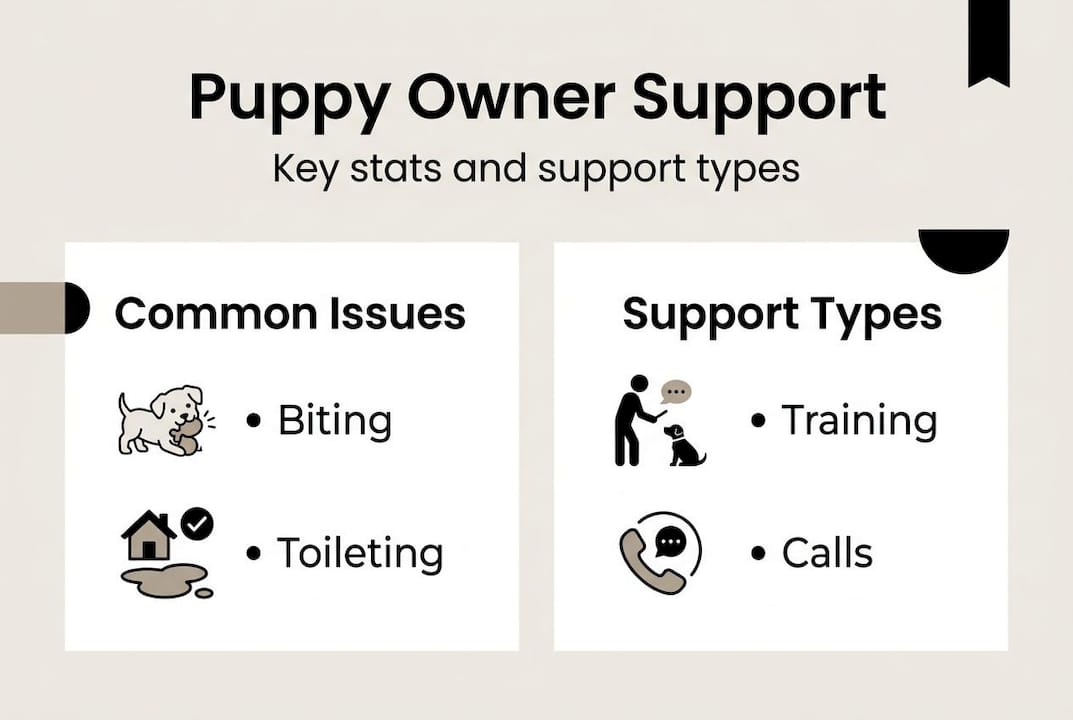
Over 78% of new puppy owners report behavioural issues including biting, lead pulling, toileting accidents, and separation anxiety during the first months. These are not signs of a bad puppy or a failing owner. They are predictable responses to a major life change, for the puppy as much as for you.
Puppies experience real stress during the transition to a new home. Early adoption at one to two months is linked to higher rates of fear and anxiety in adulthood, because the puppy misses crucial socialisation time with its litter. Even puppies adopted at the right age face the shock of unfamiliar smells, sounds, and routines. Understanding this helps you respond with patience rather than frustration.
Structured support gives you something invaluable: a framework. Instead of guessing whether a behaviour is serious or searching the internet at midnight, you have reliable guidance to fall back on. Tips for a smooth puppy settling-in process can make those first days far less chaotic, and introducing your puppy to your home in a considered way sets a positive tone from the start.
Here are the most common challenges new owners face in the first eight weeks:
- Biting and mouthing during play and interaction
- Toileting accidents indoors, often due to an inconsistent routine
- Night-time vocalisation and difficulty settling alone
- Lead pulling and reluctance to walk calmly
- Separation anxiety when left alone, even briefly
Pro Tip: Keep a simple daily log of your puppy's behaviour patterns during the first two weeks. Patterns are far easier to address when you can see them clearly, and it gives any professional you consult a useful starting point.
Support does not just help the puppy. It builds your confidence as an owner, which directly shapes how your puppy responds to you. A calmer, more informed owner creates a calmer dog. That connection is at the heart of everything.
With the need for support established, let's look at the main ways this help is commonly provided to new owners.
Types of puppy owner support available
Not all support is created equal, and knowing the difference helps you invest your time wisely. The four main categories are training classes, post-adoption support calls, information packs and checklists, and peer communities.
Training classes are the most widely used option. 67% of puppy owners attend some form of training class, and they offer genuine value for socialisation and structured learning. Classes vary enormously in quality, format, and focus, so it pays to research before you book. They are not a cure-all, but for many owners they provide a reassuring weekly anchor.
Post-adoption support calls are perhaps the most underrated option. Response rates of 72 to 89% have been recorded, and these calls have been shown to reduce behavioural returns to shelters. A direct conversation with a knowledgeable adviser can address your specific situation far more effectively than a generic article. Browse puppy help resources to find services that offer this kind of personal contact.
Information packs and checklists are accessible and easy to use at any hour. Their limitation is that they cannot adapt to your individual puppy's personality or your living situation. They work best when combined with another form of support rather than used in isolation.
Peer networks and online forums offer community, which is genuinely comforting at 3am. The risk is inconsistent advice. Not every voice in a forum has professional experience, and well-meaning suggestions can sometimes make things worse. Use these spaces for emotional support, but verify specific advice with a professional.
Here is a quick comparison to help you decide:
| Support type | Best for | Limitation |
|---|---|---|
| Training classes | Socialisation, structured skills | Variable quality, not personalised |
| Support calls | Specific concerns, early intervention | Availability varies |
| Checklists and guides | Daily structure, quick reference | No personalisation |
| Peer networks | Emotional support, shared experience | Mixed-quality advice |
Pro Tip: Combine at least two types of support from the start. A checklist gives you daily structure, while a training class or support call gives you the personalised feedback that no guide can replicate. Knowing how to spot puppy behavioural red flags early means you can escalate to professional help before small issues become bigger ones.
Having surveyed the support types, it's crucial to understand their real-world impacts, both the benefits and the limits.
How support influences puppy and owner outcomes
There is a common assumption that the right support leads to a perfectly behaved puppy. The reality is more nuanced, and understanding it will save you a lot of unnecessary worry.
Research shows that support reduces behavioural returns to shelters, yet overall return rates remain at around 8 to 9%. Interestingly, when support is in place, the reasons for returns shift from behavioural problems to owner-related factors such as lifestyle changes or moving home. This tells us something important: support works, but it cannot solve every challenge a family faces.
Training classes produce a similar pattern. Classes shift return reasons from behavioural to owner-related, but they do not necessarily improve a puppy's self-control across all situations. A puppy that sits beautifully in class may still pull on the lead in the park. Context matters enormously in dog training.
"Support enables owners to identify problems early and take targeted action, rather than waiting until a situation feels unmanageable."
Despite these nuances, owner satisfaction with support is remarkably high. Most owners report feeling more confident, less alone, and better equipped to handle challenges, even when those challenges persist. That emotional reassurance has real value. It keeps owners engaged and persistent rather than giving up.
Here is where support makes the most measurable difference:
- Early toileting issues are addressed faster with structured guidance
- Biting and mouthing reduces more quickly when owners use consistent redirection techniques
- Night-time anxiety improves when owners follow a calm settling routine from day one
- Owner confidence increases significantly with even minimal professional contact
For practical guidance on managing day-to-day challenges, puppy behaviour management resources offer structured frameworks. And if your puppy is struggling to settle, specific advice on calming a new puppy can make a noticeable difference within days.
With a realistic view of support's influence, let's focus on how to choose and make the best use of the support available.
Choosing and making the most of support
Knowing support exists is one thing. Actually using it well is another. Many owners decline free support because they feel capable or believe their puppy's issues are minor. Yet proactive contact, even when things seem fine, consistently identifies early warning signs that owners would otherwise miss.
Here is a practical approach to getting the most from available support:
- Assess your situation honestly. What specific behaviours are you finding difficult? Which parts of the day feel most chaotic? Starting with clarity helps you choose the right type of support.
- Start early. Do not wait for a problem to become serious before seeking help. The first two weeks are the most formative, and early intervention is far easier than correcting established habits.
- Combine formal and informal support. Attend a training class or book a support call, and use a daily checklist alongside it. The two approaches reinforce each other.
- Ask directly about early intervention. When speaking to a trainer or adviser, ask specifically what to watch for in the coming weeks and what action to take if you see it.
- Review reputable resources regularly. Guidance on practical puppy calming and puppy training steps can be revisited as your puppy grows and new challenges emerge.
Pro Tip: If you feel your puppy's behaviour is getting worse rather than better after two weeks of consistent effort, treat that as a clear signal to seek professional input. Progress is not always linear, but a sustained downward trend needs attention.
A few practical things to keep in mind:
- Consistency beats intensity. Ten minutes of calm, focused practice daily outperforms a single long session.
- Your tone matters. Puppies respond to your emotional state, so a calm voice and relaxed body language communicate safety.
- Rest is part of the process. Puppies sleep up to 18 hours a day and learn best in short, positive bursts.
By following these practical steps, you will be better placed for a smoother transition and a happier relationship as your puppy grows.
Why puppy support is more about reassurance than rulebooks
Here is something the research hints at but rarely states plainly: the most powerful thing support does is make owners feel less alone. Not every family needs the same approach. Not every puppy responds to the same method. And no single checklist, class, or call will produce a perfect outcome.
What we have seen, again and again, is that owners who feel supported stay engaged longer. They try again after a setback. They ask questions instead of giving up. That persistence, more than any specific technique, is what shapes a well-adjusted dog.
The idea that there is one correct form of support is worth challenging directly. Rigid programmes can make owners feel they are failing when they deviate from the plan. Adaptability, the willingness to try something different when one approach is not working, is actually a sign of good ownership, not weakness.
At Calm-Companions, we believe support should fit around your life, not the other way around. The goal is a confident owner and a settled puppy, reached by whatever path works for your household.
Discover tailored support for your puppy journey
If the first weeks with your puppy feel overwhelming, you are not doing it wrong. You are doing something genuinely challenging, and the right support makes a real difference.

Calm-Companions brings together practical puppy help resources designed specifically for new owners navigating those early weeks. From calming strategies for new puppies to step-by-step settling guides, everything is built around what actually works at home. You can also grab the free Week-1 Puppy Calm Support checklist to give yourself a structured, reassuring start from day one. Acting early, with the right tools in hand, is the single best thing you can do for both of you.
Frequently asked questions
What kind of behaviour issues are most common for new puppy owners?
Typical issues include biting, lead pulling, toileting accidents, vocalisation, and anxiety. Toileting problems affect up to 50% of new puppy owners, making it one of the most reported early challenges.
How soon after adoption should I seek support if my puppy shows worrying behaviour?
Seek support as early as possible, ideally within the first week. Support calls enable early intervention and reduce the risk of behavioural issues becoming entrenched.
Does attending puppy training ensure a well-behaved pet?
Training improves socialisation and specific skills, but it does not guarantee perfect behaviour. Classes do not reliably improve self-control across all environments, so ongoing practice at home remains essential.
Why do some owners decline free support?
Many owners feel confident or view their puppy's issues as too minor to warrant help, but proactive advice still helps identify problems before they escalate.
What's the optimal age for puppy adoption to minimise fear later?
Adopting after the key socialisation window, beyond one to two months, lowers the risk of anxiety in adulthood. Early adoption is linked to higher fear responses later in life.