
TL;DR:
- Normal puppy behaviors include playful movements, wagging tails, and gentle mouthing.
- Red flags such as stiff body language, resource guarding, or shutdown require prompt attention.
- Early intervention, calm routines, and professional support help prevent long-term behavioral problems.
Bringing a new puppy home is exciting, but it can also leave you second-guessing yourself constantly. Is that growl just play? Is hiding in the corner normal? The line between typical puppy mischief and a genuine behavioural red flag is not always obvious, and missing early warning signs can make future problems far harder to address. This article walks you through exactly what to watch for, why certain behaviours matter more than others, and what practical steps you can take right now to give your puppy the best possible start.
Table of Contents
- How to distinguish normal from concerning puppy behaviour
- Resource guarding and aggression: When to be concerned
- Persistent fear, avoidance or shutdown: Anxiety signals
- Separation distress or inability to settle: Overlooked warning signs
- Context matters: Breeds, adversity and what to do next
- A balanced approach to puppy red flags: What most guides miss
- Support for spotting and addressing puppy behaviour concerns
- Frequently asked questions
Key Takeaways
| Point | Details |
|---|---|
| Spot warning signs early | Recognising true red flags helps prevent bigger behaviour issues in adulthood. |
| Normal vs. abnormal behaviour | Learn to distinguish playful puppy antics from signs of fear, aggression, or anxiety. |
| Intervene quickly | The sooner concerning patterns are addressed, the more likely they are to improve. |
| Context is key | Breed, early experiences, and routines influence behaviour and the meaning of red flags. |
How to distinguish normal from concerning puppy behaviour
Most puppies are wonderfully chaotic. They chew things they shouldn't, bark at shadows, and throw themselves at other dogs with zero sense of personal space. This is all completely normal. The challenge is knowing when a behaviour crosses from playful to problematic.
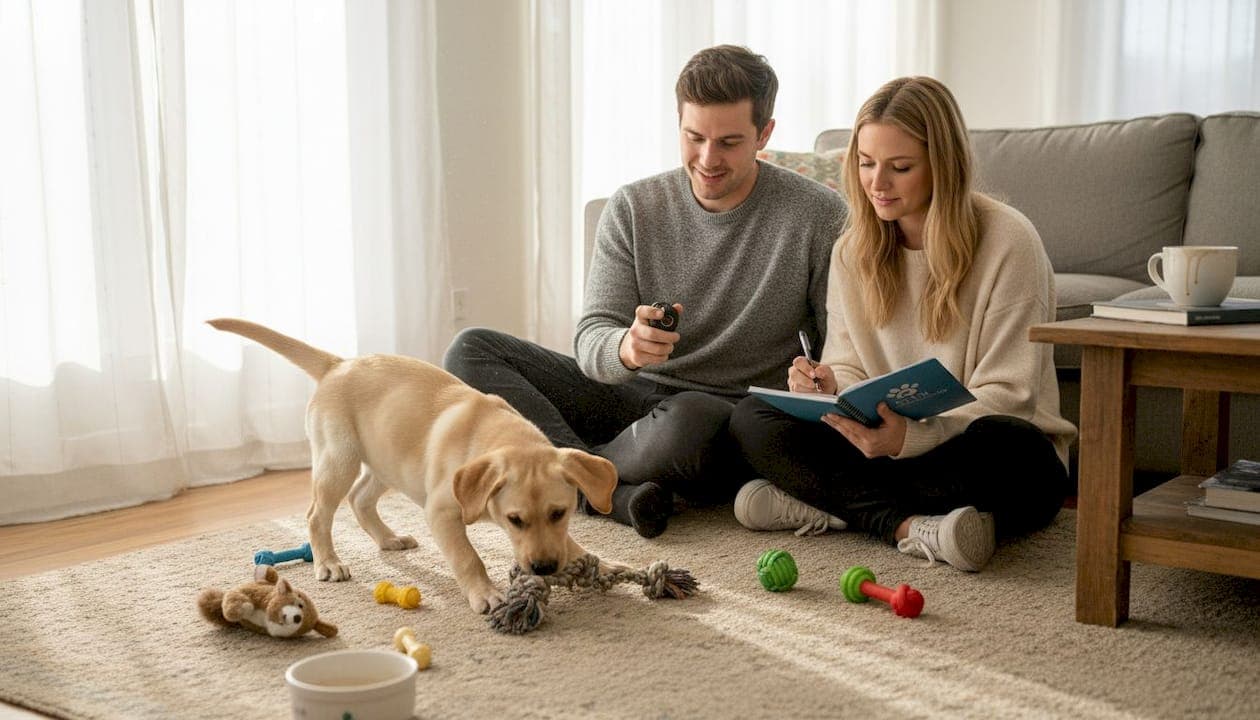
Healthy puppy play has a very specific look. You will see loose, wiggly body language, wagging tails, and play bows where the puppy drops its front end low and bounces. Puppies also self-handicap during play, meaning a bigger puppy will hold back to keep the game going. These are all green flags.
The warning signs look very different. Stiff body posture, pinned ears, lip curling, hard stare are what separate true aggression from loose, playful body language. If you notice your puppy going rigid, fixing its gaze, or showing teeth outside of play, take it seriously.
Teething and nipping are often confused with aggression, but they are not the same thing. A teething puppy mouths constantly because its gums hurt. This is normal. Teething and nipping can be managed with appropriate chew toys and calm redirection. What is not normal is a puppy that escalates from mouthing to hard biting when you try to move away.
"Growling or snapping in response to pain or fear in puppies under 12 weeks is a red flag, unlike normal play growling."
Growling or snapping from pain or fear in very young puppies is abnormal and should not be dismissed as a phase. Starting early puppy training helps establish boundaries before these patterns become habits.
Key signs to watch during play:
- Loose, bouncy movement: normal
- Play bows and wagging tails: normal
- Stiff body, pinned ears, hard stare: concerning
- Escalating snaps when touched or moved: concerning
- Mouthing that stops when redirected: normal
Pro Tip: Film a short clip of your puppy during play. Watching it back in slow motion often reveals body language cues you missed in the moment.
Resource guarding and aggression: When to be concerned
Once you can read puppy body language, look closely for specific triggers that go beyond normal play. Resource guarding is one of the most important red flags to catch early.
Resource guarding means your puppy becomes tense, still, or aggressive when someone approaches its food, toys, or sleeping spot. It can look subtle at first: a brief freeze, a low grumble, or a hard stare over the food bowl. Many owners brush this off as the puppy being "protective" of its things. That is a mistake.
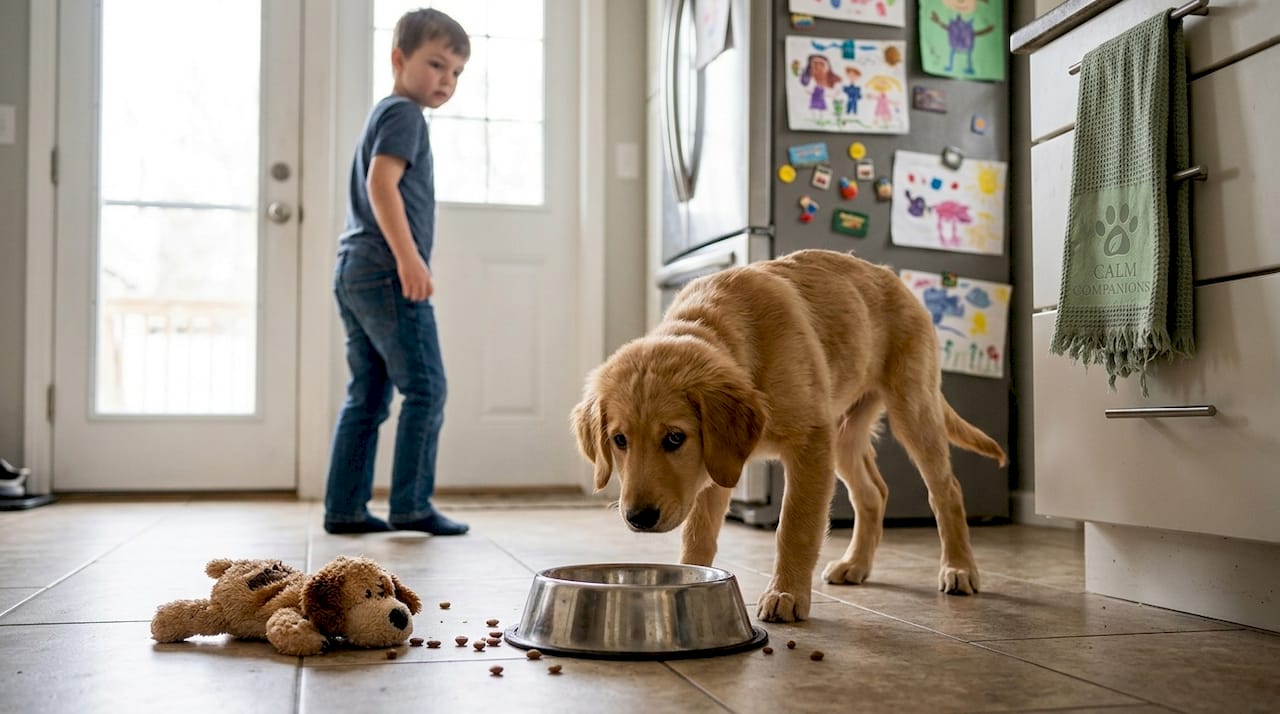
Resource guarding as early as 8 to 10 weeks is a strong predictor of future aggression. The earlier you spot it, the easier it is to address.
Signs of resource guarding to watch for:
- Freezing or going still when you approach the food bowl
- Low growling while eating or chewing
- Snapping if you reach for a toy
- Body blocking to keep others away from a prized item
- Eating faster when someone approaches
The good news is that mild resource guarding often responds well to calm, consistent management. Avoid taking items away forcefully, as this tends to make guarding worse. Instead, practise swapping: offer something of equal or higher value in exchange for the item. This builds a positive association with your approach.
When guarding escalates to snapping at children or involves multiple triggers, professional input is essential. A qualified behaviourist can assess whether the behaviour is fear-based, pain-related, or a deeper temperament issue. Setting up your home thoughtfully from day one, as covered in our guide on introducing your puppy to your home, can reduce the conditions that trigger guarding in the first place.
Pro Tip: Never punish a puppy for growling over resources. Growling is communication. Suppressing it without addressing the underlying anxiety can lead to biting without warning later on.
Persistent fear, avoidance or shutdown: Anxiety signals
Behavioural red flags are not only about aggression. Anxiety and prolonged fear are equally important to spot, and they are often overlooked because a quiet, withdrawn puppy can seem like an easy dog.
Every puppy needs time to adjust to a new home. A day or two of hiding, reluctance to eat, or staying close to one person is entirely normal. The concern arises when this does not improve after the first week, or when it gets worse.
"Shutdown" is a term used to describe a puppy that has essentially stopped engaging with its environment. It is not relaxed or calm. It is overwhelmed. Signs include:
- Hiding consistently and refusing to come out
- Cowering when approached, even gently
- Tail tucked tightly under the body at all times
- Trembling without an obvious cause like cold or illness
- Hypervigilance, meaning constantly scanning the room and startling easily
- Refusing food even when hungry
Persistent avoidance of people or dogs, hypervigilance, and flinching indicate anxiety rather than normal puppy curiosity. This matters because anxious puppies who do not receive support often develop fear-based aggression as they grow.
Risk factors include poor early socialisation before 8 weeks, traumatic experiences, or certain breed tendencies. Our guides on puppy transition tips and calming new puppies offer practical ways to reduce environmental stress during the settling-in period.
"A puppy that never relaxes, never explores, and never initiates contact is telling you something important. Listen to it."
If shutdown behaviours persist beyond the first week or two, a vet check is the first step to rule out pain or illness. From there, a qualified behaviourist can help you build a gentle desensitisation plan.
Separation distress or inability to settle: Overlooked warning signs
Beyond obvious fear or aggression, some warning signs manifest as restlessness or difficulty coping with separation. These are easy to miss because they often happen when you are not in the room.
A brief whine when you leave is normal. Puppies are social animals and take time to learn that being alone is safe. What is not normal is sustained vocalising, destructive behaviour, or frantic attempts to escape every single time you step out.
Destruction and vocalising when left alone signal potential separation anxiety rather than just a bad habit. Equally, compulsive behaviours like spinning or shadow chasing are red flags, as is an inability to settle despite adequate exercise and rest. Young puppies need up to 18 hours of sleep per day. A puppy that cannot rest is under real stress.
| Behaviour | Likely meaning | Action needed |
|---|---|---|
| Brief whining when left | Normal adjustment | Gradual alone-time practice |
| Sustained barking or howling | Separation distress | Behaviour plan needed |
| Destructive behaviour when alone | Anxiety or boredom | Rule out medical, then train |
| Spinning or shadow chasing | Compulsive behaviour | Vet and behaviourist referral |
| Inability to nap despite tiredness | Stress or pain | Vet check first |
Practical steps include gradual departures, leaving a worn item of clothing for comfort, and keeping departures and arrivals low-key. Our guide on settling techniques for puppies covers night-time routines that also support daytime settling.
Always rule out a medical cause before assuming a behavioural one. Pain, digestive discomfort, and neurological issues can all present as restlessness or distress.
Context matters: Breeds, adversity and what to do next
All puppies are unique, and interpreting red flags requires taking their background and needs into account. A Labrador and a Border Collie may show the same behaviour for completely different reasons.
Early adversity such as abuse or relinquishment before 6 months increases the risk of adult fear and aggression, but breed also shapes how risk and resilience play out. A rescue puppy from an unknown background may need more patience and professional support than one raised in a stable environment.
Research shows that behavioural problems cluster into emotional systems, including SEEKING (chewing, jumping), PANIC (separation distress), RAGE (aggression, guarding), and FEAR. Critically, behavioural problems appear in 42% of dogs by 12 months, which is why the first year is so important.
| Emotional cluster | Common behaviours | Early intervention |
|---|---|---|
| SEEKING | Chewing, jumping, hyperactivity | Enrichment, structured play |
| PANIC | Separation distress, vocalising | Gradual alone-time training |
| RAGE | Guarding, snapping, aggression | Positive management, behaviourist |
| FEAR | Hiding, trembling, avoidance | Desensitisation, calm leadership |
If you spot a red flag, follow these steps:
- Note exactly when, where, and how often the behaviour occurs
- Rule out pain or illness with a vet check
- Adjust the environment to reduce triggers
- Apply calm, consistent training using positive methods
- Seek a qualified behaviourist if the behaviour persists or escalates
Understanding puppy pack behaviour and practising calm leadership for puppies gives you the foundation to respond to red flags without panic.
Pro Tip: Keep a simple behaviour diary for the first month. Even a few notes per day helps you spot patterns and gives a behaviourist or vet crucial information if you need to seek help.
A balanced approach to puppy red flags: What most guides miss
Most articles on this topic lean heavily into worst-case scenarios. Read enough of them and you will be convinced your puppy is a lost cause by week two. That is not helpful, and it is not accurate.
The reality is that many so-called red flags respond remarkably well to calm handling, consistent routines, and meeting basic needs. Sleep, appropriate socialisation, structured play, and patient leadership resolve a significant number of early behavioural concerns before they ever become serious problems.
What experienced owners and trainers understand is that you are not diagnosing a disorder every time your puppy growls or hides. You are gathering information. The goal is to stay observant without catastrophising.
That said, persistent or escalating issues do need professional support. Ignoring a genuine red flag because you hope it will pass is the one mistake that consistently makes things worse. The sweet spot is staying calm, staying consistent, and knowing when to ask for help. Building calm and confidence from week one gives you the best possible foundation for everything that follows.
Support for spotting and addressing puppy behaviour concerns
Spotting a red flag early means you have time to act before a small problem becomes a big one. That is genuinely good news.
At Calm Companions, we have built our resources specifically for new puppy owners navigating exactly these challenges. Our free Week-1 Puppy Calm Support checklist covers daily routines, night settling, and behaviour monitoring in one simple guide. If you need more targeted support, our training help section connects you with expert guidance tailored to your puppy's specific needs. You do not have to figure this out alone, and the earlier you get the right support in place, the calmer and more confident your puppy's first year will be.
Frequently asked questions
At what age should I be most vigilant for behavioural red flags in my puppy?
Red flags can appear as early as 8 to 10 weeks, and 42% of dogs show behavioural issues by 12 months if early warning signs are not addressed. Staying vigilant throughout the entire first year gives you the best chance of catching problems early.
Is all growling a sign of aggression in puppies?
No. Play growling during games is completely normal and healthy. Growling or snapping linked to pain or fear is a red flag, as is growling over food, toys, or space.
When should I seek professional help for my puppy's behaviour?
Seek help if a concerning behaviour persists for more than a week, escalates in intensity, or does not respond to calm, consistent training. Red flags often worsen without intervention, so acting early prevents much bigger problems in adulthood.
Does my puppy's breed affect their risk for behavioural problems?
Yes. Breed modulates risk and resilience to behavioural red flags, meaning some breeds are more prone to certain issues due to genetics, while others may be more adaptable. Early adversity also plays a significant role regardless of breed.