
TL;DR:
- House training relies on consistent routines and positive reinforcement, not scolding.
- Start house training immediately upon bringing your puppy home and follow a structured schedule.
- Owner habits and predictability have a greater impact on success than puppy behavior.
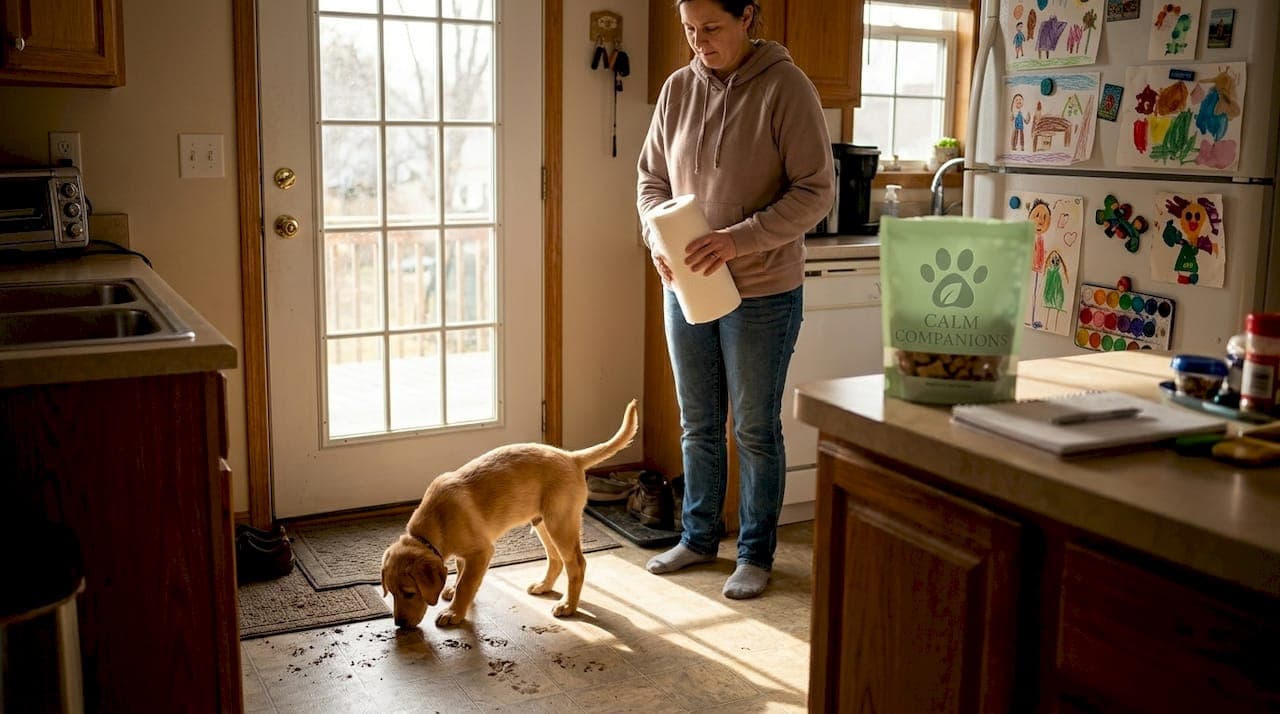
Many new puppy owners believe that catching a pup mid-accident and telling them off firmly is the fastest route to a clean home. It is not. The truth is that scolding creates confusion and anxiety, while a clear, consistent routine creates lasting habits. House training is less about reacting to mistakes and more about preventing them through structure and timing. In this guide, you will learn exactly what house training involves, when to start, how to build reliable routines, and how to troubleshoot the common pitfalls that trip up even the most dedicated new owners.
Table of Contents
- What puppy house training really means
- When and how to start house training your puppy
- Key routines and signals for successful training
- Troubleshooting and common mistakes in house training
- Why house training success is more about owner habits than puppy behaviour
- Calm support for your puppy training journey
- Frequently asked questions
Key Takeaways
| Point | Details |
|---|---|
| Routine is critical | Consistent schedules and signals help puppies learn where to toilet quickly and confidently. |
| Pads are a short-term tool | Use puppy pads for initial training only, and transition outdoors as soon as possible. |
| Owner habits drive success | Predictable routines and calm, clear responses from owners are the backbone of successful training. |
| Early start matters | Begin house training as soon as your puppy arrives to establish good habits from the outset. |
What puppy house training really means
House training is the process of teaching your puppy to toilet only in places you have chosen, whether that is outside in the garden, on a designated pad, or a combination of both. The end goal is a dog who understands where it is and is not appropriate to go, and who can hold on long enough to reach that spot reliably. That is a skill built over weeks and months, not days.
A lot of owners come into this process thinking it is about correction. Catch the puppy in the act, say a firm no, and the message gets through. In reality, puppies do not connect a telling-off with something they did moments ago. What they register is that you are unpredictable and scary around toileting. This can actually make them hide to go to the toilet, which creates a far messier and more frustrating situation.
The real work of house training looks like this:
- Monitoring your puppy closely for early signs they need to go
- Guiding them calmly to the correct spot before an accident happens
- Rewarding them warmly and immediately when they get it right
This approach works because puppies are wired to repeat behaviours that bring good things. A treat and enthusiastic praise immediately after toileting outside creates a powerful association. As puppy practical tips confirm, house training establishes lifelong patterns, not just short-term rules for puppies. Get the foundation right and you are shaping behaviour that sticks for years.
"The goal is not a perfectly obedient puppy on day one. It is a confident, calm dog who understands their world by month three."
The benefits of approaching it this way go beyond a cleaner floor. A puppy who is guided rather than punished is more relaxed, more trusting, and easier to live with in every way. Understanding puppy behaviour management from the outset helps you see house training as one part of a much larger picture of building a confident, well-adjusted dog.
When and how to start house training your puppy
The answer to when you should start is simple: the moment your puppy arrives home. Most puppies come home at around 8 weeks old, and this is actually the ideal window. Their brains are in a prime period for learning associations, and the habits formed now will shape their behaviour for life.
Early consistency is everything. If you let accidents slide in the first week because the puppy is settling in, you are actually teaching them that the kitchen floor is an acceptable toilet. Every single outing, every reward, and every calm redirection is either reinforcing or undermining the habit you want to build.
Here is a simple step-by-step approach to get started:
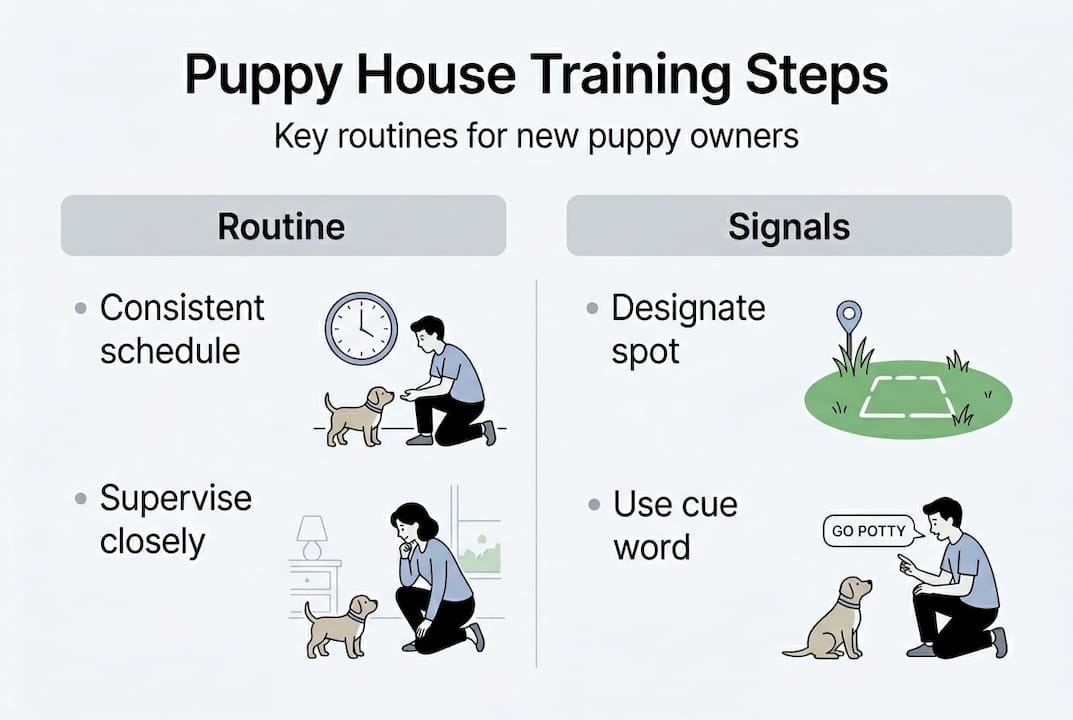
- Watch closely. Learn your puppy's pre-toilet signals: sniffing the floor, circling, squatting, or suddenly pausing mid-play.
- React quickly. When you spot the signs, calmly take the puppy to your chosen spot without fuss or excitement.
- Use a cue word. Say a consistent phrase like "go toilet" or "outside" each time. Over days and weeks, this phrase becomes a prompt the puppy responds to.
- Praise immediately. The reward must happen within seconds of the puppy finishing, not after you have walked back inside.
- Build a timed routine. Take your puppy out first thing in the morning, after every meal, after every nap, and before bedtime.
If you live in a flat or have a small breed, pay close attention here. Frequent outdoor breaks are essential for small breeds and puppies in flats, because their bladders are tiny and the temptation to use an indoor spot grows quickly if outdoor access is limited.
Pro Tip: If you use a puppy pad during the early weeks, treat it as a temporary bridge, not a long-term plan. The longer pads stay in place, the more your puppy learns that indoors is a valid toilet destination.
For more detail on building the right start, early puppy training and calming a new puppy are both worth exploring to round out your approach.
Key routines and signals for successful training
Routine is the engine of house training. Without it, even the most attentive owner will find themselves reacting to accidents rather than preventing them. Structure your puppy's entire day around feeding, play, rest, and toilet breaks, and you remove most of the guesswork.
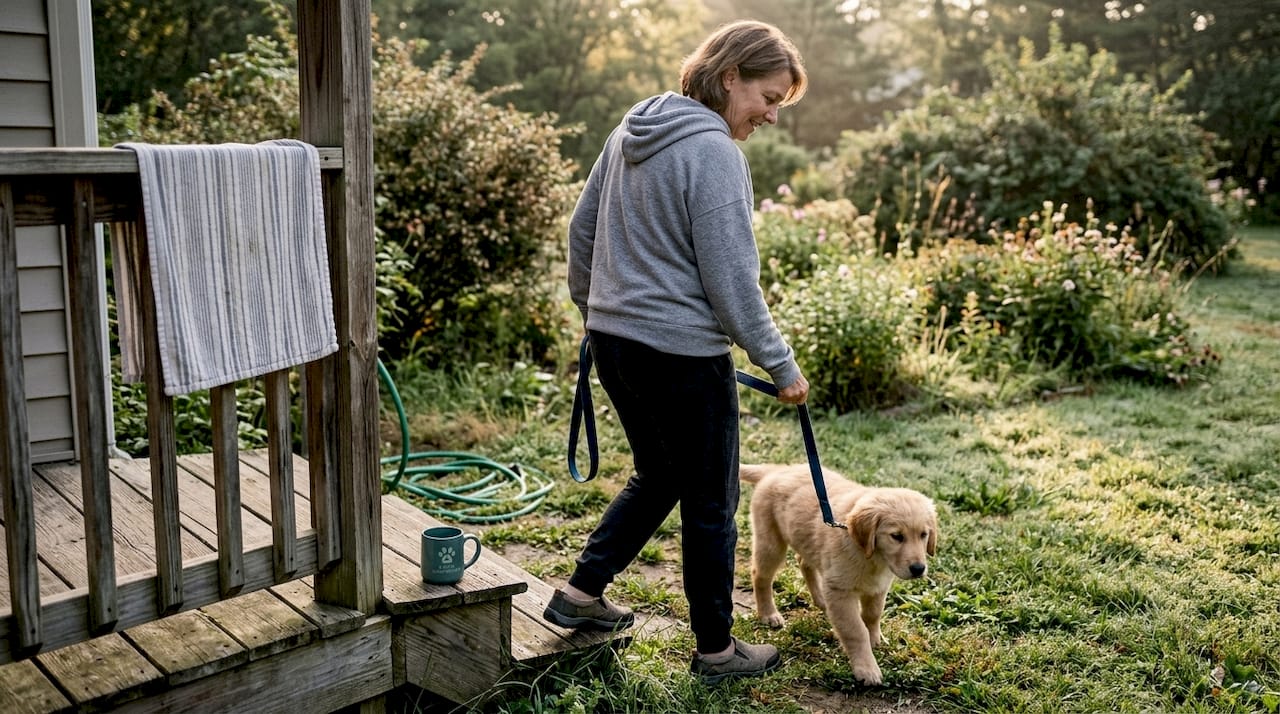
Here is a guide to how frequently puppies need toilet breaks based on age:
| Puppy age | Breaks needed per day | Typical bladder hold time |
|---|---|---|
| 8 to 10 weeks | Every 30 to 45 minutes | 1 hour or less |
| 10 to 12 weeks | Every 45 to 60 minutes | 1 to 2 hours |
| 3 to 4 months | Every 1.5 to 2 hours | 2 to 3 hours |
| 4 to 6 months | Every 2 to 3 hours | 3 to 4 hours |
As scheduled breaks by age demonstrate, younger puppies simply cannot hold on for long, and expecting them to do so sets everyone up for failure.
Beyond the schedule, learn to read your puppy's personal signals. Common ones include:
- Sniffing the ground intently
- Walking in circles or spinning
- Heading toward a previously used indoor spot
- Suddenly stopping play and becoming distracted
- Whining or scratching at the door
Creating reliable puppy calming routines around toilet time also helps your puppy feel safe and settled, which itself reduces accidents driven by anxiety. Combine your consistent cue word with calm, quiet praise and a high-value treat kept near the door, and you have a system that builds momentum fast.
Troubleshooting and common mistakes in house training
Even with the best intentions, setbacks happen. The key is knowing why they happen and what to do about them without losing patience or confidence.
Punishing a puppy for an indoor accident is one of the most common and counterproductive responses. If you did not catch the puppy in the act, any correction is confusing and frightening. Clean it up with an enzymatic cleaner to remove the scent that attracts them back to the same spot, and move on.
Here is a quick comparison of effective responses versus common missteps:
| Situation | Effective response | Common mistake |
|---|---|---|
| Accident found after the fact | Clean with enzymatic cleaner, review your routine | Scold or rub nose in it |
| Puppy circles indoors | Calmly take outside immediately | Wait to see if they settle |
| Frequent indoor accidents | Increase outdoor breaks, reduce unsupervised time | Leave pads out as a permanent fix |
| Reluctance to go outside | Spend more time outside, reward outdoors heavily | Bring the puppy back in quickly |
As indoor options like pads demonstrate, relying on them beyond the earliest weeks risks creating a lifelong indoor elimination habit that is genuinely difficult to undo.
Pro Tip: If accidents are persisting despite your best efforts, check your supervision level before blaming your puppy. Are you watching them closely enough to catch the signals in time? Are breaks frequent enough for their age? Small adjustments often create dramatic improvements.
Other typical mistakes to avoid:
- Leaving pads out for months without a clear plan to phase them out
- Assuming the puppy will signal clearly before they have learned to do so
- Inconsistent supervision, such as allowing the puppy to wander unsupervised too soon
- Ignoring early warning signals because you are busy
If accidents continue past 6 months despite consistent routines, it may be worth exploring puppy behavioural red flags or seeking advice from a vet to rule out any physical causes.
Why house training success is more about owner habits than puppy behaviour
Here is the perspective we have built from watching hundreds of new owners go through this process: the puppies who struggle the longest almost never have something wrong with them. What they have is an owner whose routine has gaps.
Puppies are extraordinarily responsive to predictability. When your feeding times are consistent, your outdoor breaks happen on schedule, and your cue words are the same every single time, the puppy's brain locks onto that pattern quickly. When the routine is patchy, because life gets busy or because owners assume the puppy will just figure it out, the puppy has nothing reliable to anchor to.
The uncomfortable truth is that most house training problems are owner training problems. The good news is that is completely fixable. Commit to calm leadership for puppies and you will notice your puppy settling faster and accidents reducing within days of genuinely tightening your own system. Your confidence and calmness become cues in themselves. A settled, consistent owner raises a settled, consistent dog.
Calm support for your puppy training journey
Building a reliable house training routine takes focus in those first weeks, and you do not have to work it all out alone. At Calm-Companions, we have created practical resources specifically designed to help new owners get structure in place quickly and calmly.
Our free puppy checklist walks you through the first week at home, covering toilet routines, night settling, and behaviour management in one straightforward guide. If you want broader support, our puppy help resources cover the questions that come up most often. And if accidents or anxiety are proving persistent, our training help page connects you with more targeted advice. Your puppy's calm start is closer than you think.
Frequently asked questions
How long does it take to house train a puppy?
Most puppies grasp the basics within 4 to 6 months, though consistency and breed size make a real difference. Small breeds often need extra time due to their more frequent toilet needs and smaller bladder capacity.
Should I use puppy pads, or only train outdoors?
Pads can bridge the gap for very young puppies or those in flats, but they should be phased out deliberately. Indoor options should be transitional only, or you risk establishing a permanent indoor toileting habit.
What if my puppy keeps having accidents?
Review your supervision, timing, and break frequency before drawing conclusions about the puppy. Ongoing accidents typically link to gaps in the owner's routine rather than a problem with the puppy itself. Consult a vet if it persists past 6 months.
At what age should I start house training?
Start on the very first day your puppy arrives home, which is usually around 8 weeks old. Early, consistent guidance from the outset gives you the strongest foundation for lasting success.