
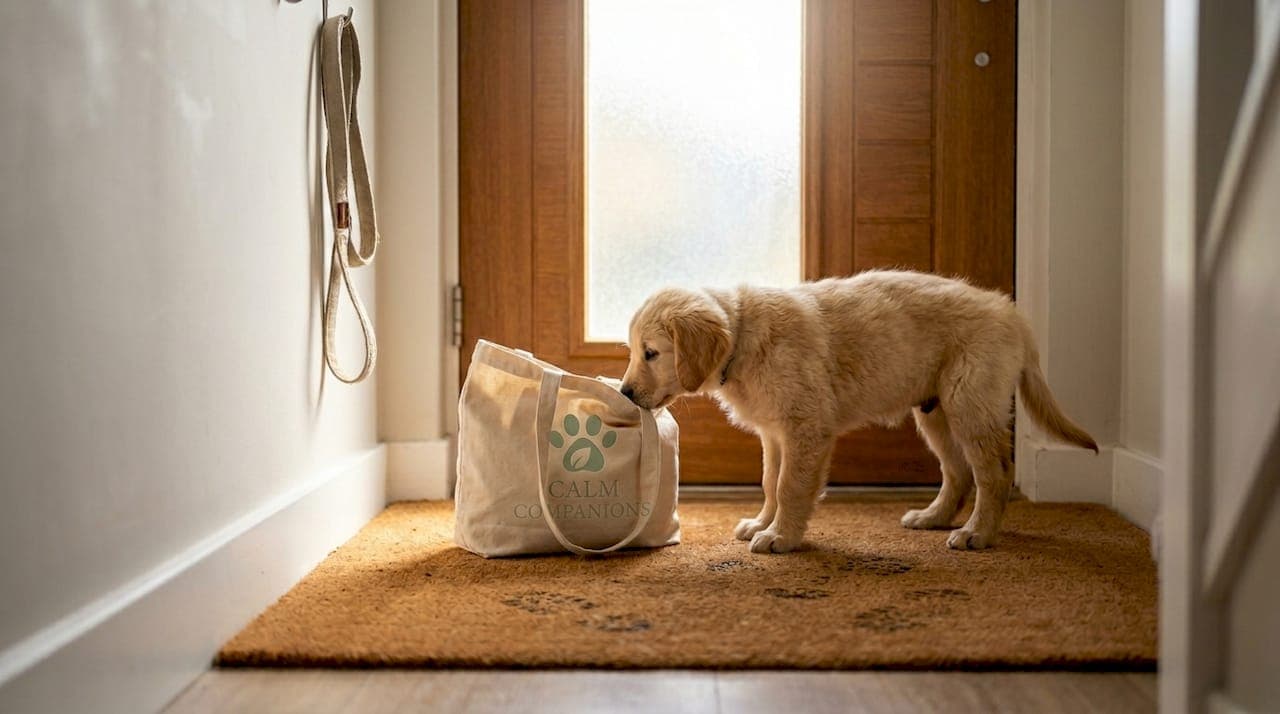
TL;DR:
- Gradual, positive socialization during 3 to 16 weeks shapes confident, lifelong behavior.
- Overwhelming exposure triggers fear imprinting, leading to anxiety and reactivity.
- Adjust socialization pace based on individual puppy's signals for optimal development.
Most new puppy owners assume the best approach is to expose their pup to everything as quickly as possible. The thinking goes: the more they see, the faster they adapt. But this is one of the most common and costly mistakes in early puppy care. Research shows that puppies have a critical socialisation window between 3 and 16 weeks where gradual, positive exposure to new stimuli shapes lifelong behaviour. Rush this process, and you risk the opposite of confidence. Slow it down thoughtfully, and you build a puppy who faces the world without fear. This guide gives you the science, the practical steps, and the honest perspective you need.
Table of Contents
- Understanding the science: Why gradual matters
- Risks of overwhelming your puppy
- How to introduce puppies gradually: Step-by-step
- Key adaptations: What about small, shy, or multi-dog homes?
- Our take: Why 'going slow' is the fastest way to a happy puppy
- Get expert support for your puppy's smooth transition
- Frequently asked questions
Key Takeaways
| Point | Details |
|---|---|
| Critical timing matters | Puppies between 3-16 weeks benefit most from calm, gradual introductions. |
| Avoid overwhelming your puppy | Rushed or forced exposure leads to fear, anxiety and potential aggression for life. |
| Follow puppy cues | Let your puppy approach new things at their own pace and back off if stressed. |
| Special cases need care | Small, shy, or multi-dog households should adapt strategies for safety and confidence. |
Understanding the science: Why gradual matters
Inside your puppy's brain, something remarkable is happening in those first weeks of life. Neural pathways are forming at a rate that will never be matched again. What your puppy experiences now, and crucially how they experience it, shapes the emotional template they carry for life.
The critical socialisation window runs from roughly 3 to 16 weeks. During this time, a puppy's brain is uniquely primed to accept new stimuli as normal. Miss this window, or fill it with frightening experiences, and the default response to novelty becomes fear or aggression rather than curiosity.
Here is what the evidence tells us about getting this right:
- Puppies introduced gradually to people, sounds, surfaces, and animals during the critical window develop stable, confident temperaments
- Positive associations formed early are far more durable than those created later in life
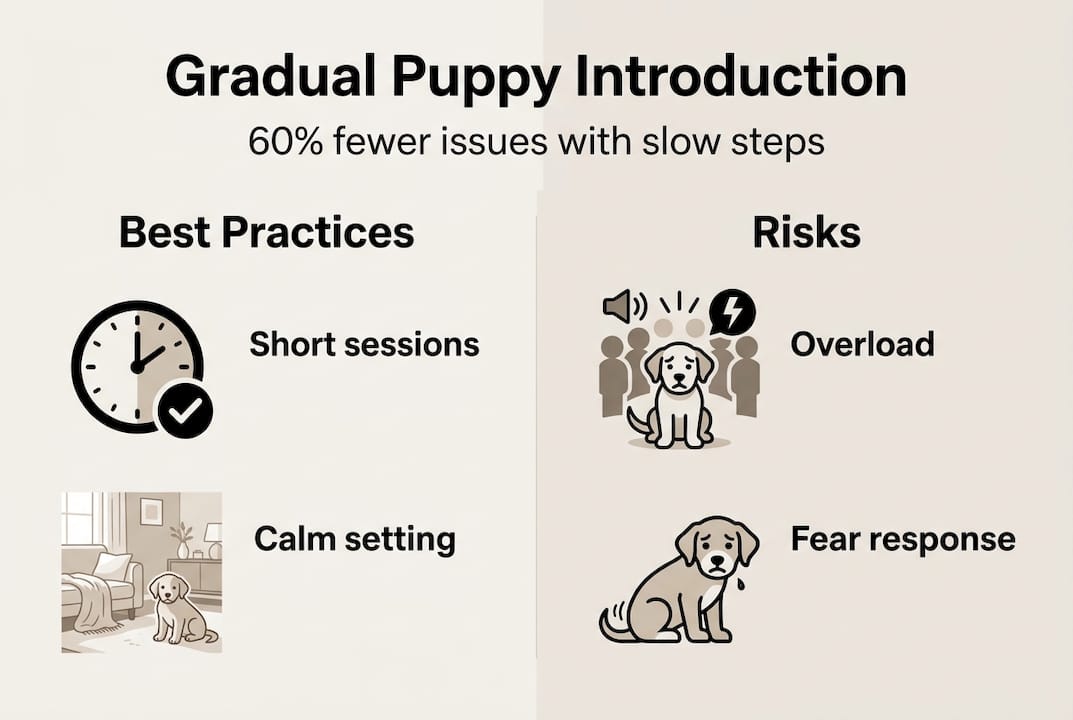
- Well-socialised puppies have 60% fewer behavioural problems than those with limited early exposure
- Gradual methods give the puppy's nervous system time to process and file each new experience as safe
Think of it like building calm from week 1. Each small, positive encounter is a deposit into an emotional bank account. Withdraw too fast, and the account goes into the red.
"The socialisation period is a once-in-a-lifetime opportunity. The experiences a puppy has during this window will influence their behaviour for the rest of their life." — Animal behaviour specialists consistently emphasise this across veterinary and training literature.
Experts across veterinary and training fields universally recommend socialising your dog through controlled, low-stress introductions rather than flooding. Flooding, which means exposing a puppy to intense stimuli until they stop reacting, might look like success but often produces shutdown rather than confidence. Establishing puppy-calming routines from the start supports this process enormously.
Risks of overwhelming your puppy
Now that the value of gradual exposure is clear, it is important to see why the wrong approach can backfire.
When a puppy is exposed to too much, too fast, the brain does not simply adapt. Instead, it registers the experience as a threat. This is called fear imprinting, and it is surprisingly easy to trigger without realising it. A crowded park on day two, a boisterous toddler rushing over, or a loud firework during the first walk can all leave lasting marks.
| Gradual introduction | Overwhelming introduction |
|---|---|
| Puppy explores at own pace | Puppy is placed into full stimulation |
| Positive associations form naturally | Stress hormones flood the system |
| Confidence builds over sessions | Fear or shutdown occurs |
| Behaviour remains stable long term | Reactivity and anxiety can develop |
According to extension research on socialisation, sudden or overwhelming introductions cause stress, fear imprinting, and risk lifelong anxiety. The damage is not always visible immediately, which makes it particularly dangerous.
Here are the key stress signals to watch for during any new introduction:
- Yawning outside of tiredness
- Repeated lip licking with no food present
- Tail tucked tightly under the body
- Freezing or refusing to move
- Whale eye (showing the whites of the eyes)
- Ears pinned flat
Overstimulation can result in learned helplessness and reactivity, two conditions that are genuinely difficult to reverse. Understanding puppy behaviour management early helps you catch these patterns before they become ingrained. If you notice any of the signals above, end the session calmly and give your puppy space to decompress.
Pro Tip: Do not wait for dramatic signs like growling or cowering. Subtle signals like yawning and lip licking are your puppy's first polite request for a break. Honour them every time, and your puppy learns that you are a safe person to communicate with. Ignoring them teaches the opposite. For more detail on spotting early warning signs, the guide on behavioural red flags is worth reading.
How to introduce puppies gradually: Step-by-step
With risks of overload clear, let us move to what proven gradual introductions actually look like in practice.
The framework is simple but requires consistency. Start small, keep sessions short, and always let your puppy set the pace. Low-intensity stimuli and short sessions of 3 to 10 minutes, where the puppy can choose their own pace, produce the best long-term outcomes.
| Week | Environment | Session length | Complexity |
|---|---|---|---|
| Week 1 | One or two rooms at home | 5 minutes | Very low |
| Week 2 | Full house, quiet garden | 5 to 10 minutes | Low |
| Week 3 | Quiet street, calm visitor | 10 minutes | Moderate |
| Week 4+ | Gradual public spaces | 10 to 15 minutes | Building |
Follow these steps for each new introduction:
- Choose a calm, low-distraction environment to begin
- Allow your puppy to approach the new thing rather than bringing it to them
- Reward calm curiosity immediately with a small treat or quiet praise
- Watch for stress signals and pause or retreat if any appear
- End every session on a positive note, even if progress was small
- Repeat the same experience until your puppy is relaxed before adding anything new
Puppy autonomy during sessions matters more than the number of new things introduced. One confident, happy encounter is worth more than ten anxious ones. For a fuller walkthrough, the guide on expert steps for new home introductions covers the first days in detail.
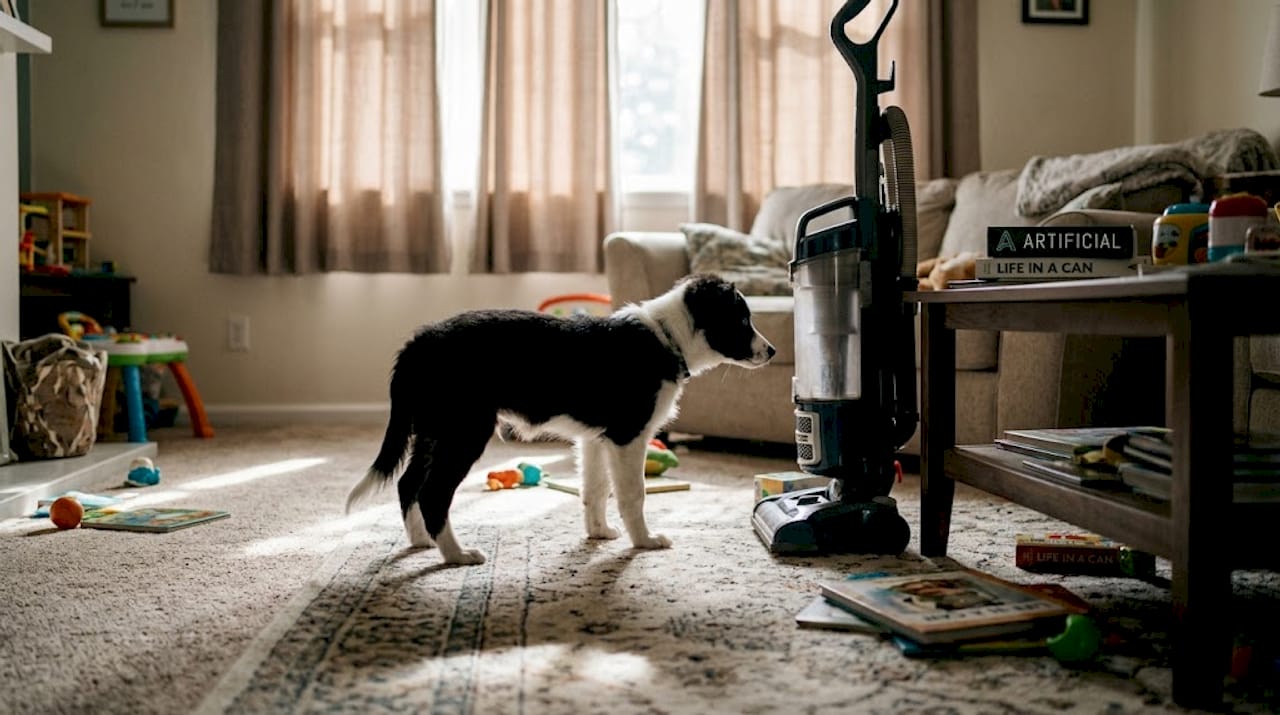
Pro Tip: Forget fixed timelines. If your puppy is still unsettled around the vacuum cleaner in week three, that is fine. Follow their cues, not a calendar. You will find more support in these stress-free transition tips and calming practical steps if you need to adjust your approach.
Key adaptations: What about small, shy, or multi-dog homes?
Practical as those steps are, each puppy is unique. Here is how to adjust for some of the most common special situations.
Small breeds face a specific challenge that larger breeds do not. The world is physically bigger and more threatening from their perspective. Small breeds need safe escape spaces during introductions with larger dogs, and introductions with existing dogs are best done on neutral territory. A baby gate, a raised surface, or a separate room gives a small puppy the ability to opt out, which is essential for building confidence rather than fear.
Shy or fearful puppies need an even slower pace. Never force a fearful puppy to approach something they are avoiding. Instead, place the new stimulus at a distance where your puppy notices it but remains relaxed. Reward calm observation. Move closer only when your puppy chooses to.
For neutral territory introductions between a new puppy and a resident dog, follow this approach:
- Choose a park or quiet outdoor space neither dog considers their territory
- Keep both dogs on loose leads and allow them to sniff briefly before moving apart
- Watch body language closely. Stiff posture, hard staring, or raised hackles are signals to increase distance
- Allow several short, positive meetings before bringing the new puppy home
"The goal is not for the dogs to be best friends immediately. The goal is for each dog to feel safe."
Understanding smoother pack behaviour between dogs takes time, and reading puppy social cues accurately is the skill that makes the difference between a smooth introduction and a stressful one.
Our take: Why 'going slow' is the fastest way to a happy puppy
One of the most common things new owners say to us is: "Shouldn't my puppy just get used to it?" It is an understandable instinct. We admire resilience. We want our dogs to be bold.
But here is the uncomfortable truth. Puppies who appear to "just get used to it" after an overwhelming experience are often not fine at all. They have shut down. Shutdown looks like calm. It is not. It is a puppy who has stopped communicating because communicating did not work.
We have seen the difference when owners follow a gradual approach. The puppy who was allowed to investigate the pushchair from across the garden before it ever came close. The pup who met the neighbour's dog through a fence for a week before they shared a garden. These puppies grow into dogs who are genuinely relaxed, not just suppressed.
The calming strategies for puppies that work long term are always the ones that respect the puppy's pace. Going slow is not coddling. It is the most efficient path to a confident, resilient adult dog.
Get expert support for your puppy's smooth transition
Knowing the principles is one thing. Putting them into practice during the chaos of a puppy's first weeks is another. If you are finding it hard to know whether your puppy is coping well, or simply want a clear plan to follow, you are not alone.
At Calm-Companions, we have built our puppy help resources specifically for this moment. Whether you need guidance on how to calm a new puppy or a structured plan for the first seven days, we have you covered. Download our free puppy week-1 checklist and get a day-by-day framework covering routines, settling techniques, and gentle introduction steps, all designed to make this transition calmer for both of you.
Frequently asked questions
What happens if I miss the puppy socialisation window?
If the critical period is missed, your puppy is more likely to develop lasting fears and aggression, but progress is still possible through slow, systematic desensitisation after 16 weeks.
How do I know if my puppy is overwhelmed?
Watch for subtle stress signals such as yawning, lip licking, tail tucking, or freezing, and always allow your puppy to retreat or pause when these appear.
Can my older puppy still learn to socialise?
Yes. Older puppies can improve with structured, gradual exposure, though results may take longer than during the ideal early window.
Should I wait for all vaccinations before exposing my puppy?
Veterinary guidance, including from the AVSAB, suggests that socialisation before full vaccination is critical and generally safe in well-managed, low-risk environments.