
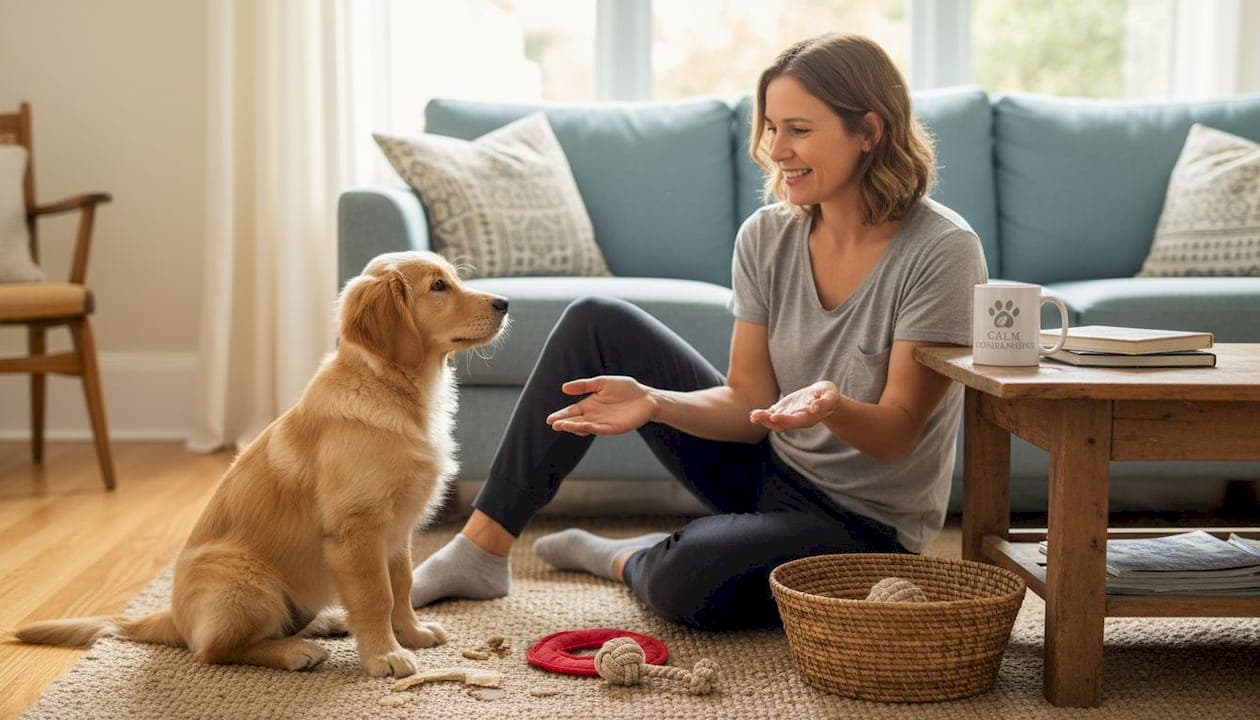
TL;DR:
Puppies communicate mainly through body language, not just wagging tails.
Recognizing context-specific signals helps build trust and prevent behavioral issues.
Early training and observation during the socialization window foster confident, well-adjusted dogs.
Most new puppy owners assume a wagging tail means a happy dog. It is one of the most common and costly assumptions you can make. Puppy body language is far richer and more nuanced than that single signal, and misreading social cues can quietly lead to behavioural issues that become much harder to address later on. The good news is that once you understand what your puppy is actually communicating, everything changes. You become calmer, your puppy feels safer, and the bond between you grows faster than you might expect. This article will walk you through what social cues are, how to read them accurately, and how to respond in ways that build genuine trust.
Table of Contents
Key Takeaways
| Point | Details |
|---|---|
| Read the whole body | Observing your puppy’s entire body language gives a true picture of their feelings. |
| Early social cues matter most | Understanding and responding to social cues during early weeks prevents future stress and behaviour problems. |
| Avoid common misinterpretations | Not every wag or yawn means what you think—context is crucial for correct communication. |
| Respond with calm guidance | Pausing interactions and mimicking calming cues can quickly build your puppy’s trust. |
What are puppy social cues and why do they matter?
Social cues are the signals your puppy uses to communicate how they feel and what they need. They include body posture, tail position, facial expressions, ear placement, eye contact, and vocalisation. Unlike adult dogs, puppies are still learning to regulate their emotions and rely almost entirely on these physical signals to interact with the world around them.
Before a puppy understands a single verbal command, they are already communicating constantly. Social cues are the primary method puppies use to connect with both humans and other dogs. This means that long before training begins in any formal sense, your ability to read these signals is already shaping your relationship.
One of the most important concepts to understand is the socialisation window. Between 3 and 16 weeks of age, puppies are at their most receptive to new experiences. Positive interactions during this period lay the foundation for a confident, well-adjusted adult dog. Miss this window or misread the cues during it, and you may spend months untangling anxiety or reactivity later.
Here are the main categories of social cues to be aware of:
-
Body posture: Relaxed and loose versus stiff and rigid
-
Tail signals: Height, speed, and direction of wagging
-
Facial expressions: Soft eyes versus hard stare, relaxed mouth versus tight lips
-
Ear position: Forward and alert versus pinned back flat
-
Calming signals: Yawning, lip licking, looking away, slow blinking
-
Play signals: Bouncy movement, play bow, loose body
Understanding these cues is not just about preventing problems. It is about building a shared language. When you start puppy training from week one with this awareness, you are already ahead of most new owners. Every positive interaction you have during those early weeks is a deposit into a trust account that pays dividends for years.
Key insight: Puppies communicate through body language far more than through sound. Learning to read these signals is the single most impactful skill a new owner can develop.
How to recognise key puppy social signals
Now that the importance of cues is clear, let us look at the specific signals you will encounter and what they actually mean. The tricky part is that many signals are context-dependent, and some are genuinely counterintuitive.
Take yawning. You might assume your puppy is simply tired. In many cases, yawning is actually a calming signal, meaning your puppy is feeling mild stress or is trying to de-escalate a situation. Lip licking, looking away, and sudden sniffing of the ground are all in the same category. These are not random behaviours. They are your puppy’s way of saying, “I am a little overwhelmed right now.”
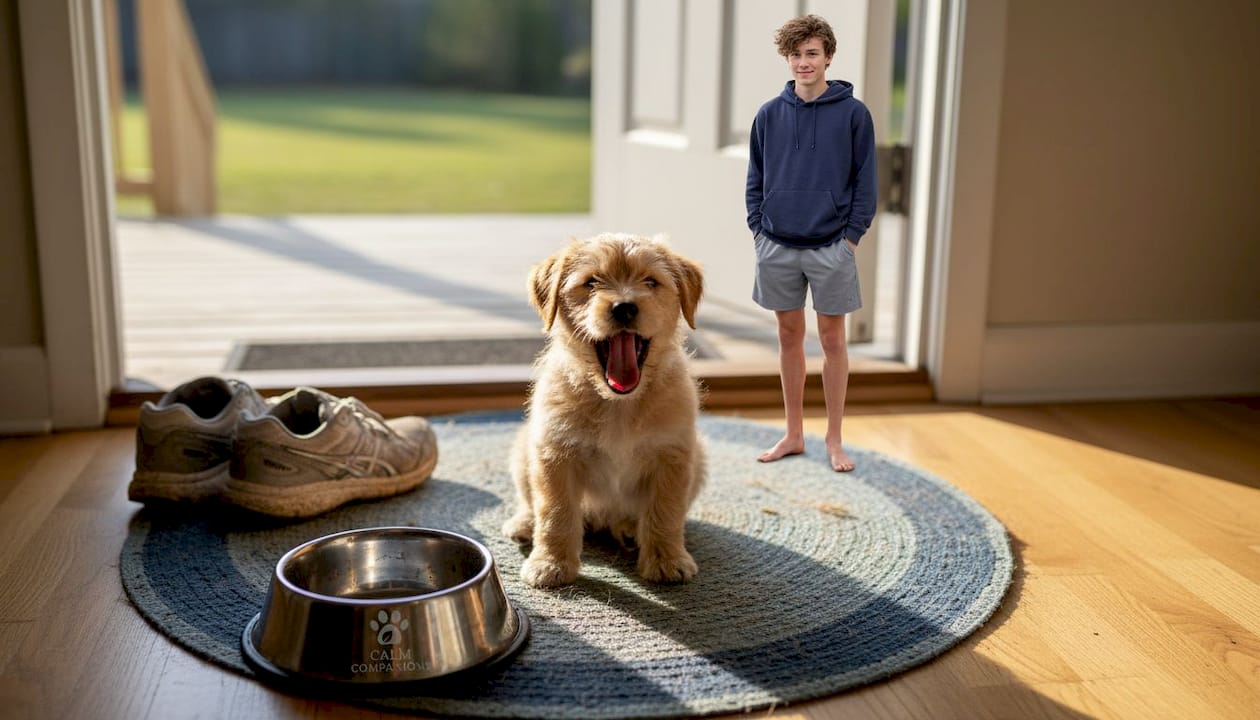
Here is a quick comparison of common signals and what they typically indicate:
| Signal | What it often means | Common misreading |
|---|---|---|
| Loose, wide wag | Happy and relaxed | Assumed to always mean happy |
| Stiff, slow wag | Aroused or uncertain | Mistaken for happiness |
| Play bow | Invitation to play | Ignored or misread as stretching |
| Freeze or stillness | Discomfort or warning | Missed entirely |
| Yawning | Stress or calming signal | Assumed to mean tired |
| Lip licking | Anxiety or appeasement | Assumed to mean hungry |
| Soft eyes, loose mouth | Calm and content | Taken for granted |
It is also worth noting that no single signal tells the full story. A wagging tail paired with a stiff body and hard stare is a very different message from a wagging tail with a loose, wiggly posture. Context is everything, and we will come back to that point.
Pro Tip: Watch your puppy’s whole body, not just one part. If the tail is wagging but the rest of the body is tense, treat it as a stress signal, not a happy one.
Good puppy behaviour management starts with this kind of observation. The more you practise reading the full picture, the more naturally it comes.
Common mistakes and challenges in interpreting cues
After learning to spot cues, it is equally important to know where new owners often go wrong. Even well-intentioned owners make consistent errors that can set back progress significantly.
Here are the most common mistakes:
-
Assuming a wagging tail always means friendliness. A fast, stiff wag can signal high arousal or even aggression. Speed and body tension matter enormously.
-
Anthropomorphising behaviour. Projecting human emotions onto your puppy leads to misreads. A puppy hiding under the sofa is not being “naughty” or “dramatic.” They are likely frightened.
-
Ignoring calming signals. Yawning, lip licking, and looking away are easy to dismiss. Repeatedly ignoring them teaches your puppy that their communication is pointless, which increases stress.
-
Misreading play as aggression. Growling during play is normal. The key is whether the body remains loose and the play is reciprocal.
-
Overlooking breed differences. Flat-faced breeds like Bulldogs show facial cues differently. Breeds with docked tails or heavy coats may mask signals entirely.
“Small breed puppies can be overwhelmed more easily and often need dedicated safe spaces where they can retreat without being followed.”
This is especially relevant when children or larger dogs are involved. A small puppy who cannot escape an overwhelming situation will escalate from calming signals to growling or snapping if the early signals are consistently ignored.
Pro Tip: If your puppy keeps moving away from a person or situation, respect it. Forcing interaction when a puppy is signalling discomfort is one of the fastest ways to erode trust.
Knowing which signs to act on early can prevent minor issues from becoming entrenched habits. And if your puppy seems consistently anxious, practical steps for calming a new puppy can make an immediate difference.
How to respond to and use your puppy’s social cues
Knowing the pitfalls, focus now shifts to actionable ways to use cues for smoother puppy management. Reading signals is only half the equation. Responding well is where real progress happens.
Here is a practical table of common cues and the most effective owner responses:
| Puppy cue | What it signals | Best owner response |
|---|---|---|
| Yawning or lip licking | Mild stress | Pause the interaction, give space |
| Play bow | Wants to engage | Respond with calm play or a toy |
| Freeze | Discomfort or warning | Stop immediately, remove trigger |
| Loose, wiggly body | Happy and relaxed | Reinforce with calm praise |
| Hiding or retreating | Overwhelmed | Allow retreat, do not follow |
| Soft eye contact | Trust and connection | Maintain gentle eye contact back |
Here are the key steps for using cues actively in your daily routine:
-
Pause on stress signals. When you see yawning or lip licking, stop what you are doing. Give your puppy a moment to settle before continuing.
-
Mirror calming signals. Mimicking calming signals such as yawning or turning slightly away can genuinely reassure your puppy. It signals that you are not a threat.
-
Use controlled exposures. Introduce new experiences gradually, watching for stress signals throughout. If you see them, slow down.
-
Reinforce calm behaviour. When your puppy is relaxed and showing soft, open body language, quietly reward it. You are teaching them that calm gets attention.
-
Build predictable routines. Puppies read environmental cues too. Consistent routines reduce uncertainty, which reduces stress signals overall.
Pro Tip: Yawn deliberately at your puppy during a tense moment. Many puppies respond by relaxing their posture. It sounds unusual, but it works.
Building this kind of attunement is at the heart of calm leadership for puppies. Pair it with the right puppy transition tips from the start, and the first weeks become far less stressful for both of you.
Why context, not isolated cues, is the puppy owner’s true advantage
Most guides on puppy body language give you a list of signals and their meanings. Memorise this, they say, and you will understand your dog. At Calm-Companions, we think that approach misses the point.
The real skill is not memorising what a play bow means in isolation. It is understanding what a play bow means when your puppy has just been startled, is in an unfamiliar environment, and has not slept well. Context transforms the meaning of every signal.
Observing the full body in its environment, not just a single cue, is what separates owners who genuinely connect with their puppies from those who are always slightly behind the conversation. A checklist of signals can get you started. But flexible, attuned observation is what actually builds the relationship.
This is also why puppy pack behaviour matters so much in multi-dog or family households. The same puppy will show different signals depending on who is in the room. Learning to read those shifts is a skill that grows with time and attention, not just knowledge.
Stop trying to decode your puppy like a puzzle. Start observing them like a conversation partner.
Support for calm, connected puppy parenting
Reading your puppy’s social cues is a skill that develops quickly when you have the right support around you. The early weeks are where the foundation is set, and having a clear, structured approach makes all the difference.
At Calm-Companions, we have built our resources specifically for new owners navigating those first critical weeks. Our Week-1 Puppy Calm Support guide gives you a practical, day-by-day framework for settling your puppy in with confidence. If you want hands-on puppy training support that goes beyond the basics, we have that too. You do not have to figure this out alone. The right guidance at the right time makes the whole experience calmer, for your puppy and for you.
Frequently asked questions
How do I tell if my puppy is happy or stressed?
A relaxed, loose body posture and soft facial features usually indicate happiness, while yawning and lip licking are common signs of stress or mild anxiety in puppies.
What is the socialisation window, and why is it important?
The socialisation window runs from 3 to 16 weeks and is the period when puppies are most open to positive experiences, shaping their confidence and behaviour for life.
Can I use my own body language to communicate with my puppy?
Yes. Mimicking calming signals such as yawning or gently turning away can reassure your puppy and signal that you are safe and non-threatening.
Do breed or size differences affect puppy social cues?
Small breed puppies can be overwhelmed more easily and may show signals differently, often requiring more protected spaces and gentler introductions to new experiences.