
TL;DR:
- Calm, predictable environments support puppies' emotional growth and reduce stress.
- Overstimulation causes poor settling, ignores cues, and long-term behavioural issues.
- Structured routines and tailored adjustments help shy or sensitive puppies feel secure.
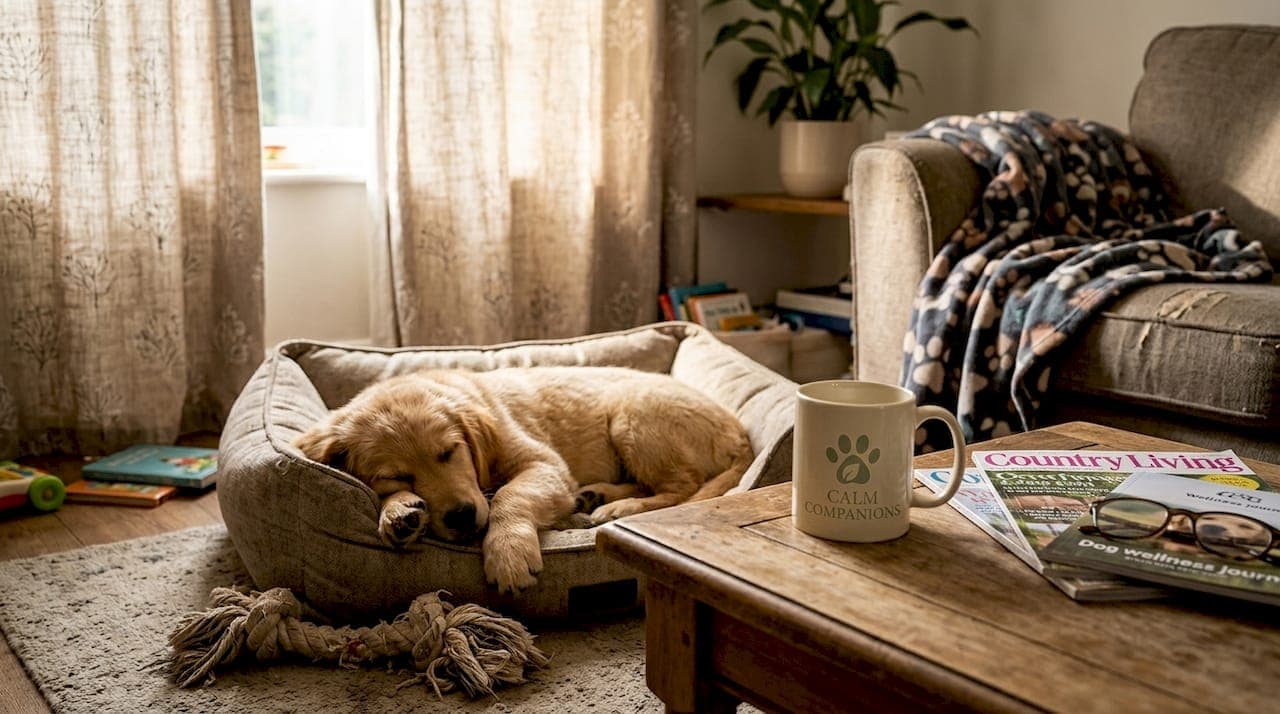
Many new puppy owners assume that a buzzing, exciting household is the best gift they can give their new arrival. If the puppy is running around, playing constantly, and meeting everyone at once, surely that means they are thriving? In reality, the opposite is often true. Puppies that are surrounded by constant noise, handling, and stimulation can struggle to settle, learn, or trust their new environment. A calm, predictable home is not boring for a puppy. It is the foundation for healthy development, confident behaviour, and a genuinely happy life together.
Table of Contents
- Why calm environments matter for puppies
- How overstimulation affects young puppies
- Early routines and their impact on adjustment
- Tailoring calm environments to individual puppies
- Why true calm beats constant entertainment
- Get expert help creating your calm puppy environment
- Frequently asked questions
Key Takeaways
| Point | Details |
|---|---|
| Calm home equals better behaviour | Puppies raised in calm, predictable settings adjust faster and show fewer behavioural issues. |
| Avoid overstimulation | Recognising and preventing overstimulation helps reduce nipping, anxiety, and future challenges. |
| Routines build confidence | Simple daily routines give puppies security and aid in toilet training and social success. |
| Adapt to each puppy | Some puppies require slower, gentler approaches for calm to take hold and prevent long-term stress. |
Why calm environments matter for puppies
There is an important distinction to draw here: calm does not mean quiet or dull. A calm environment still includes play, exploration, and social interaction. What it removes is the unpredictable, relentless stimulation that overwhelms a young puppy's developing nervous system. Puppies in calm settings are free to investigate their surroundings with curiosity, take in new experiences at their own pace, and build confidence gradually.
Research supports this strongly. Maternal stress affects puppy coping, linking prenatal anxiety in dams to measurable stress responses in puppies through faecal glucocorticoid metabolites and isolation behaviours. This tells us that the groundwork for a puppy's emotional regulation starts even before birth. Once a puppy arrives in your home, the environment you create either supports or undermines that early wiring.
"A calm environment does not limit a puppy's potential. It gives their nervous system the space to grow into it."
In studies of enriched but calm settings, animals showed increased playfulness and exploration compared to those in chaotic or barren conditions. Calm enrichment boosts activity and play while reducing anxiety markers, which is precisely what you want in those critical early weeks. You can read more about putting this into practice through early puppy training, which sets the tone for the weeks ahead.
Here is a summary of the core benefits that calm environments provide for young puppies:
- Faster trust building with their new family and home
- Lower baseline stress, which means fewer anxious or reactive behaviours later
- Improved learning readiness, as a calm brain absorbs training far more effectively
- Better sleep quality, which is essential for physical and neurological development
- Reduced risk of separation anxiety when alone time is introduced gently from the start
Understanding calm leadership for puppies is one of the most effective shifts a new owner can make. It changes the tone of every interaction and sets up a lifetime of better communication between you and your dog.
How overstimulation affects young puppies
Overstimulation is one of the most misunderstood concepts in early puppy care. It does not look like distress. In fact, it often looks exactly like what people celebrate: a hyper, bouncy, energetic puppy. But there is a difference between a puppy who is joyfully curious and one who has gone past their threshold and cannot come back down.
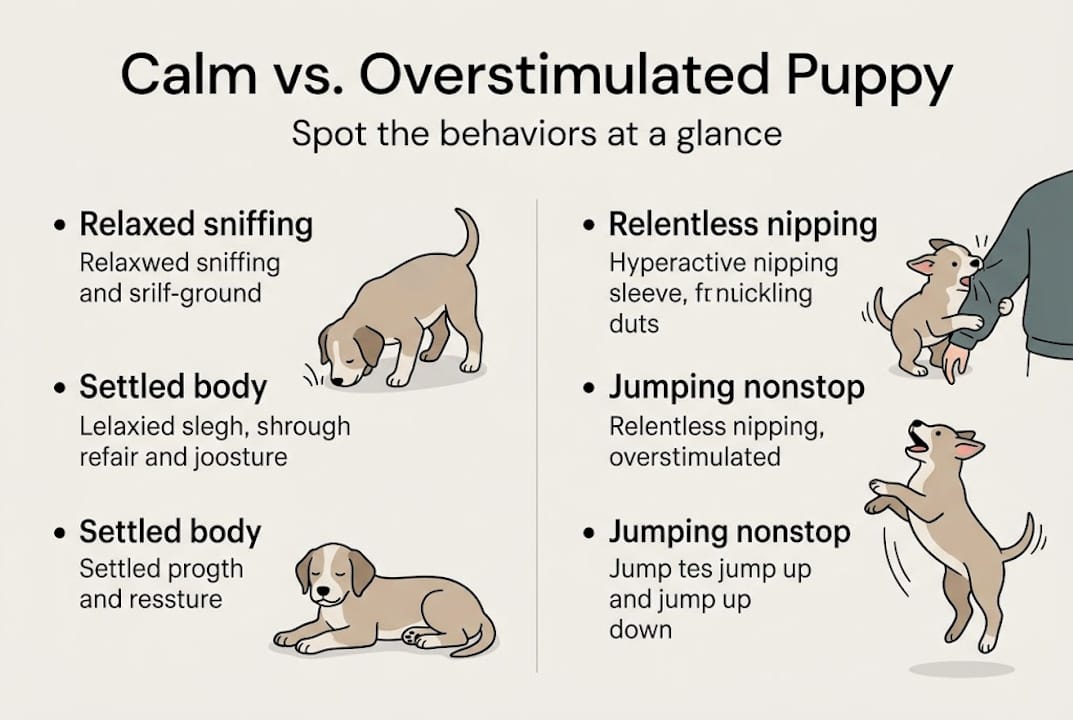
Common signs of overstimulation include relentless nipping, jumping that does not stop when asked, inability to settle after play, and completely ignoring cues they already know. Overstimulation mimics high energy, with behaviours like ignoring cues and persistent nipping being frequent signals that a puppy has had too much. Left unmanaged, this pattern builds frustration, erodes trust, and can lead to long-term issues including separation anxiety.
Calm vs. overstimulated puppy behaviours
| Behaviour | Calm puppy | Overstimulated puppy |
|---|---|---|
| After play | Settles within a few minutes | Cannot wind down, continues to seek stimulation |
| Response to cues | Responds reliably | Ignores familiar commands |
| Biting | Gentle mouthing | Hard, frantic nipping |
| Eye contact | Soft, relaxed | Darting, unfocused |
| Sleep | Falls asleep easily | Fights sleep despite being tired |
How do you reduce overstimulation when you spot it? Follow these steps:
- Pause all interaction immediately and move to a quieter space.
- Avoid eye contact and speech for a few minutes to lower arousal.
- Guide your puppy to their crate or quiet area without fuss or drama.
- Allow them to sleep without interruption until they wake naturally.
- Reassess the session that preceded it and identify what tipped them over.
Pro Tip: Puppies need 18 to 20 hours of sleep every day. If your puppy is consistently getting less than this, overstimulation is almost certainly a factor. Use sleep duration as your first benchmark for whether the environment is calm enough.
For more detail on managing the energy levels that come with puppyhood, managing puppy excitement walks through practical techniques that work during the early weeks. Learning to read body language is equally important, and understanding puppy social cues will help you spot the signals before your puppy reaches their limit.
Early routines and their impact on adjustment
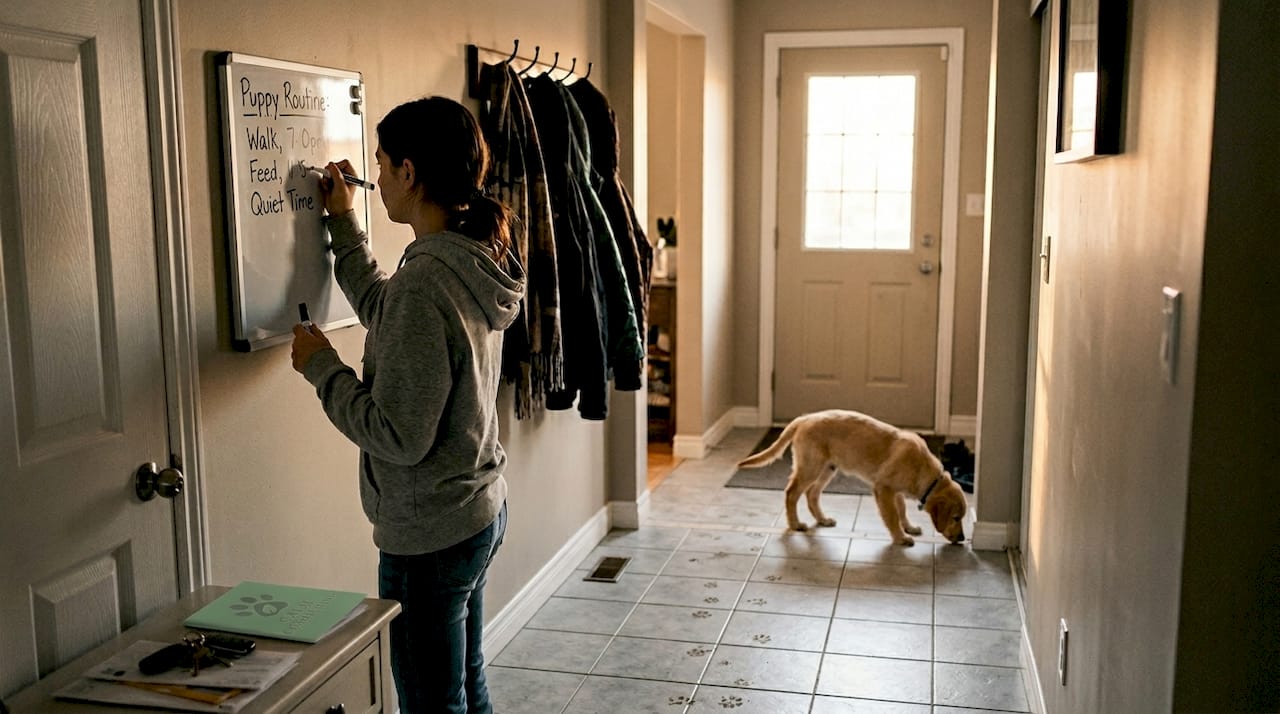
Once you can spot and prevent overstimulation, the next step is to build the right routines. Predictability is not just convenient for you. For a puppy, it is genuinely reassuring. When feeding, rest, play, and toilet breaks happen at consistent times, a puppy's nervous system learns that the world is safe and reliable. That feeling of safety is the bedrock of good behaviour and calm adjustment.
Proper early socialisation prevents lifelong fear and aggression responses, but socialisation works best when it happens within a structured, calm framework rather than through random, high-intensity exposure. A routine gives the puppy the stability they need to absorb new experiences without becoming overwhelmed.
Key routine elements and their adjustment benefits
| Routine element | Why it matters | Expected benefit |
|---|---|---|
| Set feeding times | Reduces uncertainty and digestive stress | Calmer between meals, easier toilet training |
| Scheduled naps | Prevents overtiredness and cranky behaviour | Faster settling, fewer biting incidents |
| Regular toilet breaks | Builds prediction and reduces accidents | Confidence and house training progress |
| Consistent social windows | Limits overstimulation from visitors | Less anxiety around new people over time |
| Quiet time before bed | Signals wind-down and prepares for night | Improved night settling from the first week |
Here are practical steps for building a first-week routine:
- Fix meal times and stick to them, even at weekends
- Create a nap schedule based on your puppy's natural tired signals
- Take your puppy out for toilet breaks after every meal, nap, and play session
- Limit visitor numbers and keep greetings short and calm in the first fortnight
- Use the same word cues consistently so your puppy starts to associate language with actions
You can explore this further through how routines calm puppies, which covers the science of predictability in detail. For a broader look at managing behaviour alongside routine, puppy behaviour management provides a practical framework that ties everything together.
Tailoring calm environments to individual puppies
Since every puppy is unique, you need to adapt your calm environment for all kinds of personalities. A routine that suits a confident, relaxed Labrador puppy may completely overwhelm a sensitive whippet or a shy rescue. One-size-fits-all approaches to calm rarely work in practice.
Shy or fearful puppies need customised slow plans, and prenatal dam stress has been linked to lower birth weights and elevated stress hormones in offspring. This means some puppies arrive with a more sensitised stress response, through no fault of their own or their owner's. These puppies need even more patience and an even quieter start.
Signs that your puppy may need less stimulation or extra accommodation include:
- Tucking away or hiding after short interactions
- Trembling or yawning excessively during greetings
- Refusing food in new or busy environments
- Taking significantly longer to settle after play than average
- Reacting strongly to sounds that other puppies ignore
Here are simple adjustments you can make for different personalities:
- Shy puppies: Reduce visitor numbers drastically in the first two weeks; let the puppy approach people rather than the reverse
- Excitable puppies: Build in more structured rest periods and end play sessions before the puppy reaches their limit
- High-needs puppies: Use calm enrichment toys during rest time rather than active play to meet their mental needs without raising arousal
- Sensitive puppies: Introduce household sounds gradually and use white noise or gentle music to buffer sudden changes
Pro Tip: Short, regular periods of gentle alone time from day one prevent long-term separation anxiety. Start with just a few minutes in a crate or safe area with a chew, and build up slowly. This is one of the most valuable investments you can make in those first weeks.
For more tailored advice, puppy transition tips covers the practical steps of settling different temperaments, and how to calm a new puppy gives you a step-by-step starting point for whatever personality you are working with.
Why true calm beats constant entertainment
Here is the uncomfortable truth that most puppy content glosses over: constant entertainment is not kindness. When owners feel guilty about a puppy being bored and respond by adding more toys, more play, more people, and more excitement, they are actually increasing the puppy's stress load, not reducing it. The puppy learns that stimulation is the norm and struggles to cope without it.
What decades of research and practical experience show is that the benchmarks of a well-adjusted puppy are not high energy or endless enthusiasm. They are 18 to 20 hours of sleep per day and quick recovery from stress. A puppy that can be gently unsettled and then return to calm within a few minutes is developing genuine resilience. A puppy that stays wound up for hours after an exciting event is not.
This also matters for breeders, not just owners. Maternal and prenatal factors shape a puppy's baseline stress tolerance before they ever arrive in your home. The good work you do in building calm confidence through early training and trust can compensate for a difficult start, but it takes consistency and the courage to say no to constant stimulation, even when a puppy seems to be asking for it.
Get expert help creating your calm puppy environment
Building a calm environment for your puppy is one of the best decisions you will make, but it is much easier with a clear plan and the right support.
At Calm-Companions, we have put together practical resources specifically designed for new puppy owners who want to get the first week right. Our free Week-1 Puppy Calm Checklist walks you through exactly what to do each day, from feeding schedules and nap routines to night settling and calm introductions. If you want personalised support, visit our Puppy Help hub for guidance that fits your specific situation. You can also explore our dedicated advice on calming your new puppy for practical steps you can use today.
Frequently asked questions
How much sleep does my puppy need for healthy development?
Puppies typically need 18 to 20 hours of sleep every day to recover, grow, and process their experiences without becoming overstimulated.
Can a busy household negatively impact my puppy's adjustment?
Yes, too much noise and activity raises your puppy's stress levels and can lead to behavioural issues such as persistent nipping and separation anxiety if calm periods are not built in regularly.
What are signs that my puppy is overstimulated?
Watch for frequent nipping, ignoring familiar cues, hyperactivity, and difficulty settling after play. These are reliable signals that your puppy has exceeded their stimulation threshold.
How can I help a naturally shy or nervous puppy feel safe?
Move slowly, reduce visitor numbers, and use gentle, gradual routines that introduce low-level stimulation over time, with plenty of quiet rest built in throughout the day.