
TL;DR:
- Early socialisation between three and sixteen weeks shapes a confident, well-adjusted adult dog.
- Gentle, positive exposures to people, sounds, environments, and handling reduce future behavioral issues.
- Consistency, patience, and staying calm are key to successful puppy socialisation and development.
Bringing a new puppy home is one of the most exciting things you can do, but those first few weeks can feel genuinely overwhelming. You want to do everything right, yet the sheer number of things to introduce, manage, and track can leave even the most prepared owner second-guessing every decision. Here is the thing: the experiences your puppy has between three and sixteen weeks old will shape how they respond to the world for the rest of their life. A structured, step-by-step socialisation checklist turns that pressure into something manageable. This guide walks you through what to do, when to do it, and how to keep calm while you do.
Table of Contents
- Why socialisation matters: Setting your puppy up for success
- The essential puppy socialisation checklist
- Calm introductions: How to guide your puppy through new experiences
- Tracking progress and troubleshooting common setbacks
- Our take: The truth about socialising a modern puppy
- Next steps: Support for calm, confident puppies
- Frequently asked questions
Key Takeaways
| Point | Details |
|---|---|
| Early socialisation matters | Start exposing your puppy to safe, positive experiences as soon as they arrive home for the best results. |
| Checklist keeps you on track | A structured checklist helps ensure you cover all crucial socialisation experiences methodically. |
| Go at your puppy’s pace | Tailor introductions to your puppy’s individual comfort and do not rush, even if it takes extra time. |
| Track and adapt | Monitor your puppy’s reactions, celebrate successes, and adjust if you hit setbacks or see signs of stress. |
Why socialisation matters: Setting your puppy up for success
Socialisation is not just about letting your puppy meet other dogs at the park. It is the deliberate process of exposing your puppy to a wide range of people, sounds, textures, environments, and situations during their critical developmental window. When done well, it shapes a dog who is curious rather than fearful, adaptable rather than anxious.
The critical socialisation period runs from roughly three to sixteen weeks of age. During this window, a puppy's brain is especially receptive to new experiences. What they encounter (or miss) during this time leaves a lasting impression. Proper socialisation in early weeks leads to calmer, more confident adult dogs, and fewer behavioural problems down the line.
Here is what good socialisation achieves:
- Reduced fear and anxiety around unfamiliar people and places
- Calmer responses to everyday sounds like traffic, hoovers, and doorbells
- Better tolerance of handling, grooming, and vet examinations
- More positive interactions with other animals
- Faster settling when routines change
Poor socialisation, on the other hand, is one of the leading causes of fear-based behaviours in adult dogs. Excessive barking, growling, cowering, and even aggression often trace back to gaps in those early weeks. The RSPCA puppy advice reinforces that early, positive exposure to varied experiences is one of the most powerful tools available to new owners.
"A puppy who is gently exposed to the world early grows into a dog who feels safe in it." This is not just a nice idea. It is the foundation of good behaviour management basics that will serve you for years.
Think of the socialisation window as a filing cabinet. Everything your puppy experiences now gets filed under "normal" and "safe." Leave a drawer empty and that gap can become a source of anxiety later. Your job is to fill as many drawers as possible, gently and at your puppy's pace.
The essential puppy socialisation checklist
Understanding the "why" sets the stage for the "how." Here is your essential checklist, organised by category, so you can track what your puppy has experienced and what still needs attention.
1. People Introduce your puppy to people of different ages, sizes, and appearances. This includes men with beards, children, people wearing hats or glasses, and visitors to your home.
2. Animals Arrange calm, supervised meetings with friendly, vaccinated dogs. Exposure to cats and other household pets counts too. Check the Dogs Trust socialisation guidance for safe introduction tips.
3. Noises Play recordings of thunder, traffic, fireworks, and household appliances at low volume while your puppy is relaxed. Gradually increase volume as confidence grows.
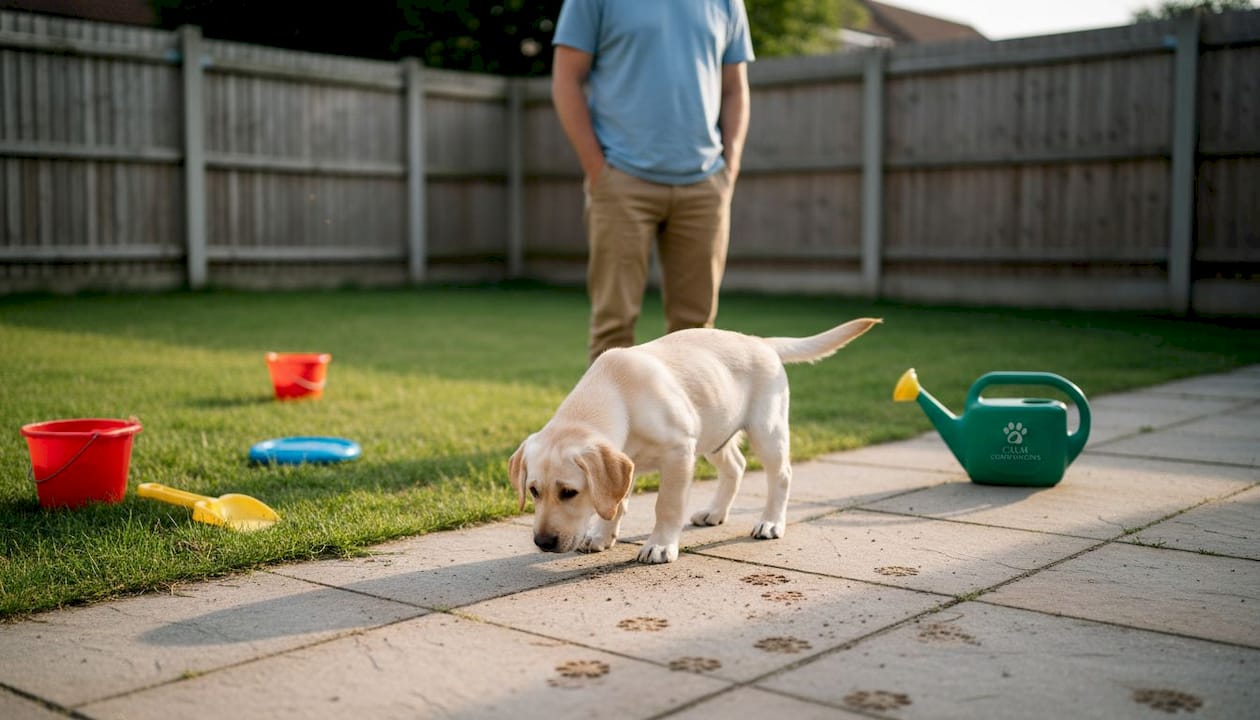
4. Environments Take your puppy to different surfaces (grass, gravel, tiles) and settings (car journeys, car parks, quiet streets). Even carrying them before full vaccination counts.
5. Handling Practise touching your puppy's ears, paws, mouth, and tail daily. This prepares them for grooming and vet visits without stress.
A well-structured checklist gives structure to your puppy's first weeks and makes it far easier to spot gaps before they become problems.
Here is a quick guide to what counts as essential versus what is a helpful bonus:
| Experience | Must-have | Nice-to-have |
|---|---|---|
| Meeting children | Yes | |
| Busy street sounds | Yes | |
| Car travel | Yes | |
| Visiting a pet shop | Yes | |
| Meeting horses or livestock | Yes | |
| Escalators or lifts | Yes | |
| Pram or pushchair | Yes | |
| Handling paws and ears | Yes |
For more guidance on introducing your puppy to home environments safely, we have a dedicated step-by-step resource worth bookmarking.
Pro Tip: Tailor your checklist to your puppy's breed and temperament. A naturally cautious breed like a Shih Tzu may need more gradual exposure than a sociable Labrador. Start with lower-intensity versions of each experience and build from there.
Calm introductions: How to guide your puppy through new experiences
Checklist in hand, let us look more closely at making each new experience calm and positive. Because the checklist only works if the introductions themselves go well.
The single most important factor in any new experience? Your energy. Dogs read their owners constantly. If you tense up when a stranger approaches, your puppy feels it. Staying relaxed and matter-of-fact signals to your puppy that there is nothing to worry about. Step-by-step, positive introductions build genuine trust and lasting calmness over time.
Here are the key principles for calm introductions:
- Let your puppy lead. Do not force them towards something that worries them. Allow approach at their own pace.
- Use high-value treats. Pair every new experience with something delicious to create a positive association.
- Keep sessions short. Five minutes of positive exposure is worth more than twenty minutes of stress.
- Praise calm behaviour. Reward your puppy for investigating calmly, not just for tolerating the experience.
- End on a positive note. Always finish before your puppy becomes overwhelmed.
For first vet visits, try visiting the practice just to say hello and receive treats, without any examination involved. This removes the automatic association between the vet and discomfort. The Blue Cross puppy guidance recommends exactly this kind of low-stakes pre-visit to build positive associations early.
"Socialisation is not about exposing your puppy to everything at once. It is about building a library of good memories, one calm experience at a time."
Knowing when to pause is just as important as knowing when to push forward. You can find practical calming steps for managing stress during introductions in our dedicated calming guide.
Pro Tip: If your puppy shows yawning, lip licking, a tucked tail, or tries to hide, those are stress signals. Stop the session immediately, give them space, and try again later with a smaller step.
Tracking progress and troubleshooting common setbacks
Even with the best plan, hurdles occur. Tracking your puppy's responses over time helps you spot patterns, celebrate progress, and catch problems early before they become ingrained.
Use a simple progress tracker like this:
| Experience | Date introduced | Puppy's response | Next step |
|---|---|---|---|
| Vacuum cleaner | Week 1 | Startled, recovered | Repeat at lower distance |
| Children visiting | Week 2 | Calm, curious | Introduce more children |
| Car journey | Week 1 | Anxious, whined | Shorter trips with treats |
| Meeting friendly dog | Week 3 | Positive, playful | Arrange regular play |
Tracking like this gives you a clear picture of where your puppy is thriving and where they need more support. Ongoing progress tracking improves outcomes and reduces the likelihood of problem behaviours developing later.
Here are the most common setbacks and how to handle them:
- Sudden fear of something familiar. This is normal. It often coincides with fear periods at around eight weeks and again at six to fourteen months. Simply go back to basics and reintroduce gently.
- Refusal to walk past a specific spot or object. Do not drag your puppy past it. Toss treats near the object and let them approach voluntarily.
- Overexcitement rather than calm. Some puppies become so stimulated they cannot settle. Shorter, quieter sessions work better than busy environments.
- Regression after illness or a stressful event. Start socialisation again at an earlier step and rebuild confidence gradually.
If your puppy shows persistent fear, freezing, or aggression despite gentle exposure, it is worth contacting a qualified behaviourist. The Kennel Club troubleshooting resource includes guidance on finding accredited trainers across the UK. Learning to read social cues for calmness will also help you respond more accurately to what your puppy is telling you.
Also worth noting: a puppy who struggles with puppy transition tips in the first weeks often benefits most from a consistent daily routine, not more exposure.
Our take: The truth about socialising a modern puppy
Here is something worth saying plainly: no puppy will tick every box on a socialisation checklist. Not one. And that is completely fine.
There is a pressure in modern puppy ownership to achieve some version of the perfectly socialised dog, exposed to every scenario, comfortable in every setting. But in our experience, that pursuit can become counterproductive. Owners push too fast, puppies become overwhelmed, and the whole process backfires.
What actually builds a confident dog is consistency, patience, and a genuine willingness to follow your puppy's lead. One calm, positive experience repeated regularly is worth more than ten rushed, stressful ones.
We also want to be honest: progress is rarely linear. There will be steps back. A puppy who seemed fine around strangers last week may be wobbly again this week. That is not failure. That is normal development. Your obedience guide matters far less in those moments than your ability to stay calm and reassuring.
Focus on quality over quantity. Celebrate the small wins. And trust that steady, gentle progress always beats rushing.
Next steps: Support for calm, confident puppies
Putting a socialisation plan into action is so much easier when you have the right tools from the start.

At Calm Companions, we have built a free week-1 puppy checklist specifically to guide new owners through those critical first days, covering routines, night settling, and early socialisation steps in one simple download. If you would like more hands-on support, our puppy help service connects you with tailored guidance for your specific situation. And if your main challenge right now is an unsettled puppy, our resource on calming your new puppy walks you through immediate, practical steps. We are here at every stage, not just to hand you a checklist, but to make sure you actually feel supported using it.
Frequently asked questions
When should I start socialising my puppy?
You should begin socialisation as soon as your puppy arrives home, ideally within the critical window of 3 to 16 weeks when their brain is most receptive to new experiences. Even before vaccinations are complete, carrying your puppy to new environments counts.
What if my puppy is scared during socialisation?
Pause the session straight away, offer calm reassurance, and allow your puppy to retreat to somewhere comfortable. Responding with reassurance and smaller steps next time builds far more confidence than pushing through the fear.
How many socialisation experiences does my puppy need?
There is no magic number. Aim for variety, but prioritise quality of exposure over ticking as many boxes as possible. Daily new, positive experiences during the early weeks are ideal.
Do I need to meet other dogs for socialisation to work?
Friendly, vaccinated dog meetings are valuable, but they are just one piece of a much bigger picture. Balanced socialisation includes sounds, environments, people, and handling, all of which matter just as much as canine company.