
TL;DR:
- Establishing a consistent routine helps puppies feel safe, reducing stress and unwanted behaviors.
- Proper scheduling of toilet breaks, meals, and sleep accelerates house training and behavior stability.
- Flexibility should come only after a puppy is confident, rested, and securely routines have been established.
Most new owners assume their puppy will simply settle in when given time and space. This is one of the most common and costly misconceptions in early puppy care. Without a clear routine, puppies experience genuine confusion, not freedom. They cannot predict what comes next, which triggers anxiety, accidents, and unwanted behaviours. Puppy schedules provide structure that helps puppies feel secure, predict expectations, and adjust faster to new homes. This guide covers everything you need: potty timing, feeding windows, sleep requirements, socialisation, and practical tips to make your first weeks together far smoother.
Table of Contents
- Why structure matters: Behaviour, confidence, and a calmer puppy
- Anchoring your day: Potty, meals, sleep, and play explained
- How scheduling fast-tracks house training and better behaviour
- Schedules for socialisation and life beyond basics
- Special cases and schedule adaptions: Illness, regressions, and breed quirks
- A hard truth most guides miss: Predictability always beats 'just winging it'
- Support for a calmer puppy journey
- Frequently asked questions
Key Takeaways
| Point | Details |
|---|---|
| Structure relieves puppy anxiety | Consistent routines quickly make puppies feel safe, calm, and able to learn. |
| Scheduling speeds up training | A regular schedule reduces toilet accidents and helps obedience stick faster. |
| Balance activity and rest | Adequate sleep and downtime prevent naughty behaviour and overtiredness. |
| Flexibility for special situations | Adapting your routine when ill or after changes makes life easier for you and your pup. |
Why structure matters: Behaviour, confidence, and a calmer puppy
Puppies are not miniature adults. Their brains are wired to learn through repetition and predictability. When the same things happen at roughly the same times each day, a puppy begins to feel safe. That sense of safety is not a luxury; it is the foundation for every skill you want to teach.
Without structure, puppies spend enormous energy trying to figure out what is happening next. That mental load shows up as biting, barking, restlessness, and toileting in the wrong places. It is not naughtiness. It is stress. When you build stress-free puppy routines from day one, you remove that guesswork and give your puppy permission to relax.
A puppy who knows what to expect is a puppy who can focus, learn, and thrive. Predictability is not boring for a dog; it is deeply reassuring.
Structure also directly shapes behaviour. Fewer surprises mean fewer outbursts. A puppy who eats, sleeps, toilets, and plays at consistent times is far less likely to bite out of frustration or have accidents through the night. Understanding how routines calm puppies helps you see why this is not just convenient for you but genuinely kind for your pup.
The core anchor points of a strong routine are:
- Morning toilet break immediately on waking
- Breakfast at a fixed time each day
- Post-meal toilet break within 15 minutes of eating
- Morning nap after the first activity session
- Midday meal and toilet routine
- Afternoon play and training kept short and positive
- Evening wind-down with a final toilet break before sleep
These anchors create a rhythm. Once you establish them, you will notice calmer behaviour, faster learning, and far less chaos. Good puppy behaviour management starts here, before any formal training begins.
Anchoring your day: Potty, meals, sleep, and play explained
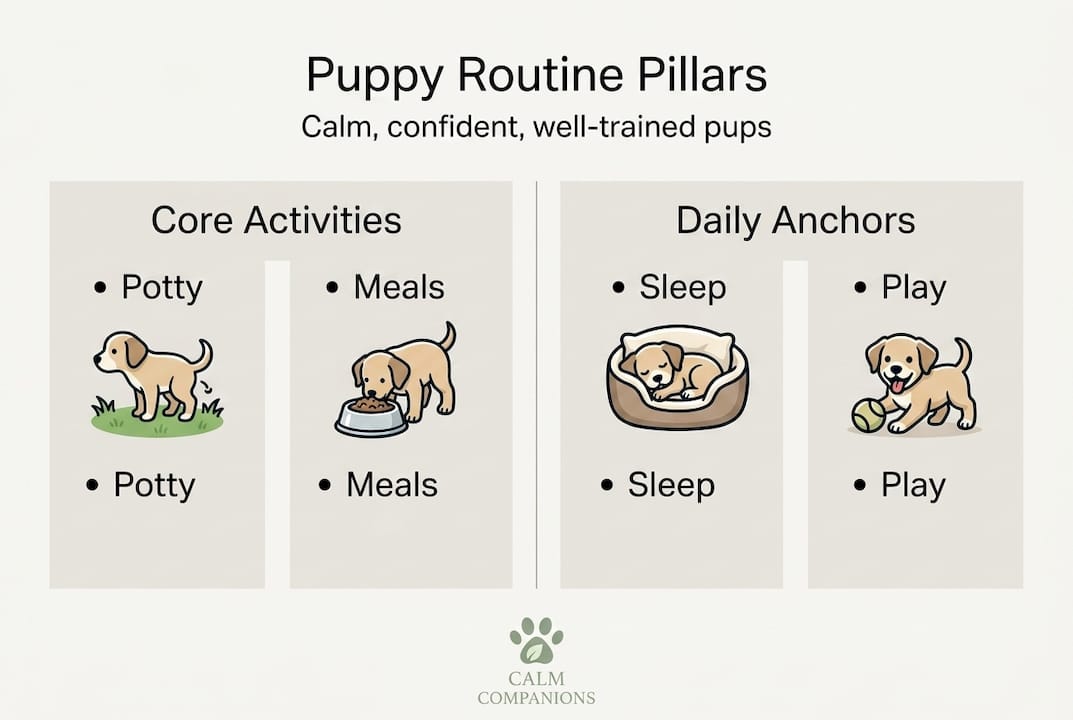
Every effective puppy schedule is built around four pillars: toileting, feeding, sleep, and play or training. Each one serves a specific purpose and, crucially, each one affects the others.
Age-based daily schedule guide
| Age | Potty breaks | Meals per day | Naps per day | Exercise per session |
|---|---|---|---|---|
| 8 to 10 weeks | Every 30 to 60 min | 4 | 4 to 5 | 5 to 10 min |
| 10 to 12 weeks | Every 1 to 2 hours | 4 | 3 to 4 | 10 to 15 min |
| 3 to 4 months | Every 2 to 3 hours | 3 | 2 to 3 | 15 to 20 min |
| 4 to 6 months | Every 3 to 4 hours | 3 | 1 to 2 | 20 to 25 min |
| 6 months+ | Every 4 hours | 2 to 3 | 1 | 25 to 30 min |
Potty breaks every 2 to 4 hours are essential for house training, with trips always after meals, naps, and play sessions. A helpful rule: puppies can hold their bladder for roughly their age in months plus one hour. So a two-month-old puppy can manage about three hours maximum.
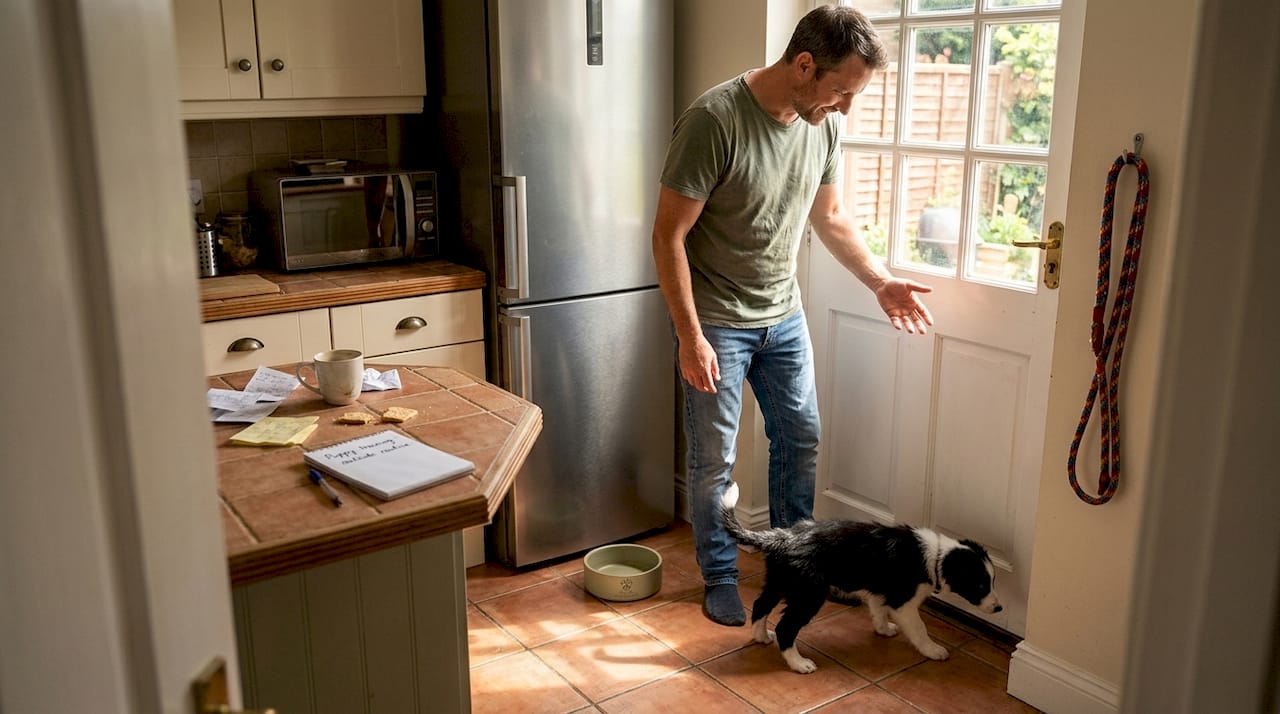
Puppies need 16 to 18 hours of sleep every single day. That is not an exaggeration. Overtired puppies bite more, focus less, and become harder to manage. Protecting nap times is just as important as toilet trips.
Feeding three to four meals daily for young puppies regulates digestion and makes toilet needs predictable. Avoid feeding close to bedtime to reduce overnight accidents.
Here is how to build your day around these pillars:
- Wake up and take your puppy outside immediately
- Feed breakfast within 30 minutes of waking
- Take outside again 10 to 15 minutes after eating
- Allow a short play or training session (age-appropriate length)
- Place your puppy in their crate or quiet space for a nap
- Repeat the toilet, feed, play, nap cycle through the day
- Final toilet trip right before bed, keep it calm and quiet
Pro Tip: Adjust both the frequency and length of activities based on your puppy's breed energy levels. A Border Collie pup and a Basset Hound pup of the same age have very different needs. Talk to your vet if you are unsure what suits your specific dog.
How scheduling fast-tracks house training and better behaviour
Consistency is where the real magic happens. When your puppy knows a toilet trip always follows a meal, their body and brain begin to work together. Accidents drop quickly because the opportunity to toilet correctly comes before desperation sets in.
Consistent potty break timing, especially after meals, naps, and play, is the single most effective tool for house training. Using the month-plus-one-hour bladder rule keeps you one step ahead of accidents rather than cleaning them up after the fact.
The knock-on benefits of a well-timed schedule go well beyond toileting:
- Easier obedience training because a rested, fed puppy pays attention
- Better digestion from regular mealtimes reducing stomach upsets
- Lower stress levels for both puppy and owner
- Faster learning of house rules through clear, repeated patterns
- Less biting because overtired and overstimulated moments are reduced
Positive reinforcement works best within a routine because the puppy understands the context. Rewarding a successful toilet trip right after a post-meal break is far more powerful than random praise. The puppy connects the action to the reward clearly. Punishment for accidents achieves nothing except eroding trust.
Puppies raised with consistent daily routines typically reach reliable house training several weeks earlier than those without structure. That is weeks fewer of accidents, stress, and confusion for everyone involved.
Pro Tip: Even when your day gets disrupted, keep the core anchors of meals and toilet trips as consistent as possible. These two pillars, more than anything else, drive fast and reliable house training progress. A solid puppy obedience guide will reinforce exactly why timing matters so much here.
Schedules for socialisation and life beyond basics
A well-structured day does something else that many owners overlook: it creates safe windows for new experiences. The socialisation window between 8 and 16 weeks is one of the most critical periods in a dog's life. What your puppy experiences during this time shapes how they respond to the world for years to come.
Structured daily schedules support socialisation during this critical window, helping prevent fear responses and behaviour problems later. When socialisation is built into a routine rather than happening randomly, it stays manageable and positive.
Key experiences every puppy should have in the first 8 to 16 weeks include:
- Meeting calm, vaccinated adult dogs
- Exposure to different surfaces: grass, gravel, tiles, carpet
- Gentle handling by different people, including children if safe
- Car journeys of short duration
- Sounds from everyday life: traffic, hoovers, doorbells
- Visits to the vet for positive non-medical check-ins
Rigid vs flexible routine comparison for socialisation
| Approach | Socialisation outcome | Puppy stress level | Owner confidence |
|---|---|---|---|
| No routine | Inconsistent, reactive | High | Low |
| Rigid routine | Structured but limited | Low to moderate | Moderate |
| Anchored flexible routine | Broad, positive, managed | Low | High |
An anchored flexible routine gives you the best of both worlds. You keep core activities consistent, like meals and sleep, while building in planned flexibility for new experiences. This approach, explored further in our guide to early puppy socialisation, helps puppies adapt to life's normal changes without becoming anxious.
Understanding puppy pack behaviour also helps here: puppies look to you for cues on how to feel about new situations. A calm, structured owner makes for a calmer, more confident puppy. For wider support during this phase, the puppy help resources at Calm-Companions offer practical next steps.
Special cases and schedule adaptions: Illness, regressions, and breed quirks
No schedule survives contact with real life completely unchanged. Puppies get poorly, go through regression phases, and have breed-specific quirks that demand adjustments. Knowing how to adapt without abandoning your routine entirely is a crucial skill.
Common disruptions that require schedule changes include:
- Illness or post-vaccination tiredness: increase rest, reduce play sessions, add toilet trips
- Teething (around 12 to 24 weeks): more chewing needs, possible restlessness at night
- House training regressions: revert temporarily to more frequent toilet breaks
- Vet visits or stressful events: expect more toileting needs and shorter attention spans
- Significant life changes: new home, new family member, change in your working hours
Puppies under 10 weeks need potty breaks every 30 to 60 minutes, including at least once during the night. Large breeds should avoid strenuous exercise until around 12 months to protect developing joints. When your puppy is ill or recovering, always adjust sleep, potty frequency, and feeding based on their energy and vet advice.
For sensitive or anxious pups, keep transitions between activities especially gentle. A consistent bedtime routine, for instance, signals that night is safe and predictable. Tips for calming a new puppy often start with exactly this kind of predictable wind-down.
Pro Tip: During any setback, illness, or regression, keep meals and toilet trips at consistent times even if everything else shifts. These two anchors maintain a thread of predictability that helps your puppy bounce back faster. Our collection of puppy transition tips includes specific strategies for exactly these moments.
A hard truth most guides miss: Predictability always beats 'just winging it'
There is a growing trend among new owners to favour flexibility from the very start, thinking it is kinder or more natural. In our experience, this is a mistake that costs weeks of progress and causes real stress for both puppy and owner.
Puppies do not thrive in ambiguity. They read cues constantly: when do we eat, when do we sleep, when is it safe to relax? Without reliable answers to those questions, they become watchful, uncertain, and often clingy or reactive. Flexibility is not a gift to a new puppy; it is a source of confusion.
The truth is that strict anchors in the early weeks are an act of kindness. Once your puppy is confident, sleeping through the night, and reliable with toileting, you can begin to flex naturally. But earning that flexibility takes consistency first. Routines for puppy calm are not about control; they are about giving your puppy the certainty they need to grow into a confident, settled companion. Set the schedule, hold to it, and flex later from a place of strength.
Support for a calmer puppy journey
Getting your puppy's routine right in those first critical weeks sets the tone for everything that follows. It is a lot to manage alone, and that is exactly why Calm-Companions exists.
Our step-by-step puppy help covers feeding windows, toilet timing, night settling, and behaviour management in one straightforward place. If you want a practical starting point, download our free puppy calm checklist to guide your first week with confidence. For owners struggling with an unsettled pup, our calming new puppy advice offers targeted, reassuring strategies to help both of you find your rhythm quickly.
Frequently asked questions
How often should I take my puppy outside to toilet?
Young puppies need toilet breaks every 2 to 4 hours and always after waking, eating, or playing. The month-plus-one-hour rule gives you a reliable upper limit for how long they can hold on between trips.
Does keeping a strict meal routine really help toilet training?
Yes, scheduled feeding times regulate digestion and make toilet needs far more predictable, which directly speeds up reliable house training. Consistency at mealtimes means fewer surprises for you and your puppy.
How much sleep should a puppy have each day?
Puppies generally need 16 to 18 hours of sleep every day, spread across multiple naps throughout the day and night. Skipping naps leads to overtiredness, increased biting, and poorer behaviour overall.
How should I adjust my schedule if my puppy is not well?
When your puppy is ill, offer extra toilet breaks, more rest time, and reduce the length and intensity of play sessions. Follow your vet's advice and keep meals and core anchor activities as consistent as possible to maintain a sense of normality.