
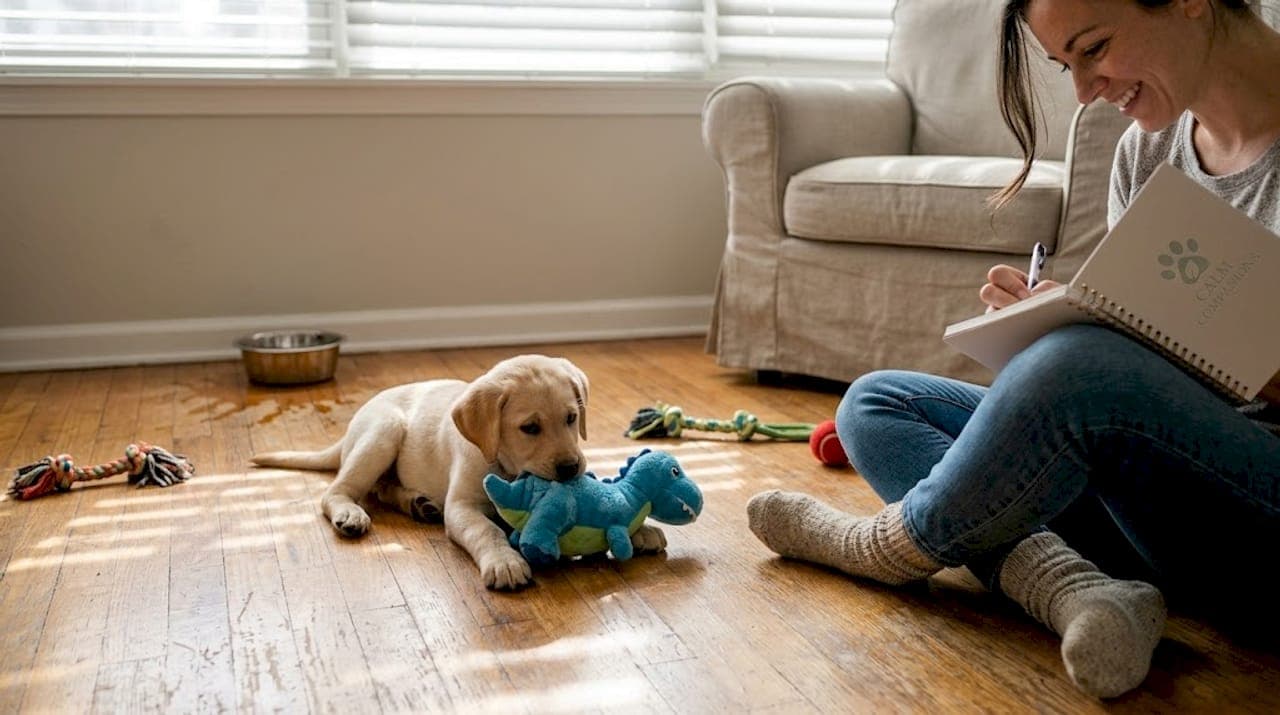
TL;DR:
- Puppy play is essential for developing social skills, bite inhibition, and emotional resilience.
- Safe, structured play sessions should be short, supervised, and incorporate calming routines for balance.
- Observing individual puppy signals ensures play remains positive, preventing overstimulation and injury.
Most new owners assume puppy play is simply about burning off energy and keeping a wriggling ball of fur occupied. In reality, play is one of the most powerful tools you have for shaping your puppy's temperament, social skills, and ability to settle into your home. Puppy play supports physical exercise, mental stimulation, socialisation, bite inhibition, and overall adjustment to home life. Get it right and you will notice a calmer, more confident puppy within days. This guide covers the mechanics of healthy play, the warning signs to watch for, and the practical strategies that make the biggest difference.
Table of Contents
- Why puppy play is more than just fun
- Understanding puppy play behaviours and mechanics
- Risks and mistakes: avoiding overstimulation and unsafe play
- Making puppy play count: practical strategies for new owners
- The overlooked secret: why a flexible play routine matters most
- Support and resources for a well-adjusted puppy
- Frequently asked questions
Key Takeaways
| Point | Details |
|---|---|
| Early play sets behaviour | Structured play in the first months shapes your puppy’s social and emotional foundations. |
| Watch for signals | Positive puppy play shows loose bodies and shared fun, while stiffness or yelping means it’s time to pause. |
| Balance and rest matter | Short, frequent play sessions and plenty of sleep help puppies settle calmly at home. |
| Toys, not hands | Always use toys for play to teach good habits and protect against accidental nipping. |
| Adjust for best results | Tailor your puppy’s play routine based on their signals and daily mood for a confident, happy pet. |
Why puppy play is more than just fun
When your puppy pounces on a toy or wrestles with a sibling, something remarkable is happening beneath the surface. Every play session is a learning experience that shapes how your puppy processes the world, responds to other animals, and manages its own emotions. Far from being trivial, play is the primary vehicle through which puppies develop the skills they will rely on for life.
Play builds bite inhibition, which is the ability to control the pressure of a bite. Puppies learn this through feedback from littermates and, later, from you and your reactions. Without this learning, mouthing can become a persistent and painful problem. Play also develops social skills, teaching puppies to read body language, take turns, and respond appropriately to signals from others.
The timing of play matters enormously. The critical socialisation window runs from 3 to 16 weeks, during which play promotes cognitive skills and helps prevent destructive behaviour later in life. Missing this window does not mean all is lost, but it does mean you will need to work harder to build the same foundations.
Here is what consistent, well-managed play contributes to your puppy's development:
- Physical health: Builds coordination, muscle tone, and healthy weight
- Mental stimulation: Reduces boredom and the frustration that leads to chewing or barking
- Emotional resilience: Helps puppies learn to cope with novelty and mild stress
- Bonding: Strengthens the trust between puppy and owner
- Calmer behaviour: A well-played puppy is far more likely to settle quietly
"Play is not a reward for good behaviour. It is the environment in which good behaviour is learned."
For a broader look at how play fits into the bigger picture, our guide on puppy behaviour management covers the full range of strategies that support a smooth settling-in process. You will also find that support for new puppy owners makes a measurable difference during those first overwhelming weeks. Understanding safe group play guidelines is equally important once your puppy is ready to meet others.
Understanding puppy play behaviours and mechanics
Knowing why play matters is one thing. Knowing what healthy play actually looks like is what allows you to guide it effectively. Puppies communicate through body language, and once you learn to read the signals, you will never watch a play session the same way again.
The most reliable sign of healthy play is the play bow: front legs stretched forward, bottom in the air, tail wagging loosely. This is your puppy's way of saying, "I want to play and everything that follows is friendly." Alongside this, look for loose, wiggly body movements, open mouths, and frequent pauses where both animals reset before continuing.
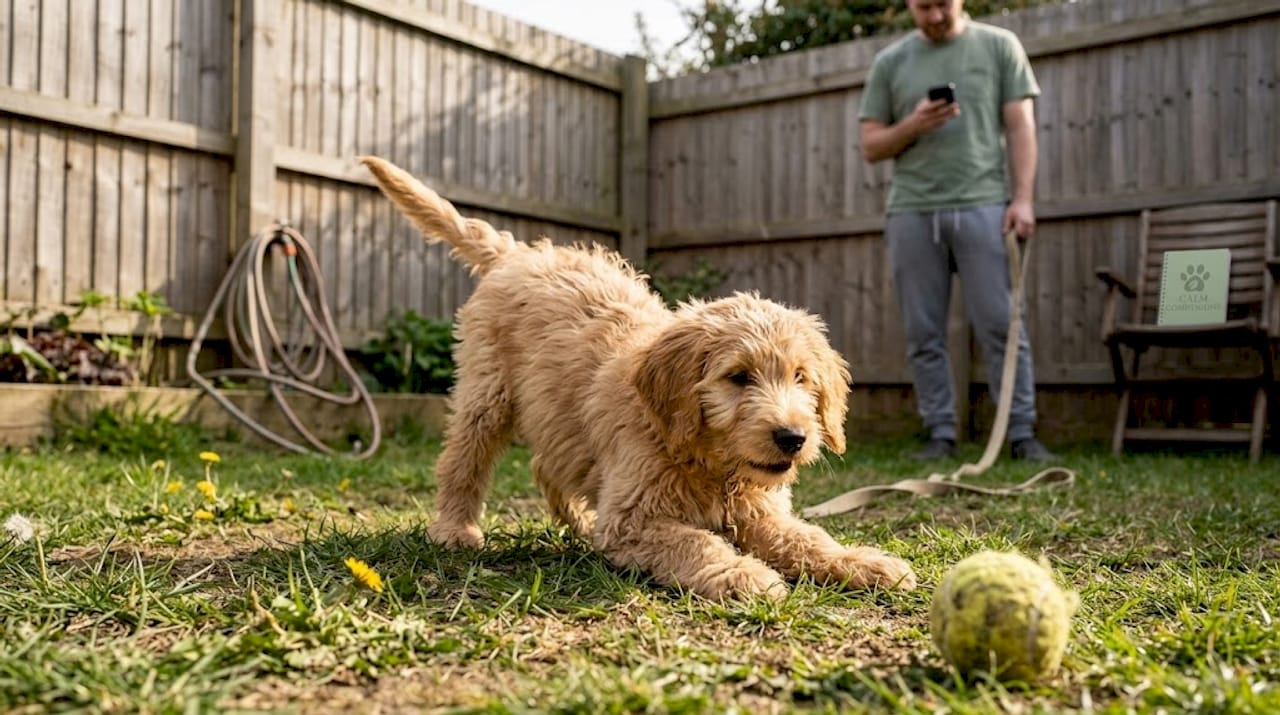
Signs of good play include loose bodies, play bows, and role reversals, where the chaser becomes the chased. These reversals are important because they show both puppies are willing participants rather than one being bullied.
Here is a simple timeline of how play behaviour typically develops:
| Age | Typical play behaviour |
|---|---|
| 3 to 5 weeks | Tumbling with littermates, mouthing |
| 6 to 8 weeks | Object play begins, chase games emerge |
| 8 to 12 weeks | Social play peaks, bite inhibition develops |
| 3 to 5 months | Play becomes more complex, rules-based |
| 5 to 6 months | Adult play patterns begin to form |
When playing with your puppy directly, always use toys rather than your hands. Hands-on roughhousing teaches your puppy that human skin is an acceptable target, which creates problems as the puppy grows stronger. Rope toys, soft plush toys, and balls are all excellent choices for interactive sessions.
For guidance on reading your puppy's signals more accurately, our article on puppy social cues is a practical starting point. Understanding puppy pack behaviour also helps you anticipate how your puppy will interact with other dogs. The puppy raising play tips from experienced guide dog raisers offer further insight into structured, purposeful play.
Pro Tip: If play escalates and your puppy becomes frantic, calmly remove the toy, turn away, and wait 20 seconds before re-engaging. This teaches your puppy that calm behaviour keeps the game going.
Risks and mistakes: avoiding overstimulation and unsafe play
Play can go wrong quickly, and the consequences range from minor frustration to genuine injury. Understanding the warning signs gives you the power to intervene before things escalate.
The most important concept here is overstimulation. When a puppy becomes overaroused, its brain essentially floods with excitement hormones and the ability to self-regulate disappears. Overstimulation and rough play can cause hyperarousal, injury, or frustration, and puppies need 18 to 20 hours of sleep per day to support healthy growth. Cutting into that rest with excessive play is one of the most common mistakes new owners make.
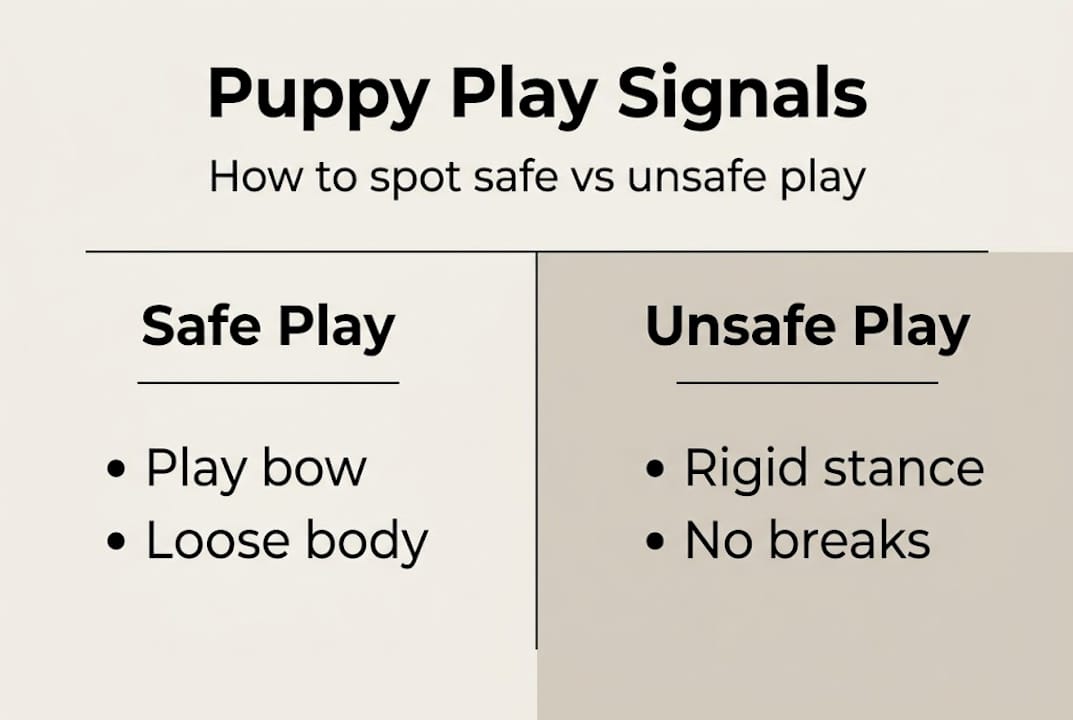
Here is a comparison of healthy play versus play that has gone too far:
| Healthy play | Overstimulated or unsafe play |
|---|---|
| Loose, wiggly bodies | Stiff, rigid posture |
| Frequent natural breaks | No pauses, relentless chasing |
| Role reversals between dogs | One puppy always dominant |
| Soft vocalisations | Loud yelping or growling |
| Both puppies re-engage willingly | One puppy tries to escape |
Common owner mistakes include wrestling with hands, pairing puppies of vastly different sizes or energy levels, and allowing play to continue long after the puppy shows signs of tiredness. The risks of overplaying are well documented and include chronic fatigue, irritability, and increased reactivity.
Follow these steps when play becomes too intense:
- Calmly say "enough" in a neutral tone
- Remove toys or step away from the play area
- Guide your puppy to a quiet space or crate
- Allow at least 20 to 30 minutes of rest before the next session
- Reflect on what triggered the escalation so you can adjust next time
Pro Tip: Schedule downtime deliberately. Treat rest after play as non-negotiable, just as you would a feeding time. A puppy that learns to settle after play becomes a dog that settles reliably as an adult.
For more on keeping arousal levels manageable, our guide on managing puppy excitement walks you through the most effective calming techniques. You can also find tailored advice through our puppy help guidance resources.
Making puppy play count: practical strategies for new owners
Now that you understand both the value and the risks of play, here is how to structure it so your puppy gets the most benefit with the least stress.
Short daily play sessions with toys, combined with puppy classes and monitoring for balance, aid adjustment and can even prevent separation anxiety from taking hold. The key word is short. Aim for three to five sessions of 5 to 15 minutes throughout the day rather than one long marathon.
Follow this structure for each session:
- Choose a calm, familiar space with minimal distractions
- Introduce one toy at a time to keep focus clear
- Play actively for 5 to 10 minutes, watching for signs of fatigue
- End the session while your puppy is still engaged, not exhausted
- Transition to a quiet activity such as a chew or a rest in the crate
The best toys for young puppies include:
- Soft plush toys for gentle mouthing and comfort
- Rope toys for interactive tug (keep sessions brief and controlled)
- Rubber chew toys for solo play and teething relief
- Snuffle mats for mental stimulation without physical overexertion
- Balls sized appropriately so there is no choking risk
Puppy training classes are worth their weight in gold during the socialisation window. They provide controlled exposure to other puppies and people in a supervised environment, which is far safer than unmanaged park encounters. Classes also give you direct feedback on your handling technique.
Pro Tip: Use play as a reward during training. A quick 30-second game of tug after your puppy sits on cue is often more motivating than a treat, and it deepens your bond at the same time.
For practical help with those first unsettled days, our resource on calming your new puppy is a great companion to this guide. The advice on leaving your puppy alone is also worth reading as you begin building independence alongside play. Our puppy calm support checklist pulls together all of these strategies into a simple daily framework.
The overlooked secret: why a flexible play routine matters most
Here is something most puppy guides will not tell you. All the rules and schedules in the world will not help if you are not paying attention to the individual puppy in front of you.
We see many new owners follow advice rigidly, playing at the same times every day regardless of whether their puppy is tired, anxious, or simply not in the mood. The result is a puppy that becomes frustrated or overstimulated, and an owner who cannot understand why the "correct" approach is not working.
The real skill is observation. Watch how your puppy moves before a session begins. Is it bright-eyed and seeking engagement, or slow and yawning? Matching play to your puppy's actual state, rather than the clock, is what separates good owners from great ones. Matching play partners by size and energy, using positive reinforcement during play, and allowing rest afterwards all prevent overarousal and build a stronger bond.
Experiment with different toys, different times, and different lengths of session. Then observe what produces the calmest, most settled puppy afterwards. That is your answer. Our guide on a peaceful puppy start explores this flexible, observational approach in more detail.
Support and resources for a well-adjusted puppy
Putting all of this into practice during the first weeks at home can feel like a lot to manage on your own. The good news is that you do not have to figure it out from scratch.
Calm-Companions offers a range of free and practical resources designed specifically for new puppy owners navigating exactly these challenges. From structured daily routines to night settling techniques, our puppy help resources give you a clear framework to follow. If you are looking for calm, step-by-step calming advice for new puppies, we have you covered. Download our free puppy calm support checklist to get a ready-made weekly plan that takes the guesswork out of those first critical days.
Frequently asked questions
How much play does a young puppy need each day?
Short daily play sessions of 5 to 15 minutes, repeated several times throughout the day, work best for young puppies. Plenty of rest between sessions is just as important as the play itself.
What are signs that play has become too rough or overstimulating?
Warning signs include stiff body posture, loud yelping, no natural breaks, or one puppy consistently dominating. When you spot these, pause the session and allow time to calm down before continuing.
Should I let my puppy play with my hands?
It is best to use toys instead of hands during play. Using hands encourages mouthing and biting habits that become harder to correct as your puppy grows stronger.
Does puppy play help with behaviour and training?
Play supports cognitive development and can enhance your puppy's ability to learn, particularly during the socialisation period. Interactive play also reinforces the bond that makes training more effective.
Is group play with other puppies important?
Yes. Well-supervised group play teaches puppies to read social cues, practise role reversals, and build the confidence needed for healthy interactions throughout their lives.