
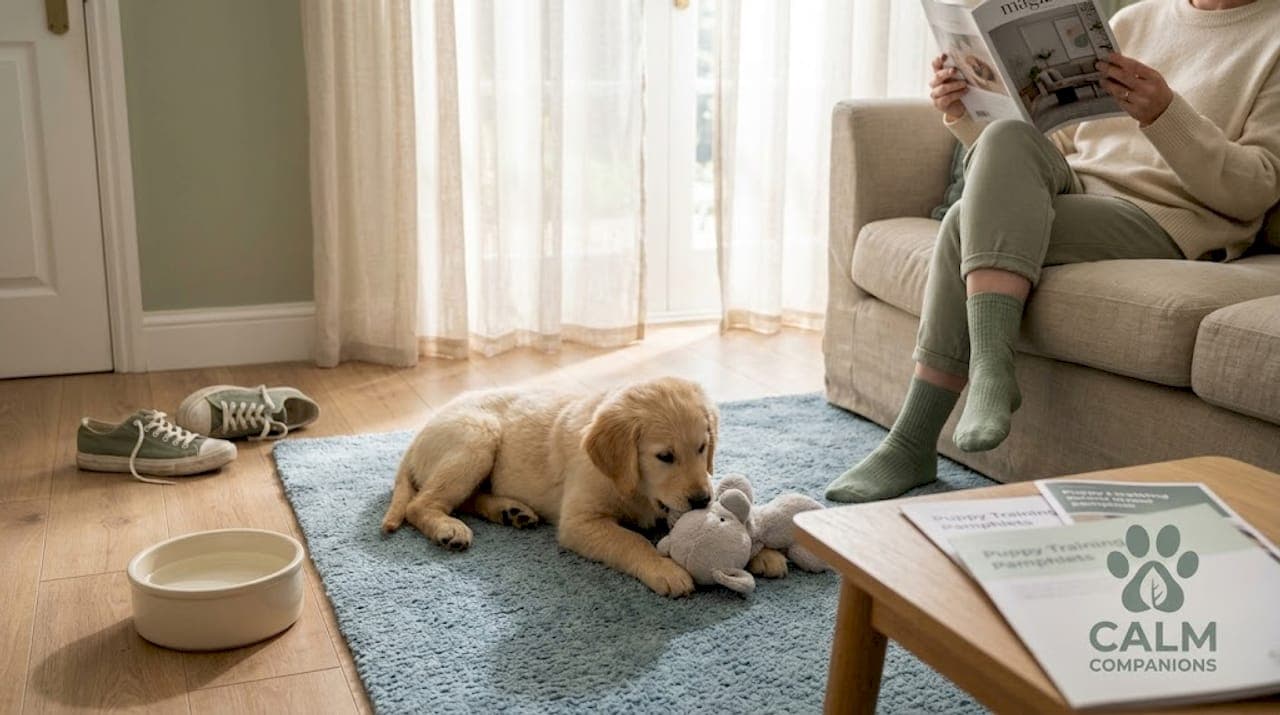
TL;DR:
- Natural remedies like pheromone diffusers and calming supplements are supported by scientific evidence for puppy anxiety.
- Combining a consistent routine, environment adjustments, and behavioral techniques provides the most effective management.
- Always evaluate safety, scientific backing, and individual puppy needs before implementing natural anxiety solutions.
Bringing a new puppy home is one of the most exciting things you can do, but those first nights can quickly reveal a side of puppy ownership nobody warns you about. The crying, the pacing, the trembling in the corner of the crate. Your instinct is to fix it gently, without reaching for sedatives or harsh interventions. The good news is that there are evidence-backed natural options that genuinely work, and this article walks you through how to evaluate them, what the science says, and how to pick the right combination for your puppy's specific situation.
Table of Contents
- How to evaluate natural remedies for puppy anxiety
- Top 7 natural remedies for puppy anxiety
- Comparing the top remedies: Which is right for your puppy?
- Situational recommendations and advanced tips
- A fresh perspective: Why "natural" isn't always simple for puppy anxiety
- Support for your puppy: Next steps with Calm-Companions
- Frequently asked questions
Key Takeaways
| Point | Details |
|---|---|
| Layer approaches | Combining routine, pheromones, and behavioural strategies works better than using one remedy alone. |
| Evidence matters | Choose options supported by research for safety and results, such as L-theanine or pheromone diffusers. |
| Tailor to your puppy | Adapt remedies to your puppy’s personality, needs, and home situation for maximal calm. |
| Watch and adjust | Monitor your puppy’s response and consult your vet if anxiety persists or worsens. |
How to evaluate natural remedies for puppy anxiety
Before you spend money on every calming product on the shelf, it helps to have a simple framework for deciding what is worth trying. Not all "natural" solutions are created equal, and what works brilliantly for one puppy may have little effect on another.
What does "natural" actually mean here? In the context of puppy anxiety, natural remedies include pheromone products, herbal or nutritional supplements, behavioural techniques, environmental adjustments, and structured routines. They are distinct from prescription medications, though they can be used alongside them with vet guidance.
When you are evaluating options, use these criteria:
- Safety: Is it appropriate for your puppy's age and size? Young puppies metabolise substances differently to adult dogs.
- Scientific backing: Is there peer-reviewed or at least credible independent evidence, not just manufacturer claims?
- Ease of use: Can you realistically maintain it every day during the settling-in period?
- Severity match: Is the remedy suited to your puppy's level of anxiety? Mild nerves need different support than full panic responses.
- Vet suitability: Does your puppy have any health issues that could interact with the remedy?
One of the most important things research shows is that routine and predictability reduce anxiety behaviours by 52%, and daily exercise reduces cortisol by 41%. That means structure itself is a remedy, not a supporting act.
Multi-modal approaches consistently outperform single remedies. Think of it like nutrition: one vitamin does not replace a balanced diet. Pairing pheromone diffusers with a predictable daily schedule, for example, will almost always beat relying on one alone. You can explore how to calm a new puppy for a practical starting point.
A red flag worth mentioning: if your puppy shows extreme fear, aggression, or loss of appetite alongside anxiety, do not rely solely on natural remedies. These signs can indicate an underlying health issue, and a vet check should come first. For a broader look at managing anxious tendencies, the puppy behaviour management guide provides a thorough grounding.
Pro Tip: Start natural remedies during the first week, before anxiety patterns become entrenched. Rewiring a stressed puppy's response is far easier early on than reversing weeks of learned fear.
Top 7 natural remedies for puppy anxiety
With a solid framework in mind, here are the most effective natural remedies you can try, each explained with what the evidence says and how to use it in practice.
1. Pheromone diffusers and collars (Adaptil)
Adaptil uses a synthetic version of the dog appeasing pheromone (DAP), which mother dogs naturally produce to calm their puppies. You plug a diffuser into the wall near your puppy's resting area, or clip a collar directly on them. Research shows that pheromone products like Adaptil reduce crying at night and improve adaptation in newly homed puppies. These are a smart first purchase because they work passively. You do not need to train anything or maintain a schedule. They are especially effective for the first two to four weeks.
2. Calming treats and supplements
L-theanine (an amino acid found in green tea), alpha-casozepine (a milk protein), and Zylkene are among the best-studied options. Calming treats with L-theanine and alpha-casozepine show up to 79% improvement in anxiety scores. These work by supporting GABA receptors in the brain, essentially taking the edge off without sedation. Timing matters here. Give them 30 to 60 minutes before a known trigger such as visitors or car travel.
CBD oil has grown in popularity but requires more caution. Studies show that CBD blends mildly reduce stress response, particularly for car travel. However, quality varies enormously between products, and you should always discuss dosing with your vet first.
3. Anxiety wraps (ThunderShirt)
Pressure therapy is a real phenomenon. The gentle, constant hug of an anxiety wrap activates the parasympathetic nervous system, the one responsible for "rest and digest." Anxiety wraps provide 82% moderate-to-major improvement for noise and storm-related anxiety. They are also excellent for fireworks, car journeys, and vet visits. Put it on your puppy 10 to 15 minutes before the trigger, not during the panic, so they associate it with calm rather than crisis.
4. Probiotics targeting the gut-brain axis
This one surprises most people. The gut and brain communicate constantly through what researchers call the gut-brain axis. When the gut microbiome is unbalanced, it can amplify anxiety and even aggression. Probiotics like Lactiplantibacillus plantarum LP815 reduce anxiety and aggression in randomised controlled trials with dogs. Probiotic supplements designed specifically for dogs are widely available and safe for puppies. Allow four to eight weeks to see meaningful results.
5. Routine, exercise, and predictability
This is the remedy that costs nothing but consistent effort. A puppy who knows when to expect feeding, play, toilet trips, and sleep produces measurably less cortisol. The routines that calm puppies are not complicated, but they must be consistent. Even a small change in timing can temporarily spike a nervous puppy's anxiety. Build in daily physical exercise appropriate to your breed and age, as this directly burns off the stress hormone cortisol.
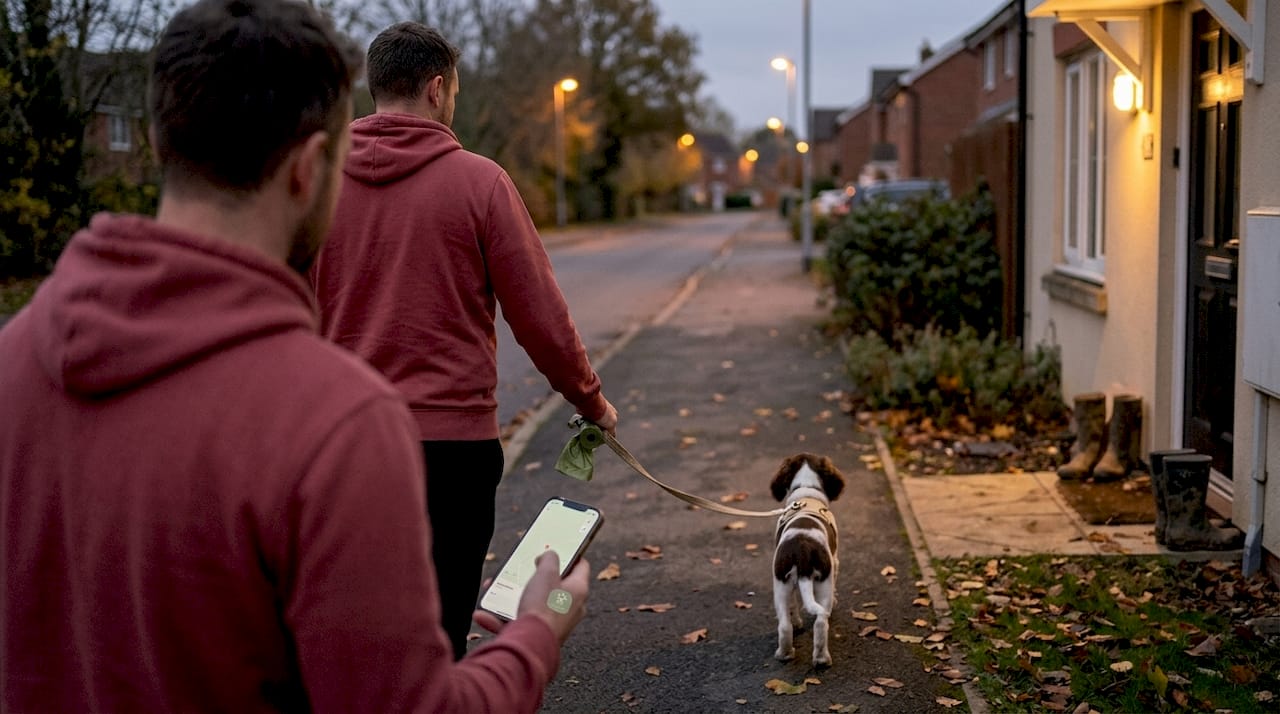
6. Counterconditioning and desensitisation
These are behavioural techniques rather than products. Desensitisation means gradually exposing your puppy to their anxiety trigger at a very low intensity. Counterconditioning means pairing that trigger with something positive, like a treat or play. Together, they are the most durable long-term solution. Counterconditioning and desensitisation are essential for changing anxiety triggers permanently, because they actually alter how the puppy's brain responds to the stimulus. You can explore early puppy training techniques that incorporate both methods from week one.
7. Safe spaces and environmental adjustments
A puppy who has a dedicated, predictable safe space, such as a crate covered with a blanket, a quiet corner with familiar-smelling bedding, or a room with white noise, recovers from startles far faster. The key is to never force your puppy into their safe space. It should be somewhere they choose. Add an item that smells like their littermates or mother during the first week if you can get one, as familiar scent is powerfully calming for young puppies. You can find week-1 calm support resources that cover environmental setup in detail.
Pro Tip: Avoid flooding. Flooding means exposing your puppy to a full-intensity trigger all at once in the hope they will "get used to it." It almost always backfires and creates deeper fear responses.
Comparing the top remedies: Which is right for your puppy?
Now, simplify your decision by seeing these options side by side.
| Remedy | Evidence strength | Good for | Note |
|---|---|---|---|
| Pheromone diffuser (Adaptil) | Strong (independent studies) | Night crying, new home nerves | Best in first 4 weeks |
| Calming treats (L-theanine) | Moderate to strong | Pre-trigger anxiety, daily use | Give 45 mins before trigger |
| CBD oil | Mild to moderate | Travel, situational stress | Vet consult essential |
| Anxiety wrap | Strong for noise | Storms, fireworks, travel | Apply before trigger |
| Probiotics | Growing evidence | Ongoing anxiety, gut health | Takes 4 to 8 weeks |
| Routine and exercise | Very strong | All anxiety types | Core strategy, not optional |
| Counterconditioning | Very strong | Specific triggers | Requires consistency |
| Safe space creation | Strong | Crate fear, night waking | Setup in week 1 |
The biggest insight from research is that combining routine and exercise reduces anxiety behaviours far more than any single product-based remedy. Think of pheromones and calming treats as support tools that make the behavioural work easier, not replacements for it.
For practical steps for calming a puppy, combining pheromone diffusers with a structured daily routine gives you the strongest starting point with the least effort required.
Which pairs well with what?
- Pheromone diffuser + structured routine: Excellent first combination for all new puppies
- Calming treats + counterconditioning: Strong for specific fears like strangers or loud sounds
- Anxiety wrap + desensitisation: Ideal for noise sensitivity and travel
- Probiotics + exercise: Good foundational support for high-anxiety breeds over the medium term
Situational recommendations and advanced tips
After reviewing the main options, here is how to tailor your approach for your puppy's unique situation.
Night crying: This is the most common issue in week one. Pheromone collars worn at night, a ticking clock wrapped in a blanket (mimicking a heartbeat), and an item with the breeder's scent can each reduce distress significantly. Avoid rushing in at every cry, as this teaches that crying brings attention. Instead, use a consistent "settle" cue and reward quiet moments.
Separation anxiety: Start with very short absences of two to three minutes and reward calm behaviour on return. Calming treats given before you leave can help bridge the gap while the counterconditioning takes hold. Never make departures dramatic.
Crate training fear: Cover three sides of the crate with a blanket, place a worn T-shirt inside, and feed all meals inside the crate to build positive associations. An Adaptil diffuser positioned nearby adds another layer of support.
Car travel: Anxiety wraps and CBD oil (with vet approval) are both backed by evidence for travel stress. Feed your puppy a light meal two hours before travel, and practice short positive trips before longer journeys.
Thunderstorms and fireworks: Anxiety wraps show the strongest evidence here. Combine with a pre-prepared safe space (dark, quiet, familiar), and consider a short-term calming supplement during fireworks season.
Special populations also need adjusted approaches. High-energy breeds need more exercise, senior dogs can benefit from melatonin for sleep disruption, and rescued puppies may need a slower desensitisation timeline with more frequent vet check-ins. For rescued dogs especially, avoid forcing interactions with strangers or children until your puppy shows confident, relaxed body language on their own terms. The puppy transition tips article covers these scenarios in more detail.
When should you escalate? If your puppy's anxiety does not improve after four weeks of consistent natural remedies, or if they show destructive behaviour, inability to eat, or extreme fear responses, speak to a vet or accredited behaviourist. Natural remedies are powerful, but they have limits.
A fresh perspective: Why "natural" isn't always simple for puppy anxiety
Here is something most articles on this topic gloss over. There is a widespread assumption that natural equals gentle, effortless, and universally safe. That assumption can actually delay real progress for anxious puppies.
Consider pheromone products. Manufacturer-funded studies report impressive results, but independent reviews note mixed results and consistently stress that pheromones work best as part of a multimodal approach, not as a standalone fix. The product is genuinely helpful. But if you plug in a diffuser and change nothing else about your puppy's environment, routine, or your own responses to their anxiety, you are unlikely to see the transformation you hoped for.
The same goes for CBD and calming treats. They are tools, not solutions. And some "natural" products carry real risks if used incorrectly. Certain herbal ingredients, for example, are metabolised through the liver and can be problematic in puppies with developing organ function. Natural does not automatically mean harmless.
What experienced puppy professionals actually do is combine environment, routine, behaviour, and supplements in a deliberate, layered way from day one. They do not wait to see if one thing works before trying another. They build the whole scaffold at once. And crucially, they prioritise their own calm behaviour, because puppies are exquisitely sensitive to owner anxiety. If you are stressed every time your puppy cries, your stress becomes part of their anxiety cycle.
The uncomfortable truth is that the most powerful "remedy" in your toolkit is consistent, calm leadership paired with a structured environment. Products and supplements amplify this foundation. They cannot replace it. If you start with the calm confidence training approach from week one, you create a puppy who is resilient, not just temporarily soothed.
Support for your puppy: Next steps with Calm-Companions
Moving from insight to action, here are resources to help you start today.
If reading this article has helped you see the settling-in process more clearly, Calm-Companions is here to support you at every step. The expert guide to calming a new puppy pulls together the most effective strategies into one easy-to-follow resource designed specifically for the first weeks at home.
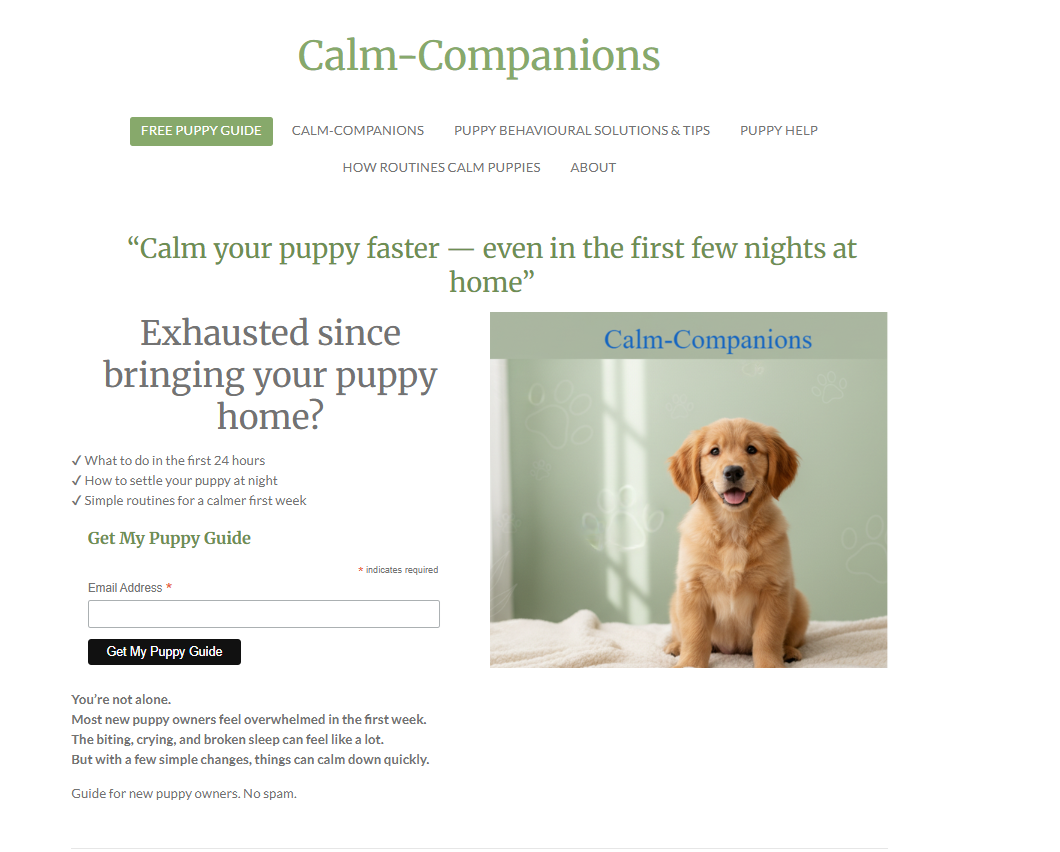
Our free puppy settle-in checklist gives you a structured, week-by-week plan covering night settling techniques, routine building, and gentle behaviour management. It takes the guesswork out of those first chaotic days. Sign up and you will also receive our Week-1 Calm Support guide, which walks you through exactly how to layer natural remedies, safe space setup, and daily structure for the calmest possible start.
Frequently asked questions
How long does it take for natural anxiety remedies to work in puppies?
Most natural remedies like pheromones or calming treats show noticeable results within one to two weeks for mild anxiety, but Zylkene shows 74% success across an eight-week trial, suggesting full adjustment takes longer for many puppies.
Are natural anxiety remedies safe for all puppies?
Most are safe for healthy puppies, but always consult your vet before using supplements like CBD, as variable absorption and liver risks mean some products are unsuitable for puppies with underlying health conditions.
What is the best first step for a new owner's anxious puppy?
Establish a predictable daily routine from day one and consider adding a pheromone diffuser near your puppy's sleeping area, since pheromone products are effective for newly homed puppies and routine reduces anxiety with no side effects.
Are there side effects with natural anxiety products?
Side effects are rare but possible, particularly with supplements; CBD, L-theanine and nutraceuticals carry variable absorption rates and potential liver considerations, so follow product directions carefully and always get vet clearance first.
Can I combine different natural remedies safely?
Yes, and in fact combinations tend to work better than single remedies; pairing pheromones with behavioural techniques is particularly effective, though you should check with your vet before stacking multiple supplements, as routine, exercise, and multimodal approaches consistently outperform any single remedy in the research.