
TL;DR:
- Proper preparation and positive associations are essential for reducing puppy travel anxiety.
- The owner’s calmness and routine significantly influence the puppy’s comfort during journeys.
- Using safety-approved restraints and gradual exposure builds a confident, stress-free travel experience.
Picture your puppy's very first car ride. Wide eyes, trembling paws, a whine that builds into a full chorus of distress before you've even left the driveway. It's overwhelming for them and, honestly, exhausting for you. Many new puppy owners assume that travel anxiety is simply something dogs grow out of. It isn't. Without the right approach, those stressful early journeys can set a pattern that lasts for years. The good news is that a handful of well-timed, evidence-based steps can genuinely transform car travel from a battle into something both you and your puppy can handle calmly and confidently.
Table of Contents
- Essential preparations before you travel
- Step-by-step guide to a calm puppy journey
- Troubleshooting and handling common puppy travel issues
- How to build positive travel associations for future success
- Our hard-won lessons: what most dog travel advice misses
- Support for calm journeys: where to find help
- Frequently asked questions
Key Takeaways
| Point | Details |
|---|---|
| Safety is priority | Crash-tested crates or harnesses not only protect puppies but also reduce their anxiety during travel. |
| Gradual introduction works | Introducing travel routines and environments step by step helps puppies adjust without fear. |
| Calming aids can help | CBD supplements, L-tryptophan, and compression vests may significantly ease travel anxiety for many dogs. |
| Routine matters | Consistent routines and positive travel experiences create calmer, happier journeys in the future. |
| Owner’s calm is contagious | Puppies pick up on your emotions, so staying calm yourself can make a noticeable difference. |
Essential preparations before you travel
Getting your preparation right is everything. The most common mistake new owners make is treating the first journey as a trial run, expecting their puppy to simply "figure it out." Dogs don't work that way. They rely on familiarity, routine, and positive associations. Before you even start the engine, there are several key things to sort.
Build your travel kit
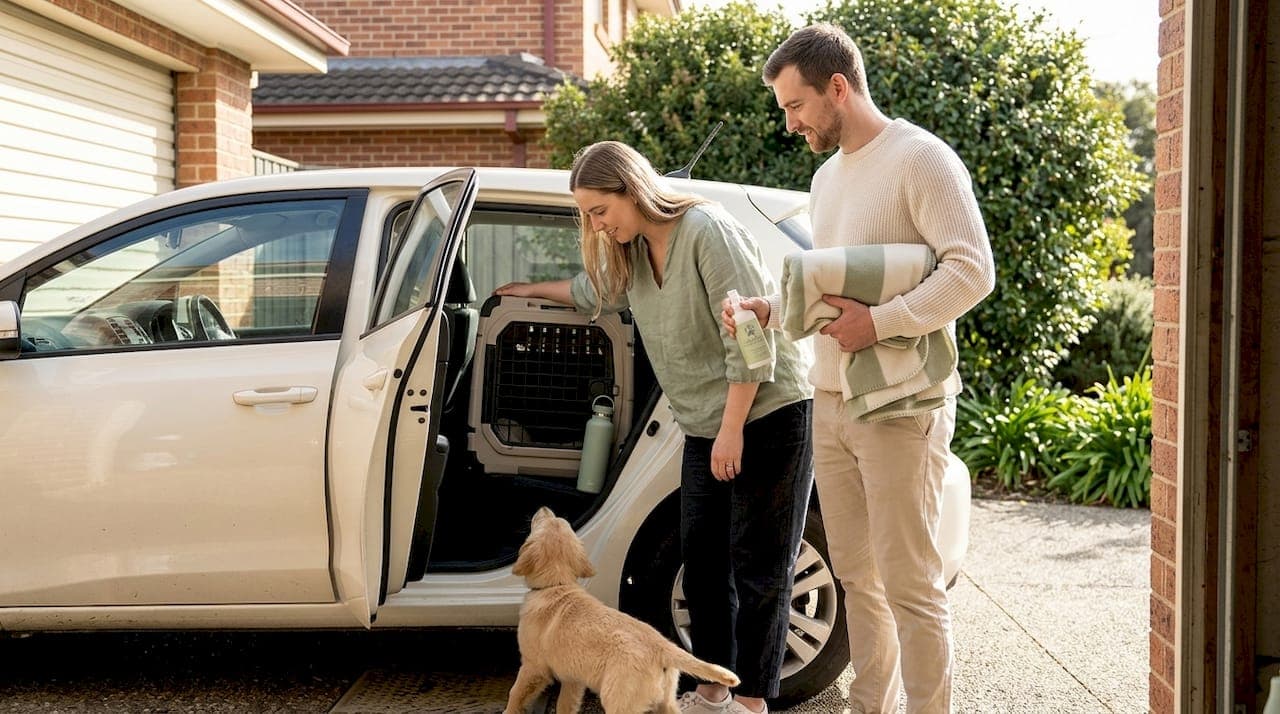
Having the right supplies ready makes an enormous difference. Here is what you will need:
- A crash-tested crate or safety-approved harness
- Fresh water and a portable, spill-proof bowl
- High-value training treats (small, soft, easy to eat)
- A familiar toy or unwashed blanket carrying your home's scent
- Poo bags, kitchen roll, and a spare changing mat for accidents
- A spare lead and collar tag with up-to-date contact details
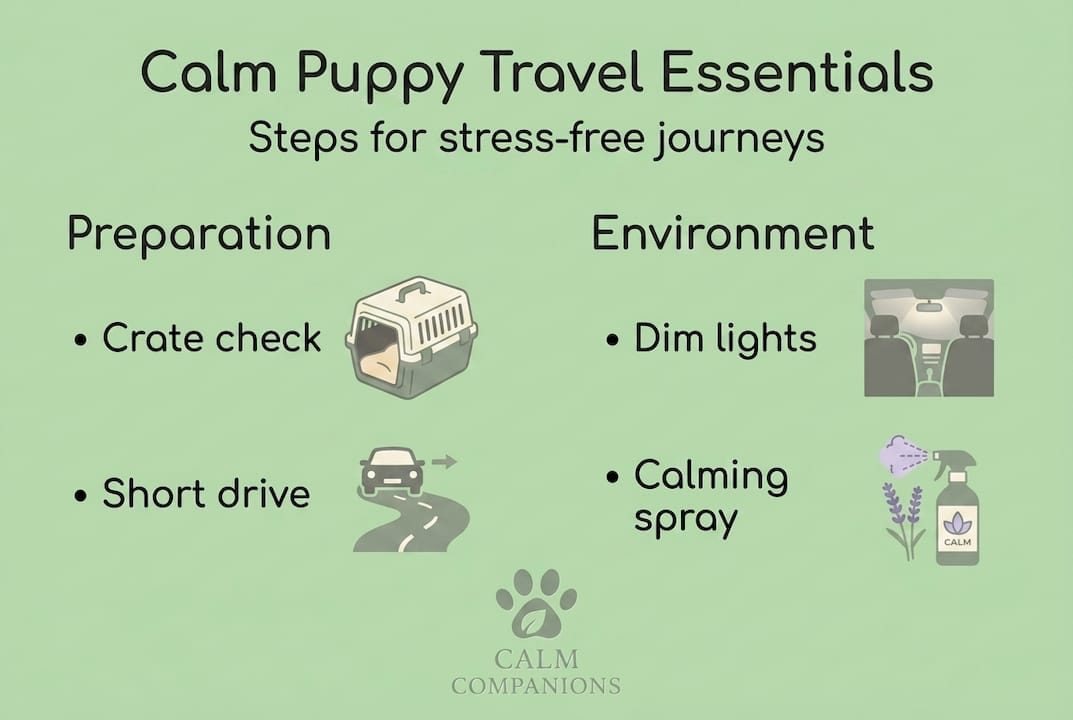
Do not skip the crate quality check. Crash-tested crates positioned forward-facing give better motion perception and, when lightly covered, reduce the visual stimuli that can spike anxiety. Think of it as your puppy's safe den on wheels.
Introduce the crate before the trip
Many owners put their puppy in the crate for the first time on the day of travel. This is asking for trouble. Start introducing the crate at home at least a week before any journey. Leave it open in the living room with a treat inside. Feed meals near it, then inside it. Progress to closing the door for a few seconds, then a minute, then longer. By the time the crate goes in the car, it should already feel like home.
For broader guidance on making that early period easier, the advice on stress-free puppy transition is well worth reading alongside this guide.
Create a calming car environment
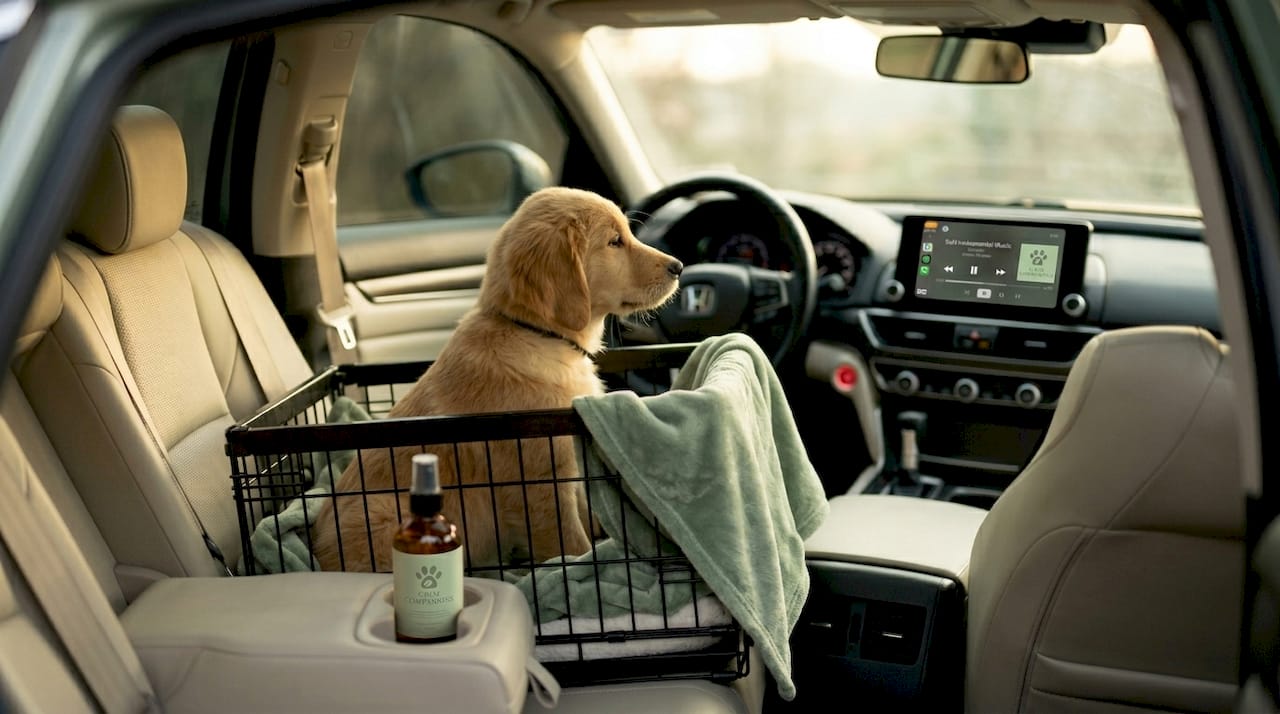
Dim lighting inside the crate, a lightly spritzed calming spray (dog-safe lavender or adaptil), and your own soft, slow voice all help lower your puppy's arousal level before the journey begins. Avoid loading them into a hot car or a vehicle that smells strongly of air freshener.
Withhold food before travel
Feed your puppy at least two to three hours before any car journey. A full stomach and the motion of a car are a reliable recipe for vomiting. Small treats during the journey are fine, but a full meal immediately before travel is not.
Comparison: crate vs. seatbelt harness
| Feature | Crash-tested crate | Safety harness |
|---|---|---|
| Physical security in an accident | Very high | Moderate to high |
| Anxiety reduction | High (enclosed, den-like) | Lower (more exposed) |
| Ease of installation | Moderate | Quick |
| Best for anxious puppies | Yes | Situational |
| Cost | Higher | Lower |
Pro Tip: Before your big journey, do two or three short "fun drives" of just five to ten minutes. Drive to the park, let your puppy have a run, then drive home. This teaches them that the car is a gateway to good things, not just a source of stress. Advice on calming your new puppy covers more techniques you can use alongside these car preparation steps.
Step-by-step guide to a calm puppy journey
With your gear sorted and your puppy already familiar with the crate, here is how to handle the journey itself. Follow this sequence every time, and your puppy will begin to anticipate the routine rather than dread it.
- Exercise your puppy first. A twenty to thirty minute walk or play session before loading takes the edge off excess energy. A tired puppy settles far more quickly in a moving vehicle.
- Set up the crate in the car. Do this before you bring your puppy out. Place the familiar blanket inside, add a chew or treat, and leave the door open so they can investigate at their own pace.
- Load calmly, not hurriedly. Carry your puppy to the car rather than letting them rush ahead. Keep your voice low and steady. Avoid excited high-pitched tones, which can raise arousal.
- Close the crate gently and wait. Give your puppy a moment to settle before starting the engine. If they are calm, reward with a quiet "good" and a small treat through the crate door.
- Drive smoothly. Sudden braking and sharp cornering unsettle dogs more than many owners realise. Drive as if you have a hot drink balanced on the dashboard.
- Stop every forty-five to sixty minutes for a short toilet break and water. Keep these stops calm and brief. This is not playtime, it is a reset.
- Arrive and exit calmly. Wait for your puppy to settle before opening the crate. Reward calm exits generously.
Calming aids: what does the evidence say?
| Calming aid | Effectiveness | Notes |
|---|---|---|
| CBD (2 to 4mg/kg) | Mild reduction in cortisol | Best combined with other aids |
| L-tryptophan or α-casozepine | Mild, supportive | Works well alongside CBD |
| Compression vest | Effective in around 80% of dogs | Reduces overall anxiety response |
| Adaptil spray or collar | Moderate | Particularly useful for young puppies |
| Prescription sedation | High (severe cases) | Vet consultation required |
Knowing how to calm a new puppy before and during a journey is just as important as the physical setup.
Safety warning: Never allow your puppy to roam freely in the car. An unrestrained dog is a serious hazard to both themselves and everyone in the vehicle. In the event of sudden braking or an accident, even a small puppy becomes a dangerous projectile. Always use a secured crate or crash-tested harness, every single journey.
Watch for signs of distress throughout the trip. Excessive panting, drooling, whining, pawing at the crate door, or attempts to escape are all signals that your puppy is struggling. Reduce speed where possible, open a window slightly for fresh air, and pull over if the distress becomes significant.
Pro Tip: Keep initial journeys under twenty minutes. Gradually increase the duration over several weeks. Refer to advice on managing puppy excitement to understand how over-stimulation on journeys can spill over into behaviour at home.
Troubleshooting and handling common puppy travel issues
Even with excellent preparation, some puppies still find travel genuinely difficult. This does not mean you have failed. It means you need to refine your approach. Here is how to handle the most common problems.
Recognising genuine distress
Not every whine is a crisis. Puppies will often fuss briefly when they are bored or uncertain, and then settle. However, the following signs indicate real stress that requires action:
- Continuous, escalating whining or barking
- Heavy, open-mouthed panting without heat as a cause
- Repeated attempts to escape the crate
- Salivating or vomiting
- Trembling that does not stop
Quick fixes for travel anxiety
- Increase the frequency of stops. A break every thirty minutes for a very anxious puppy can lower their overall stress significantly.
- Open windows slightly. Fresh air and the change of airflow can be genuinely distracting and soothing.
- Add a compression vest before the next journey. As noted, compression vests show effectiveness in approximately 80% of anxious dogs.
- Place a recently worn item of your clothing in the crate. Your scent is one of the most powerful calming signals available.
- Play classical music or a dog-specific calming playlist at a low volume.
Establishing routines to calm puppies consistently will make each journey easier than the last, because your puppy begins to know exactly what to expect.
When to contact your vet
If your puppy is vomiting on every journey, showing panic that does not reduce over multiple trips, or if they are losing weight or refusing food in association with travel, speak to your vet. There are safe, prescription options for dogs with genuine motion sickness or clinical anxiety, and your vet is the right person to assess whether these are appropriate.
Pro Tip: Build a pre-travel ritual that happens before every single journey. This might be a short walk, a specific phrase you use ("car time"), and the same blanket going into the crate. Consistent signals help your puppy predict what is coming, which dramatically reduces anxiety. Reading up on building puppy trust will give you a broader understanding of how routine and leadership reduce stress across all areas of your puppy's life.
How to build positive travel associations for future success
Troubleshooting is reactive. What you really want is to build a puppy that genuinely doesn't mind travel, and eventually enjoys it. That takes consistent, deliberate effort over weeks and months.
Reward calm behaviour generously
Every time your puppy travels without significant distress, that journey should end with something wonderful. A visit to the park, a game in the garden, a favourite toy. Dogs are highly motivated by outcomes. If the car reliably predicts great things at the other end, they will start to feel positively about the journey itself.
Use calm, positive language throughout
Your tone of voice is a powerful tool. Speaking in a low, steady, warm voice throughout the journey reassures your puppy that everything is fine. Avoid shouting, sudden exclamations, or frustrated sighs when things go wrong. Dogs read emotional signals with remarkable accuracy.
Key principles for positive association building
- Take short journeys with fun destinations at least twice a week during the first month
- Ignore minor fussing completely. Do not reward whining with attention or treats
- Never use punishment during or after a journey, even if your puppy has been sick or disruptive
- Celebrate visible progress, however small. Settling five minutes faster than last time is a genuine win
- Keep routines identical across every trip so your puppy builds a reliable mental map of what travel means
The science supports this approach. CBD combined with L-tryptophan can help reduce the cortisol (stress hormone) spike associated with car travel, giving your puppy a calmer baseline from which positive associations can actually form. A dog that is chemically overwhelmed cannot learn positive associations effectively.
Reading about puppy behaviour management will help you apply these same principles across the rest of your puppy's daily life, because the skills transfer directly.
Pro Tip: Consistency matters more than intensity. A short, positive journey three times a week will build confidence far faster than one long, demanding trip. Reference your calming puppy routines regularly to stay on track.
Our hard-won lessons: what most dog travel advice misses
Most travel guides focus almost entirely on the puppy. Better harness. Better crate. Better treats. These things matter, but there is something almost no article mentions: your emotional state is equally important.
Dogs do not just hear your voice, they read your entire body. Tense shoulders, quick movements, shallow breathing, a tight grip on the lead. Your puppy picks all of this up within seconds and mirrors it back to you. We have seen this play out repeatedly. An anxious owner loads their puppy anxiously. The puppy arrives anxious. The owner blames the puppy. The real issue was never addressed.
Before every journey, take sixty seconds to breathe slowly, loosen your shoulders, and move deliberately and calmly. This is not about performance. It is about genuinely regulating your own nervous system so that your puppy has something stable to anchor to.
The preparation rituals we recommend, the familiar blanket, the consistent phrase, the calm loading sequence, are as much about signalling to yourself as they are about the dog. When you follow a reliable routine, you feel less anxious. Your puppy then feels less anxious. It is a genuinely positive cycle.
The practical calming steps outlined across our resources are built with this in mind. The puppy's behaviour is often a direct reflection of the owner's behaviour. Address both, and journeys improve dramatically.
Pro Tip: A calm tone and gentle presence soothe your puppy even in unpredictable traffic situations. If something unexpected happens, take a breath before you react. Your puppy is watching.
Support for calm journeys: where to find help
Putting all of this into practice takes time, and there will be days when it feels harder than expected. That is completely normal.
At Calm-Companions, we have built a range of resources specifically for new puppy owners navigating exactly these challenges. Whether you need structured guidance on settling routines, step-by-step behavioural support, or a practical weekly checklist to keep you on track, our puppy help resources are a good place to start. Our free weekly checklist covers routines, night settling, and behaviour management, all designed to make the first weeks genuinely calmer. You can also explore our guide to calming puppies or access the broader puppy calm support checklist to stay organised and confident throughout the journey.
Frequently asked questions
What is the safest way to secure my puppy during car travel?
Crash-tested crates or harnesses positioned forward-facing provide the safest setup and help reduce anxiety by limiting unwanted movement and visual overstimulation. Always check that the product you use has been independently safety-tested before relying on it.
Are there any proven supplements to help calm my dog whilst travelling?
CBD at 2 to 4mg/kg, particularly when combined with L-tryptophan or α-casozepine, has been shown to reduce cortisol responses during car travel, and compression vests are effective for around 80% of anxious dogs. Always consult your vet before starting any supplement routine.
How can I help my puppy if they get carsick?
Avoid feeding your puppy for at least two to three hours before travel, ensure good ventilation in the vehicle, and make frequent short stops to break up the journey. If vomiting continues across multiple trips, speak to your vet as there are safe prescription options available.
What should I do if my puppy remains anxious after several journeys?
Gradual positive exposure, paired with calming aids and a consistent pre-journey routine, is the most effective long-term strategy. If anxiety does not improve after six to eight weeks of consistent effort, a qualified canine behaviourist can provide personalised support tailored to your puppy's specific needs.