
TL;DR:
- Calmness and routines are essential for helping puppies settle and build trust in their new home.
- Using safe zones, gradual crate training, and positive reinforcement supports a peaceful transition.
- Ongoing consistency, patience, and observing individual puppy needs are key to long-term calm behaviour.
Bringing a new puppy home is one of the most exciting things you can do, but within hours, many owners find themselves drowning in contradictory advice. Should you let the puppy cry it out? Is a crate cruel or kind? Do you cuddle or ignore? The sheer volume of conflicting guidance can leave you more anxious than your puppy. The good news is that there are proven, gentle strategies that genuinely work, and understanding them early makes an enormous difference to how quickly your puppy settles, how much sleep you both get, and how strong your bond becomes from the very start.
Table of Contents
- Setting the scene: why calm matters for your puppy's transition
- Calming strategies from day one: safe zones, routines, and predictability
- Advanced strategies: reinforcement, activity, and interpreting puppy needs
- Adapting strategies for fear periods, socialisation, and alone time
- Real-world wisdom: what most puppy books don't mention
- Get tailored help for a peaceful puppy start
- Frequently asked questions
Key Takeaways
| Point | Details |
|---|---|
| Safe spaces help calm | A dedicated puppy zone or crate gives a new puppy a sense of security for a calmer start. |
| Consistency builds trust | Predictable routines for feeding, play, and rest help puppies adapt and reduce anxiety. |
| Active teaching matters | Use positive reinforcement and read puppy signals to encourage calm and prevent overwhelm. |
| Adapt with development | Adjust calming tactics for fear periods, alone time, and socialisation to support emotional growth. |
Setting the scene: why calm matters for your puppy's transition
Your puppy's first days in a new home are, without question, the most disorienting of their young life. They have left their mother, their littermates, every familiar smell, and every sound they have ever known. Everything is new, everything is uncertain, and their nervous system is working overtime to process it all. This is not the moment for overwhelming stimulation, loud gatherings, or long play sessions that push them past their limits.
Calmness is not just a nice idea during this period. It is the foundation on which every other skill, habit, and behaviour is built. A puppy that feels safe and regulated is a puppy that can learn. A puppy in a constant state of stress cannot absorb training, cannot sleep properly, and cannot begin to trust you. Recognising the signs that your puppy is overwhelmed is the first practical step you can take.
Common signs your puppy is overwhelmed include:
- Trembling or shaking when not cold
- Excessive barking or whining without an obvious trigger
- Hiding behind furniture or under beds
- Yawning repeatedly in a non-sleepy context
- Refusing food or water
- Frantic, unfocused running or spinning
- Lip licking or nose licking repeatedly
When you notice these signs, the response is simple: reduce stimulation, guide your puppy to their safe space, and give them quiet time. As experts advise, you should create a safe, quiet zone or crate as a primary resting area to prevent overwhelm during the first 72 hours and beyond.
"Think of your puppy's safe zone as their personal retreat, not a place of isolation. It is the one constant in a world that has just been turned upside down."
The owner mindset during this period matters enormously. Patience, empathy, and consistency are not just virtues; they are tools. Your puppy is watching you. Your energy, your movements, your tone of voice all communicate whether this new world is safe or threatening. Keeping yourself calm, especially when you are tired and frustrated at 3am, is genuinely part of the strategy. For a deeper look at calming your new puppy, it helps to understand this emotional context before reaching for any specific technique.
Calming strategies from day one: safe zones, routines, and predictability
Now you know why calm matters, let's get practical with the core tools and routines for the earliest days.
Structure and predictability are the two most powerful calming forces available to you in week one. Puppies are not naturally chaotic creatures; they are creatures of habit who feel safest when they can anticipate what happens next. A predictable day reduces anxiety because the puppy's brain is not constantly bracing for the unexpected.
Consistent daily routines for meals, potty breaks, play, and naps provide predictability and security, helping puppies settle faster. This is not about rigid military scheduling. It is about giving your puppy enough repetition that they begin to relax into the rhythm of your household.
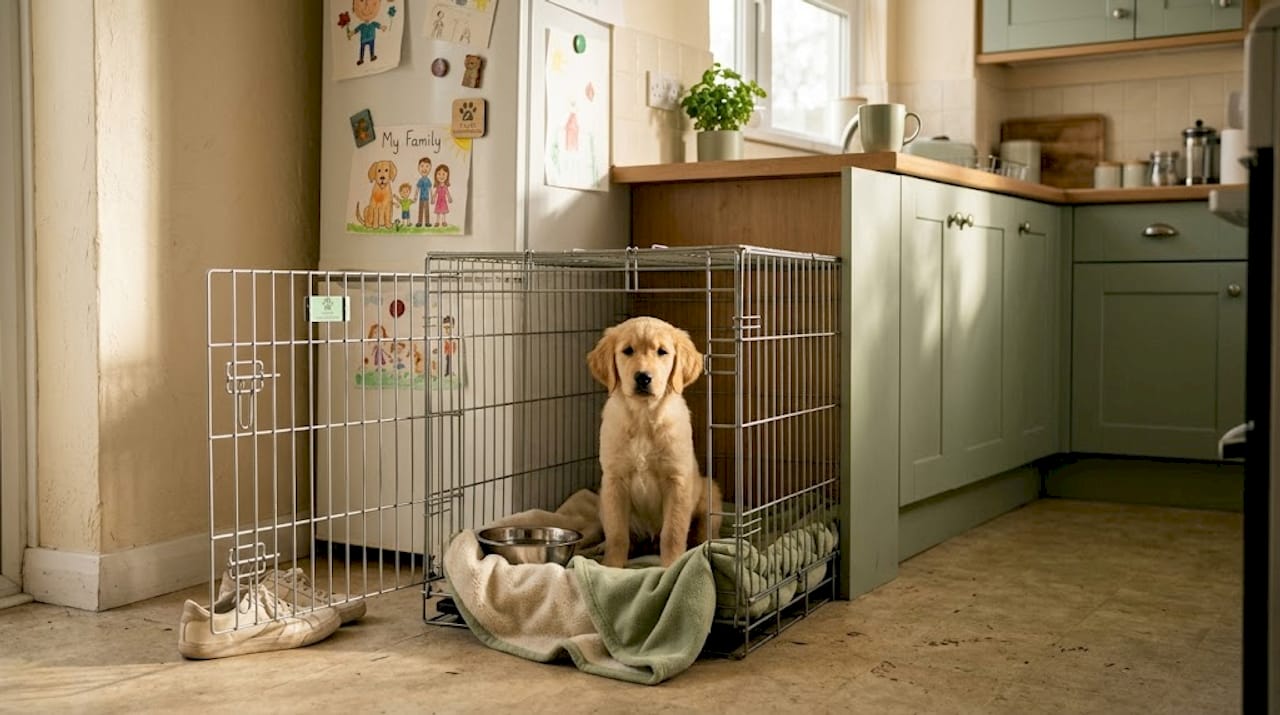
Setting up a safe puppy zone is the single most impactful physical change you can make. Here is how to do it properly:
- Choose a quiet corner away from the main household traffic, ideally where you can still be heard but not constantly disturbed.
- Place a comfortable, washable bed or blanket inside. Include a piece of clothing with your scent on it.
- Add a water bowl nearby, within easy reach but not inside the sleeping area.
- Position the zone away from direct sunlight, draughts, and loud appliances.
- Introduce your puppy to the space calmly on their first day, without forcing them inside.
- Allow them to explore and exit freely at first, building positive association before any door is closed.
When it comes to choosing the right type of resting space, the options each have their place:
| Option | Pros | Cons | Best use case |
|---|---|---|---|
| Safe zone (pen or playpen) | Spacious, flexible, easy to supervise | Less den-like, may feel exposed | Daytime naps, supervised rest |
| Crate | Den-like, portable, supports potty training | Needs gradual introduction | Night-time settling, alone time |
| Open bed | Comfortable, no confinement | No boundaries, easy to ignore | Older, settled puppies only |
Crate training, when done correctly, is a gift to your puppy, not a punishment. The key is gradual introduction: feed meals inside the crate, use treats and toys to build positive association, start with the door open, and only begin short closed sessions once your puppy is comfortable and relaxed inside.
Pro Tip: Anchor all changes and new routines to meal times during the first week. Puppies respond strongly to food, and using feeding as a consistent daily marker helps them build a mental map of the day far more quickly than any other method.
For practical calming steps beyond the safe zone, the importance of routines cannot be overstated. Even small, repeated sequences, such as a short walk followed by a meal followed by a nap, begin to signal to your puppy that the world is predictable and therefore safe. The week-1 calm support resources available can help you map this out day by day if you are unsure where to start.
Advanced strategies: reinforcement, activity, and interpreting puppy needs
With a solid foundation, it is time to go beyond basics and actively teach calm, addressing both physical and mental needs.
One of the most common mistakes new owners make is assuming a restless puppy simply needs more play. In reality, restlessness is a communication, and your job is to interpret it correctly before responding. The four most common causes of a puppy that will not settle are hunger, a need to toilet, overtiredness, and under-stimulation. Getting these wrong wastes time and accidentally reinforces the wrong behaviours.
If your puppy won't settle, always check basic needs first: potty, hunger, and overtiredness. Overtired puppies, in particular, need enforced quiet rest in a crate for two to three hours rather than more play.
Here is a quick reference for interpreting common puppy behaviours:
| Behaviour | Likely cause | Calming response |
|---|---|---|
| Whining and circling | Needs to toilet | Take outside immediately, calmly |
| Biting and jumping | Overtired or overstimulated | Crate rest, no eye contact |
| Barking at nothing | Anxious or under-stimulated | Calm reassurance, chew toy |
| Refusing to settle | Hunger | Check feeding schedule |
| Frantic running | Too much energy, needs outlet | Short, calm walk then rest |
Positive reinforcement is your most effective teaching tool during this period. The key techniques include:
- Rewarding calm behaviour immediately with a quiet, low-key treat (no excited praise that ramps energy back up)
- Practising a simple "down" or "settle" cue and rewarding the position generously
- Ignoring attention-seeking behaviours such as pawing, barking, or jumping completely
- Rewarding four paws on the floor with calm, brief attention
- Using a calm, steady voice rather than high-pitched excitement when praising
Positive reinforcement means rewarding calm behaviours like down and stay with treats, while ignoring whining and barking to avoid reinforcing attention-seeking. This sounds simple, but it requires real consistency. One family member who gives in to the barking undoes the work of everyone else.
Before crating your puppy, always ensure they have had an opportunity to exercise and engage with enrichment activities such as chews and puzzles. Mental stimulation before crating promotes settling because a tired puppy rests better. A ten-minute sniff walk or five minutes of gentle puzzle feeding before a crate session can make the difference between a puppy that settles in minutes and one that cries for an hour.
Pro Tip: The single most powerful thing you can do is ignore the chaos and reward the quiet. When your puppy stops barking and lies down, that is your moment. A calm, quiet treat delivered the instant they settle teaches them faster than any amount of correction.
For more on understanding puppy cues and puppy behaviour management, it is worth reading further once you have the basics in place. Building calm leadership for puppies is an ongoing process, not a one-week fix.
Adapting strategies for fear periods, socialisation, and alone time
Advanced management is especially important during sensitive windows. Here is how to adapt to your puppy's developing mind and emotional needs.
Between eight and twelve weeks of age, most puppies go through what behaviourists call a "fear period." During this window, experiences that might have seemed fine a week earlier can suddenly cause lasting fear responses. A loud noise, an unfamiliar person, or a new surface underfoot can all leave a significant impression. Understanding this period changes how you approach training and socialisation entirely.
During fear periods between eight and twelve weeks, you should lower training criteria, keep sessions short and fun, avoid forcing any exposure, and stay calm yourself to model the behaviour you want to see.
Here is how to adjust your strategy during a fear period:
- Shorten all training sessions to two to three minutes maximum.
- Reduce the difficulty of tasks so your puppy experiences success rather than confusion.
- Never force your puppy towards something that frightens them. Let them approach at their own pace.
- Use high-value treats to create positive associations with mildly unfamiliar things.
- If your puppy startles, stay calm and neutral. Do not rush to comfort dramatically, as this can reinforce the fear response.
- Avoid busy, noisy environments during peak fear windows.
Socialisation between three and sixteen weeks prevents future fear responses. Controlled, positive exposures build resilience without overwhelming your puppy. The goal is not to expose your puppy to everything at once but to ensure each new experience ends on a positive, calm note.
Alone time is another area where owners often inadvertently create problems. Dramatic departures and excited returns teach your puppy that your absence is a significant event worth being distressed about. Owner calmness reduces puppy separation stress. Calmer exits and returns, combined with pre-departure exercise and chews, improve alone-time resting significantly.
For transition tips for puppies that cover these sensitive windows in more detail, it is worth bookmarking resources that address the full arc of the first few months rather than just the first week.
"A calm owner is the most underrated calming tool of all. Your puppy does not need you to fix every moment of discomfort. They need you to show them, through your own steady presence, that everything is going to be fine."
Real-world wisdom: what most puppy books don't mention
Here is the honest truth that most guides skip over: no single strategy is a magic fix. Calm is not something you install in a puppy once and then walk away from. It is something you actively teach, reinforce, and adapt every single day, especially in those first few weeks when everything is new and your puppy's nervous system is still maturing.
The crate is perhaps the most overhyped single solution in puppy advice. It is genuinely useful, but as experts note, crate training is a management tool that supports supervision and potty training, not a standalone calm-teacher. Pairing it with active teaching of settling behaviours is what actually produces a calm puppy. Owners who rely on the crate alone without teaching calm in other contexts often find their puppy is fine in the crate but chaotic everywhere else.
The other thing most books do not tell you is how much your individual puppy's personality matters. Some puppies settle in three days. Others take three weeks. Some respond beautifully to a crate; others find it more stressful than helpful. The strategies in this article are evidence-based starting points, not rigid rules. Your job is to observe your specific puppy, notice what is working, and adjust accordingly.
Stress-free routine building is ultimately about becoming fluent in your puppy's individual language. That takes time, presence, and a willingness to try something different if the first approach is not landing. The owners who succeed fastest are not the ones who follow instructions most rigidly. They are the ones who stay curious, stay calm, and keep paying attention.
Get tailored help for a peaceful puppy start
Reading about calming strategies is a brilliant first step, but putting them into practice during an exhausting first week is a different challenge entirely.
At Calm-Companions, we have built our resources specifically around the reality of those first days and nights, when you are tired, your puppy is unsettled, and you need clear, practical guidance rather than vague reassurances. Our free week-1 checklist walks you through each day of your puppy's first week at home, covering routines, night settling, and behaviour management in a format you can actually use at 2am. If you want a step-by-step calming guide or personalised puppy help tailored to your situation, we have resources ready for you. You do not have to figure this out alone.
Frequently asked questions
How long does it take for a new puppy to settle?
Most puppies settle within two to three weeks when consistent routines for meals, potty breaks, play, and naps are in place. Individual personality and breed temperament also play a role in the timeline.
Should I ignore my puppy when it cries at night?
Once basic needs are met, it is generally best to ignore brief crying rather than rushing in, since rewarding whining reinforces the behaviour. Make sure your puppy feels safe and comfortable in their sleeping space before settling them for the night.
Can crate training help calm my puppy?
Yes, when introduced patiently and positively, crate training provides a secure den-like space that genuinely supports settling. Gradual introduction with meals and treats inside, starting with the door open, builds the positive association that makes it work.
What if my puppy still won't settle despite trying these strategies?
First, rule out any underlying medical issues by speaking with your vet, as pain or illness can cause persistent distress. For ongoing distress that does not respond to consistent management, a certified trainer or vet behaviourist can offer tailored support.