
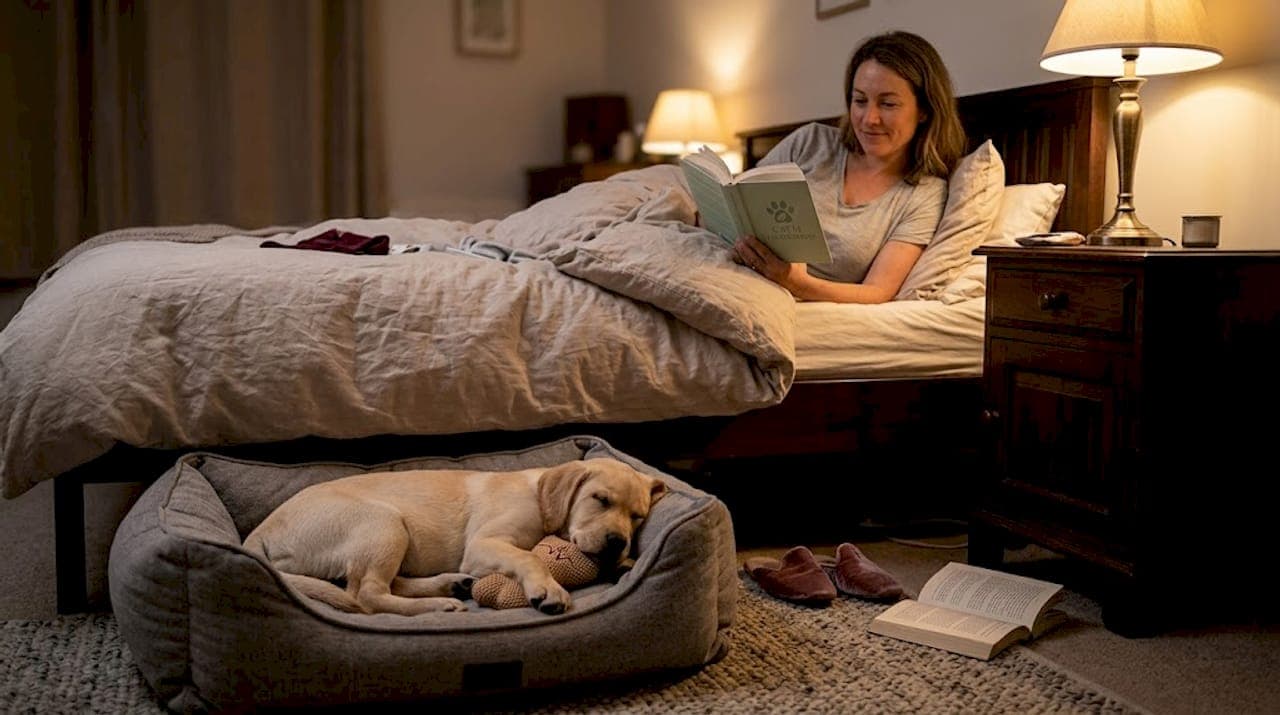
TL;DR:
- Puppies struggle to settle due to separation anxiety, small bladder capacity, and environmental stress.
- A consistent bedtime routine and a well-prepared, calming environment aid growing a self-soothing puppy.
- Patience and realistic expectations are essential, with most puppies sleeping through by 12 to 16 weeks.
Those first few nights with a new puppy can feel relentless. The whimpering starts, the clock ticks past midnight, and you wonder whether you've made a terrible mistake. You haven't. Nearly every new puppy owner goes through this exact experience, and the good news is that it does not last forever. With the right approach, most puppies settle significantly within just a few nights. This article walks you through the real reasons your pup struggles at night, exactly what you need to set up a calming environment, and a clear step-by-step routine that actually works.
Table of Contents
- Understanding why puppies struggle to settle at night
- Your puppy night-time calming checklist: what you need
- Step-by-step: calming your puppy at night
- Troubleshooting: common night-time issues and what to do
- The truth about puppy night-time settling: less perfection, more patience
- Expert help for a calmer puppy night
- Frequently asked questions
Key Takeaways
| Point | Details |
|---|---|
| Night cries are normal | Most puppies struggle due to anxiety or routine changes, not bad behaviour. |
| Preparation reduces stress | Setting up a calm environment and having the right supplies can make nights smoother. |
| Routine is essential | A structured evening routine helps puppies learn when and where to sleep. |
| Consistency works best | Following these steps steadily leads to improved sleep within days or weeks. |
| Help is available | Expert advice and dedicated support can make the adjustment easier for both owner and puppy. |
Understanding why puppies struggle to settle at night
Before you can fix the problem, it helps to understand what is actually going on. Your puppy is not crying to wind you up or manipulate you. The separation anxiety causes behind night-time restlessness are rooted in biology and emotion, not naughtiness. A young puppy has spent every night of its short life curled up with its mother and littermates. Suddenly being alone in a dark, unfamiliar room is genuinely distressing for them.
There are three main reasons puppies struggle to settle: separation from their litter, a very small bladder that simply cannot hold through the night, and the stress of a completely new environment. Understanding this reframes everything. Your puppy is not misbehaving. It is coping with a lot of change at once.
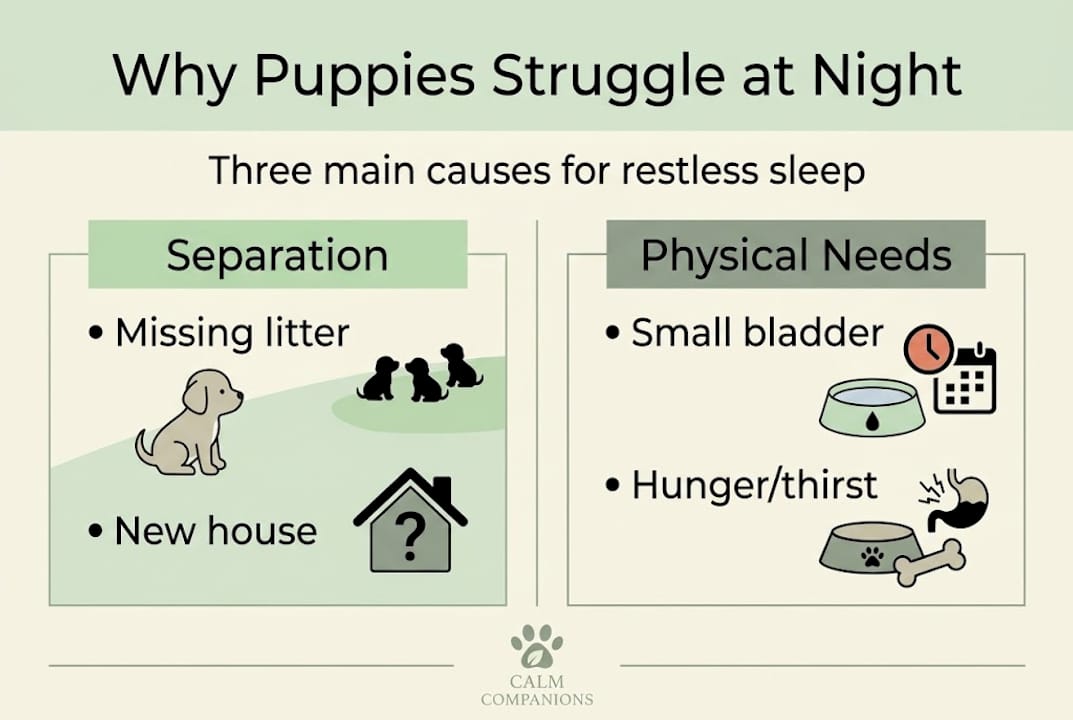
It is also worth knowing that puppies sleep 16 to 18 hours per day in total, so they do have the capacity for good sleep. The challenge is channelling that rest into the night-time hours. With routine-based settling and consistency, most owners see real improvement within 3 to 7 nights, with full nights of sleep achievable by 12 to 16 weeks of age.
Here are some signs your puppy is overtired or stressed at bedtime:
- Excessive yawning or blinking slowly
- Biting or mouthing more than usual
- Restlessness and inability to settle even when lying down
- High-pitched whining rather than occasional vocalising
- Zoomies or frantic energy late in the evening
When crying starts, run through this quick checklist before assuming it is just fussing:
- Does the puppy need the toilet?
- Is the room too cold or too warm?
- Is there an unusual noise causing alarm?
- Has the puppy had enough water?
- Is the crate comfortable and secure?
The table below shows the difference between emotional and physical triggers, which helps you respond more effectively.
| Trigger type | Examples | How to respond |
|---|---|---|
| Emotional | Separation anxiety, fear of darkness, unfamiliar sounds | Proximity, familiar scent, gentle reassurance |
| Physical | Full bladder, hunger, discomfort, too hot or cold | Toilet trip, check temperature, adjust bedding |
With patience and consistency, most puppies make real, noticeable progress within the first week. Every calm night you create is building a foundation for lifelong good sleep habits.
Your puppy night-time calming checklist: what you need
Setting up the right environment before bedtime is half the battle. You do not need to spend a fortune, but a few well-chosen items make an enormous difference to how quickly your pup settles.
The single most important decision is where your puppy will sleep. Here is a comparison to help you choose:
| Option | Pros | Cons | Best for |
|---|---|---|---|
| Crate | Den-like, safe, aids toilet training | Takes time to introduce positively | Most puppies, especially those being toilet trained |
| Open bed | Cosy, accessible | No containment, accidents harder to manage | Older, calmer puppies |
| Puppy pen | More space, flexible layout | Less den-like feel, puppy may feel isolated | Very active breeds or those rejecting crates |
Once you have chosen your setup, stock it properly. According to white noise machine advice, a well-prepared crate should include soft bedding, an item carrying your scent such as a worn T-shirt, a safe chew toy, and a cover over the crate to create a den-like atmosphere. White noise machines are genuinely useful for drowning out household sounds that might startle a light-sleeping pup.
Here is your essential supply checklist:
- Soft, washable crate liner or blanket
- A worn item of your clothing for familiar scent
- A safe, size-appropriate chew toy
- White noise machine or a radio set to low
- Night light or blackout curtain depending on your puppy's preference
- Puppy-safe calming aid such as a DAP diffuser if recommended by your vet
Pro Tip: A heartbeat toy, which mimics the rhythm of a littermate's heartbeat, can be genuinely soothing for young puppies in their first weeks. Alternatively, a warm (not hot) water bottle wrapped in a towel placed beside the pup replicates the warmth of sleeping alongside siblings. Both options reduce the shock of sleeping alone.
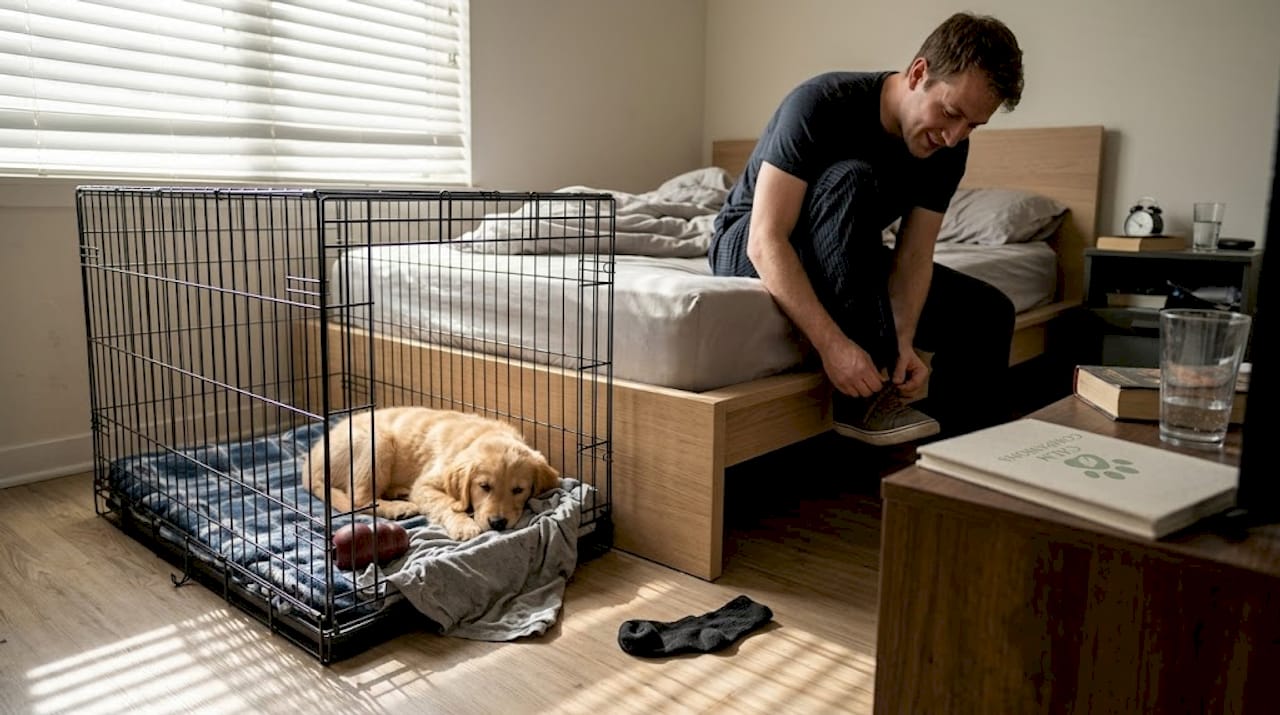
Position the crate close to your bed initially. This means your puppy can hear and smell you, which dramatically lowers anxiety. Over the following weeks, you can gradually move the crate towards the door and eventually out of the bedroom if that is your long-term plan. Learn more essential puppy settling techniques to build on this foundation.
Step-by-step: calming your puppy at night
A predictable evening routine is the most powerful tool you have. Puppies learn through repetition, so the more consistent you are, the faster they learn that night means sleep.
Follow this bedtime sequence every evening:
- Exercise and play around 60 to 90 minutes before bedtime. A good play session burns energy without overstimulating the pup right before sleep.
- Last meal of the day at least two hours before bed to allow digestion and reduce the chance of an upset stomach overnight.
- Final toilet trip immediately before going to bed. Keep it calm, quiet, and business-like. No games, no fuss.
- Settle the crate with bedding, the scent item, and a chew toy before guiding your pup in.
- Wind-down period of 15 to 20 minutes in a quiet, dimly lit space. This signals to your puppy that exciting time is over.
- Place your puppy in the crate calmly and without drama. No long goodbyes.
A consistent bedtime routine that includes exercise, feeding, play, and a final toilet break genuinely accelerates the settling process. Puppies thrive on predictability. When the same sequence happens each night, your pup begins to anticipate sleep and self-regulate.
Wind-down activities that work well include:
- Gentle stroking or quiet cuddle time on the floor
- Slow-paced sniff games with a treat hidden in a snuffle mat
- A brief, calm training session using simple commands
- Chewing a long-lasting treat in the crate with the door open
Introduce the crate positively during the day by placing treats and meals inside before you expect your puppy to sleep in it at night, as good crate training tips will always recommend. A puppy that already associates the crate with good things will settle far more easily.
Pro Tip: Keep your exits and entries at bedtime completely low-key. A big farewell or an excited morning greeting teaches your puppy that being apart from you is a dramatic event. Calm, matter-of-fact transitions make alone time feel normal and safe.
If your puppy whimpers briefly after you have confirmed all needs are met, try to resist rushing back in. Brief fussing that is not attended to usually fades within a few minutes. For more on handling crying calmly, the key is learning to distinguish distress from mild protest.
Troubleshooting: common night-time issues and what to do
Even with the best routine in place, you will hit bumps. Knowing how to respond in the moment keeps you from accidentally undoing your progress.
First, know when you genuinely need to get up. Attend to your puppy if:
- Crying has been going on for more than five minutes without pausing
- There are clear signs of urgency such as circling or scratching
- Your puppy seems distressed rather than just vocal
- The puppy is very young, under 10 weeks, and it has been over two hours since the last toilet trip
For night-time potty advice, the reliable rule is one hour per month of age plus one. So a two-month-old puppy can reasonably wait around three hours. Set an alarm rather than waiting to be woken by crying, and keep the trip completely calm. No lights on, no talking, no play. Carry the puppy straight out, wait for them to go, then carry them straight back.
When you can safely ignore the whining, do so calmly. Brief, non-urgent fussing that stops and starts is usually self-soothing behaviour. Rushing in teaches your puppy that crying brings company. As guidance on calm responses to crying consistently shows, the goal is to rule out genuine needs first, then allow brief whining to resolve on its own.
For accidents, clean thoroughly using an enzymatic cleaner to remove the scent marker, and adjust your alarm timing so you are getting to the puppy before the accident happens.
Consistency over perfection. Accidents and setbacks are part of the process. Never punish a puppy for a night-time accident. It achieves nothing except eroding trust.
If anxiety seems severe or nothing is improving after two weeks, consider moving the crate back into your bedroom temporarily and speaking to your vet to rule out any medical causes.
The truth about puppy night-time settling: less perfection, more patience
Here is something the polished guides often skip over: perfect routines rarely exist in real life. You will forget the wind-down one night. You will respond to whining when you should not have. You will feel guilty, exhausted, and convinced you are doing it wrong.
You are not doing it wrong. Progress, not perfection, is the real goal.
Every puppy has a different temperament. Some settle in three nights. Others take three weeks. Comparing your experience to someone else's on an online forum is genuinely unhelpful. What matters is that your effort is calm, consistent, and attuned to your specific dog.
As research on crate training consistently shows, the biggest mistake owners make is oscillating between boundaries and over-comforting because guilt gets in the way. Pick an approach, follow it with patience, and trust the process. For a broader view of what to expect, the full calming guide covers the wider settling-in period with the same realistic, supportive approach.
Let go of the guilt. Show up calmly each night. Your puppy will get there.
Expert help for a calmer puppy night
Sleepless nights are draining, but you do not have to navigate them alone. Calm-Companions exists precisely for moments like this, when you need clear, practical guidance without the overwhelm.

Our specialist puppy help section brings together expert-backed routines, settling advice, and troubleshooting tools designed specifically for new puppy owners. If you want a structured starting point, our free puppy calm checklist gives you a week-by-week plan covering everything from night-time routines to daytime behaviour. It is the resource we wish every owner had on day one. Explore our proven puppy calming methods and take the guesswork out of those first tough weeks.
Frequently asked questions
How long will it take for my puppy to sleep through the night?
Most puppies show real improvement within 3 to 7 nights and can sleep through by 12 to 16 weeks with a consistent routine in place.
Should I ignore my puppy crying at night?
Always check for physical needs first, then allow brief whining to fade on its own. Ignoring mild whining after needs are met helps your puppy learn to self-soothe rather than rely on your presence.
What should I put in my puppy's crate at night?
Include soft bedding, a safe chew toy, and a worn item carrying your scent. These three basics, as recommended in crate comfort guidance, create a familiar and secure sleeping space.
How often does a puppy need the toilet at night?
Use the rule of one hour per month of age plus one. A nighttime toilet schedule based on this formula prevents accidents without disrupting sleep more than necessary.